Zabost Anna, Filipczak Dorota, Kupis Włodzimierz, Szturmowicz Monika, Olendrzyński Łukasz, Winiarska Agnieszka, Jagodziński Jacek, Augustynowicz-Kopeć Ewa
Department of Microbiology, National Tuberculosis and Lung Diseases Research Institute, 01-138 Warsaw, Poland.
Department of Thoracic Surgery, National Tuberculosis and Lung Diseases Research Institute, 01-138 Warsaw, Poland.
Diagnostics (Basel). 2022 Mar 15;12(3):711. doi: 10.3390/diagnostics12030711.
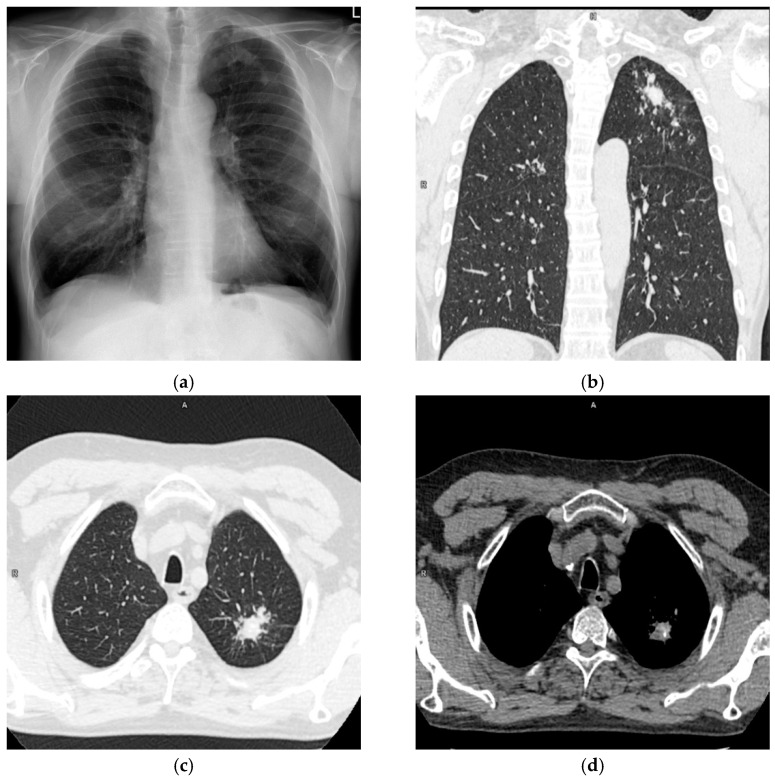
According to the World Health Organization (WHO), there were 465,000 cases of tuberculosis caused by strains resistant to at least two first-line anti-tuberculosis drugs: rifampicin and isoniazid (MDR-TB). In light of the growing problem of drug resistance in across laboratories worldwide, the rapid identification of drug-resistant strains of the complex poses the greatest challenge. Progress in molecular biology and the development of nucleic acid amplification assays have paved the way for improvements to methods for the direct detection of in specimens from patients. This paper presents two cases that illustrate the implementation of molecular tools in the recognition of drug-resistant tuberculosis.
根据世界卫生组织(WHO)的数据,有46.5万例结核病是由至少对两种一线抗结核药物(利福平及异烟肼)耐药的菌株引起的(耐多药结核病)。鉴于全球各实验室耐药问题日益严重,快速鉴定结核分枝杆菌复合群的耐药菌株构成了最大挑战。分子生物学的进展及核酸扩增检测方法的开发为改进直接检测患者标本中结核分枝杆菌的方法铺平了道路。本文介绍了两个案例,阐述了分子工具在耐药结核病识别中的应用。