Applied Metabolomics Research Group, IMIM, Hospital del Mar, Doctor Aiguader 88, 08003 Barcelona, Spain.
Integrative Pharmacology and Systems Neuroscience Group, IMIM, Hospital del Mar, Doctor Aiguader 88, 08003 Barcelona, Spain.
Int J Mol Sci. 2022 Mar 16;23(6):3219. doi: 10.3390/ijms23063219.
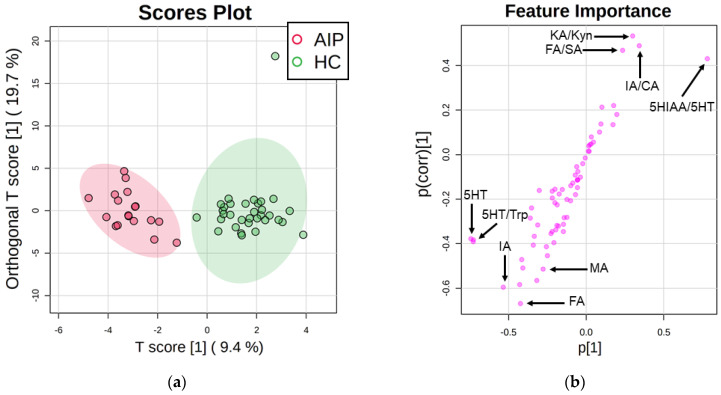
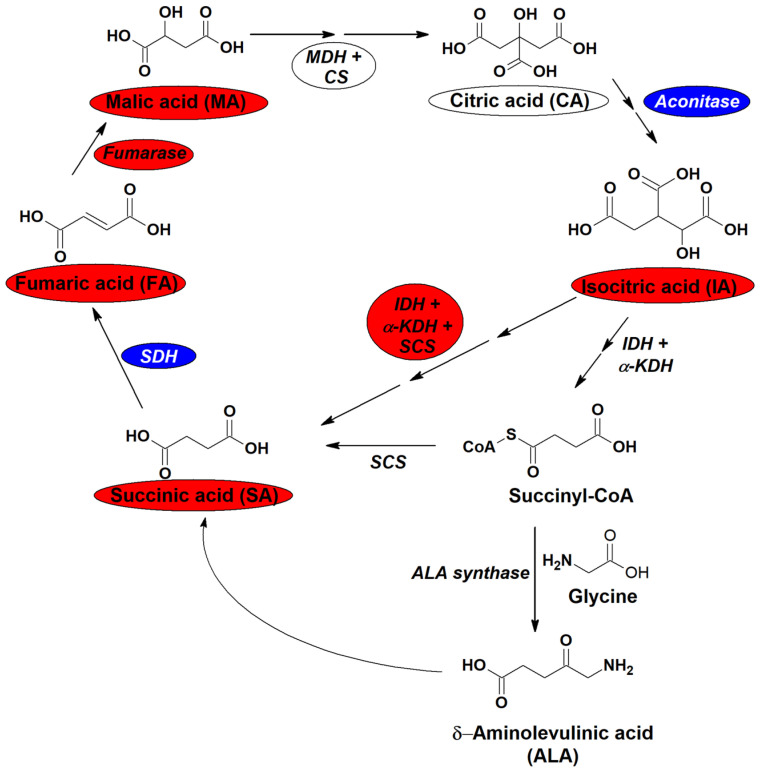
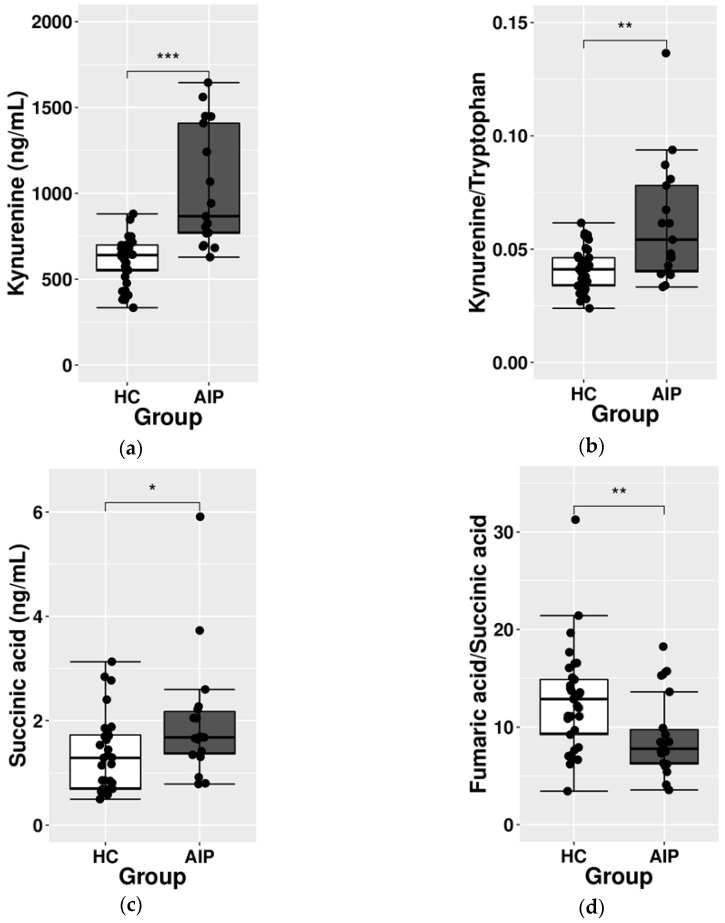
Acute intermittent porphyria (AIP) is an inherited rare hepatic disorder due to mutations within the hydroxymethylbilane gene. AIP patients with active disease overproduce aminolevulinic acid (ALA) and porphobilinogen (PBG) in the liver which are exported inducing severe neurological attacks. Different hepatic metabolic abnormalities have been described to be associated with this condition. The goal of this research was to explore the metabolome of symptomatic AIP patients by state-of-the art liquid chromatography-tandem mass spectrometry (LC-MS/MS). A case versus control study including 18 symptomatic AIP patients and 33 healthy controls was performed. Plasmatic levels of 51 metabolites and 16 ratios belonging to four metabolic pathways were determined. The results showed that the AIP patients presented significant changes in the two main areas of the metabolome under study: (a) the tryptophan/kynurenine pathway with an increase of tryptophan in plasma together with increase of the kynurenine/tryptophan ratio; and (b) changes in the tricarboxylic acid cycle (TCA) including increase of succinic acid and decrease of the fumaric acid/succinic acid ratio. We performed a complementary in vitro study adding ALA to hepatocytes media that showed some of the effects on the TCA cycle were parallel to those observed in vivo. Our study confirms in plasma previous results obtained in urine showing that AIP patients present a moderate increase of the kynurenine/tryptophan ratio possibly associated with inflammation. In addition, it also reports changes in the mitochondrial TCA cycle that, despite requiring further research, could be associated with an energy misbalance due to sustained overproduction of heme-precursors in the liver.
急性间歇性卟啉症(AIP)是一种遗传性罕见肝脏疾病,由羟甲基胆素基因中的突变引起。患有活动性疾病的 AIP 患者在肝脏中过度产生氨基乙酰丙酸(ALA)和卟胆原(PBG),这些物质被输出,导致严重的神经发作。已经描述了不同的肝脏代谢异常与这种情况有关。本研究的目的是通过最先进的液相色谱-串联质谱(LC-MS/MS)探索有症状的 AIP 患者的代谢组。进行了一项病例对照研究,包括 18 名有症状的 AIP 患者和 33 名健康对照者。测定了属于四个代谢途径的 51 种代谢物和 16 种比值的血浆水平。结果表明,AIP 患者在研究中的两个主要代谢组区域表现出显著变化:(a)色氨酸/犬尿氨酸途径,血浆中色氨酸增加,同时犬尿氨酸/色氨酸比值增加;(b)三羧酸循环(TCA)的变化,包括琥珀酸增加和富马酸/琥珀酸比值降低。我们进行了一项补充的体外研究,将 ALA 添加到肝细胞培养基中,结果显示 TCA 循环中的一些影响与体内观察到的相似。我们的研究证实了以前在尿液中获得的结果,表明 AIP 患者的犬尿氨酸/色氨酸比值略有增加,可能与炎症有关。此外,它还报告了线粒体 TCA 循环的变化,尽管需要进一步研究,但由于肝脏中持续过量产生血红素前体,可能与能量失衡有关。