The Innovation in Biomaterials Laboratory, School of Dentistry, Federal University of Goiás, Goiânia 74690-900, Brazil.
Department of Internal Medicine and Clinical Nutrition, Institute of Medicine, Sahlgrenska Osteoporosis Centre and Centre for Bone and Arthritis Research at the Sahlgrenska Academy, University of Gothenburg, 413 45 Gothenburg, Sweden.
Int J Mol Sci. 2022 Mar 18;23(6):3287. doi: 10.3390/ijms23063287.
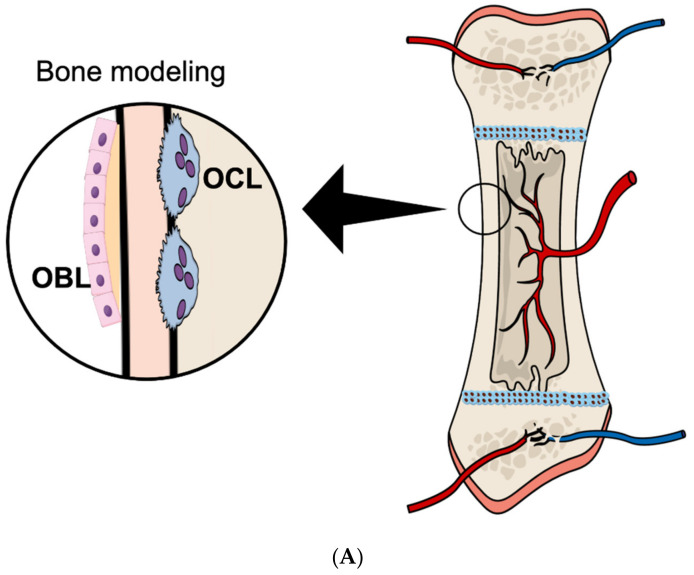
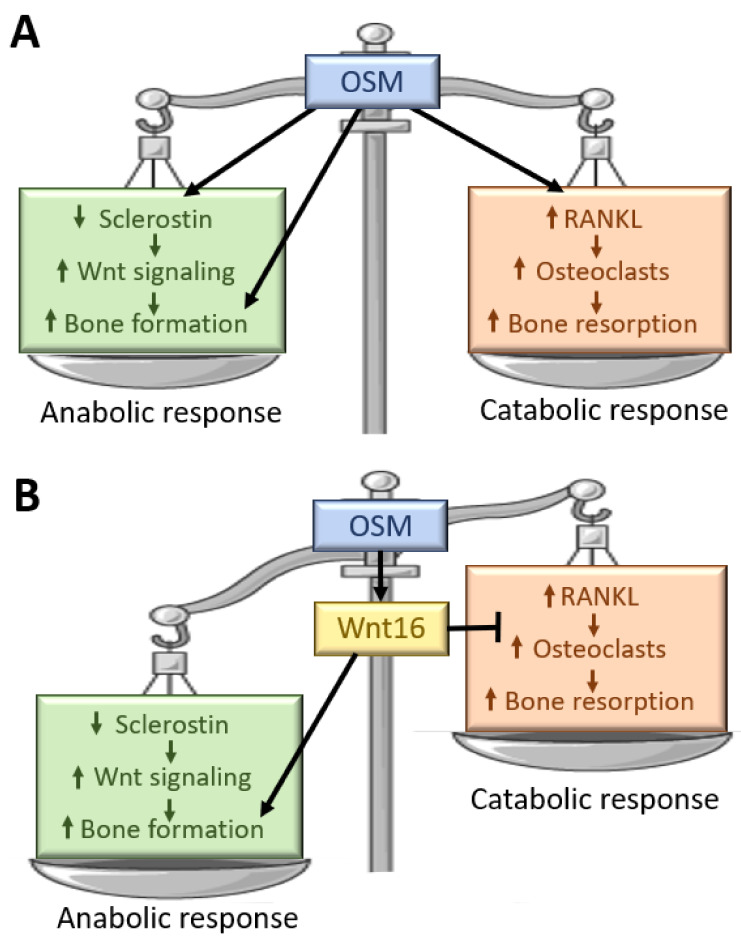
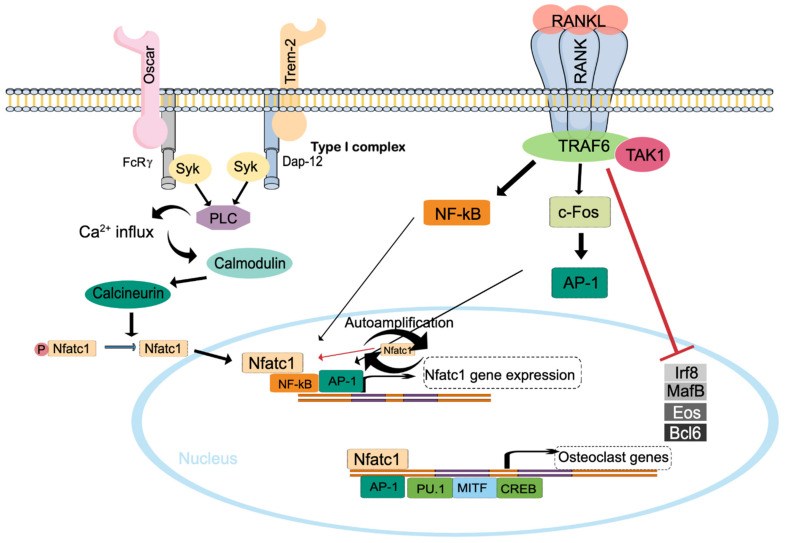
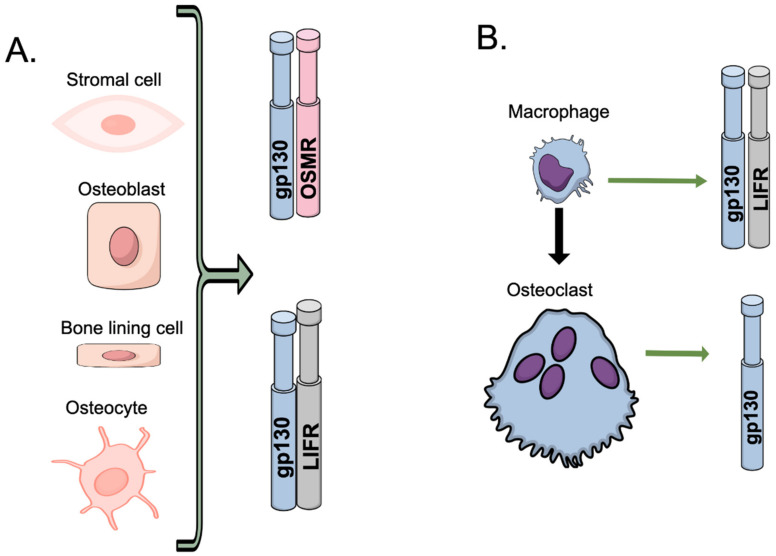
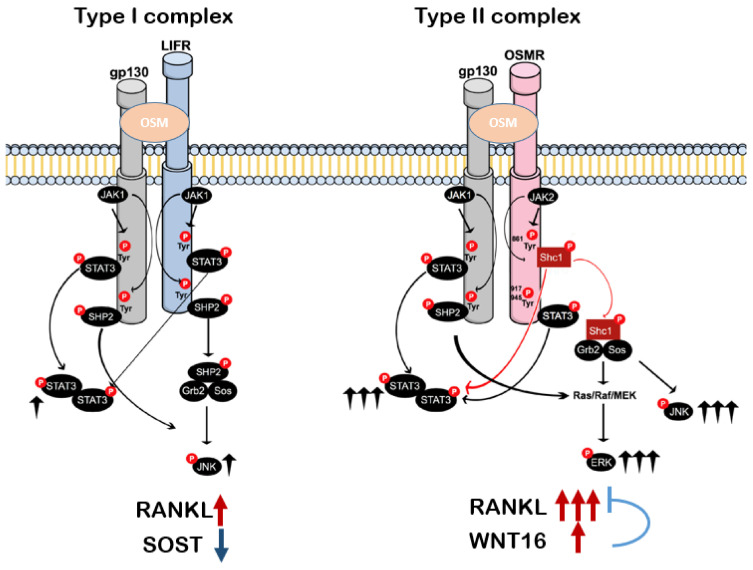
Oncostatin M (OSM), which belongs to the IL-6 family of cytokines, is the most potent and effective stimulator of osteoclast formation in this family, as assessed by different in vitro assays. Osteoclastogenesis induced by the IL-6 type of cytokines is mediated by the induction and paracrine stimulation of the osteoclastogenic cytokine receptor activator of nuclear factor κ-B ligand (RANKL), expressed on osteoblast cell membranes and targeting the receptor activator of nuclear factor κ-B (RANK) on osteoclast progenitor cells. The potent effect of OSM on osteoclastogenesis is due to an unusually robust induction of RANKL in osteoblasts through the OSM receptor (OSMR), mediated by a JAK-STAT/MAPK signaling pathway and by unique recruitment of the adapter protein Shc1 to the OSMR. Gene deletion of in mice results in decreased numbers of osteoclasts and enhanced trabecular bone caused by increased trabecular thickness, indicating that OSM may play a role in physiological regulation of bone remodeling. However, increased amounts of OSM, either through administration of recombinant protein or of adenoviral vectors expressing , results in enhanced bone mass due to increased bone formation without any clear sign of increased osteoclast numbers, a finding which can be reconciled by cell culture experiments demonstrating that OSM can induce osteoblast differentiation and stimulate mineralization of bone nodules in such cultures. Thus, in vitro studies and gene deletion experiments show that OSM is a stimulator of osteoclast formation, whereas administration of OSM to mice shows that OSM is not a strong stimulator of osteoclastogenesis in vivo when administered to adult animals. These observations could be explained by our recent finding showing that OSM is a potent stimulator of the osteoclastogenesis inhibitor WNT16, acting in a negative feedback loop to reduce OSM-induced osteoclast formation.
骨保护素 M(OSM)属于白细胞介素 6(IL-6)家族细胞因子,在不同的体外检测中,被评估为该家族中最有效的破骨细胞形成刺激因子。IL-6 型细胞因子诱导的破骨细胞生成是通过成骨细胞细胞膜上表达的核因子κ-B 配体(RANKL)的诱导和旁分泌刺激,以及破骨细胞前体细胞上核因子κ-B(RANK)受体的靶向来介导的。OSM 对破骨细胞生成的强大作用归因于其通过 OSM 受体(OSMR)异常强烈地诱导成骨细胞表达 RANKL,这是通过 JAK-STAT/MAPK 信号通路介导的,并且通过独特地将衔接蛋白 Shc1 募集到 OSMR 来实现的。在小鼠中删除基因会导致破骨细胞数量减少,而小梁骨厚度增加导致小梁骨增多,这表明 OSM 可能在骨重塑的生理调节中发挥作用。然而,通过给予重组蛋白或表达 的腺病毒载体增加 OSM 的量,会导致骨量增加,而没有明显增加破骨细胞数量的迹象,这一发现可以通过细胞培养实验来解释,该实验表明 OSM 可以诱导成骨细胞分化并刺激培养物中骨结节的矿化。因此,体外研究和基因缺失实验表明 OSM 是破骨细胞形成的刺激因子,而给予 OSM 给小鼠的实验表明,当给予成年动物时,OSM 并不是体内破骨细胞生成的强刺激因子。这些观察结果可以通过我们最近的发现来解释,即 OSM 是破骨细胞生成抑制剂 WNT16 的有效刺激因子,通过负反馈回路发挥作用,从而减少 OSM 诱导的破骨细胞形成。