College of Medicine & Health Sciences, Khalifa University, Abu Dhabi 127788, United Arab Emirates.
Int J Mol Sci. 2022 Mar 20;23(6):3365. doi: 10.3390/ijms23063365.
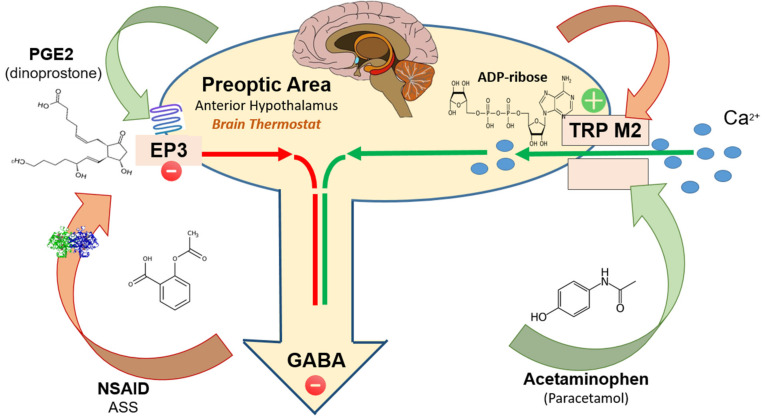
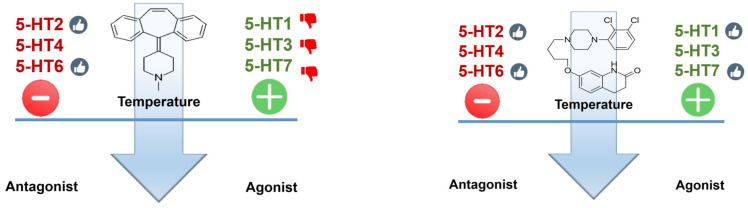
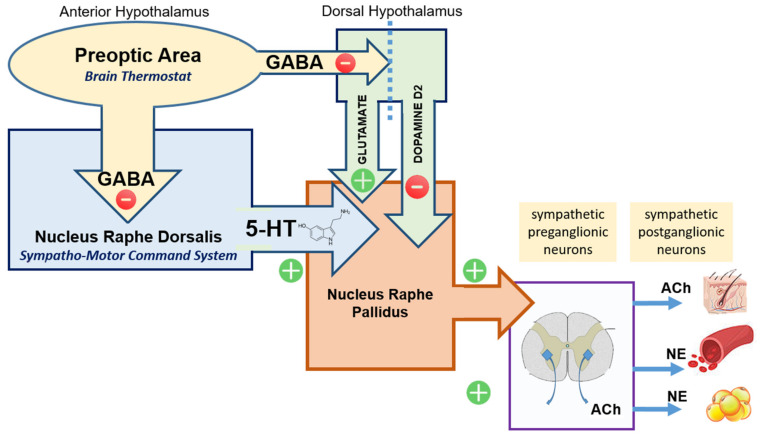
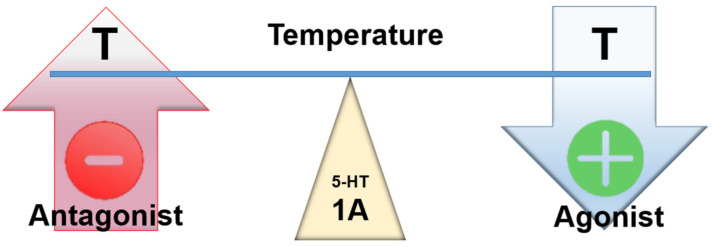
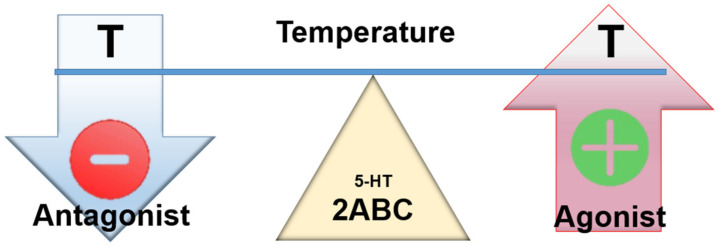
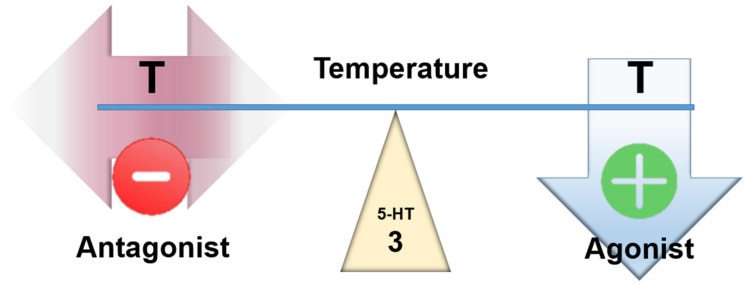
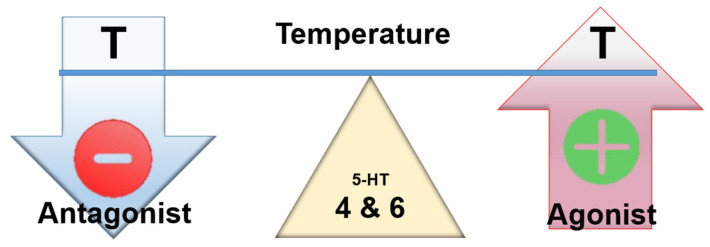
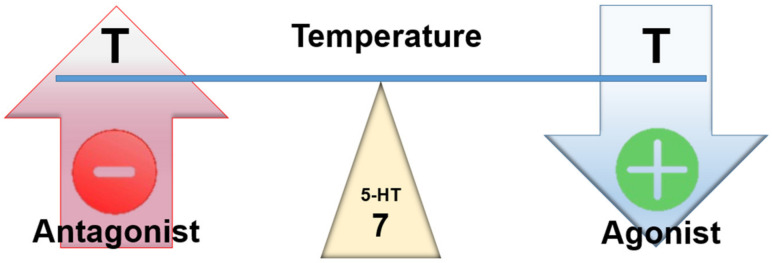
Fine temperature control is essential in homeothermic animals. Both hyper- and hypothermia can have deleterious effects. Multiple, efficient and partly redundant mechanisms of adjusting the body temperature to the value set by the internal thermostat exist. The neural circuitry of temperature control and the neurotransmitters involved are reviewed. The GABAergic inhibitory output from the brain thermostat in the preoptic area POA to subaltern neural circuitry of temperature control (Nucleus Raphe Dorsalis and Nucleus Raphe Pallidus) is a function of the balance between the (opposite) effects mediated by the transient receptor potential receptor TRPM2 and EP3 prostaglandin receptors. Activation of TRPM2-expressing neurons in POA favors hypothermia, while inhibition has the opposite effect. Conversely, EP3 receptors induce elevation in body temperature. Activation of EP3-expressing neurons in POA results in hyperthermia, while inhibition has the opposite effect. Agonists at TRPM2 and/or antagonists at EP3 could be beneficial in hyperthermia control. Activity of the neural circuitry of temperature control is modulated by a variety of 5-HT receptors. Based on the theoretical model presented the "ideal" antidote against serotonin syndrome hyperthermia appears to be an antagonist at the 5-HT receptor subtypes 2, 4 and 6 and an agonist at the receptor subtypes 1, 3 and 7. Very broadly speaking, such a profile translates in a sympatholytic effect. While a compound with such an ideal profile is presently not available, better matches than the conventional antidote cyproheptadine (used off-label in severe serotonin syndrome cases) appear to be possible and need to be identified.
恒温动物的精细温度控制至关重要。体温过高和过低都会产生有害影响。存在多种高效且部分冗余的机制,可将体温调节到内部恒温器设定的值。本文综述了温度控制的神经回路和涉及的神经递质。视前区脑恒温器(POA)向温度控制的下级神经回路(中缝背核和中缝苍白核)的 GABA 能抑制输出是由瞬态受体电位受体 TRPM2 和 EP3 前列腺素受体介导的(相反)作用之间的平衡决定的。POA 中表达 TRPM2 的神经元的激活有利于体温过低,而抑制则产生相反的效果。相反,EP3 受体可引起体温升高。POA 中表达 EP3 的神经元的激活导致体温升高,而抑制则产生相反的效果。TRPM2 的激动剂和/或 EP3 的拮抗剂可能有助于控制体温过高。温度控制的神经回路的活动受到各种 5-HT 受体的调节。基于提出的理论模型,“理想”的对抗血清素综合征发热的解毒剂似乎是 5-HT 受体亚型 2、4 和 6 的拮抗剂和受体亚型 1、3 和 7 的激动剂。广义上讲,这种特征表现为交感神经抑制作用。虽然目前尚无具有这种理想特征的化合物,但似乎有可能找到比常规解毒剂赛庚啶(在严重血清素综合征病例中被超适应证使用)更好的匹配物,需要加以确定。