Thomas Alvin, Wirth Jennifer Clare, Poehlmann-Tynan Julie, Pate David J
Human Development and Family Studies Department, School of Human Ecology, University of Wisconsin-Madison, Madison, WI 53706, USA.
Helen Bader School of Social Welfare, University of Wisconsin-Milwaukee, Milwaukee, WI 53201, USA.
Int J Environ Res Public Health. 2022 Mar 16;19(6):3518. doi: 10.3390/ijerph19063518.
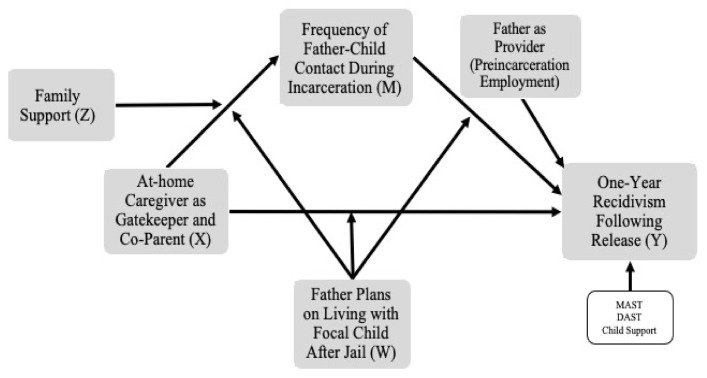
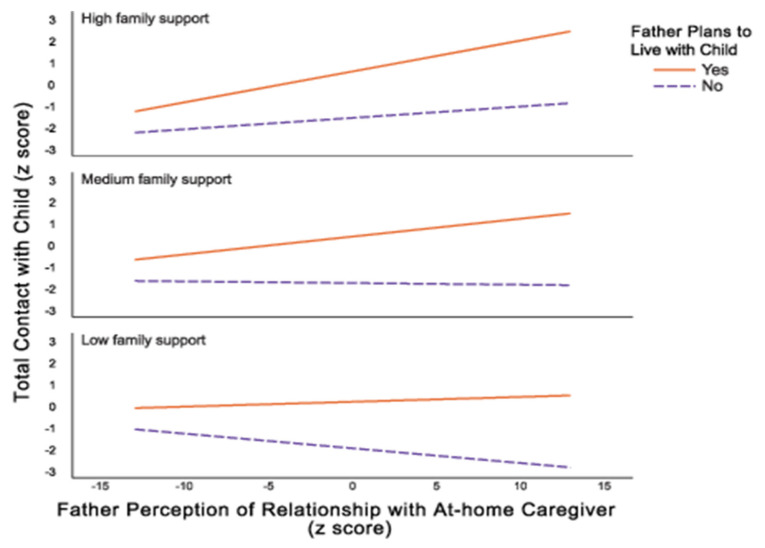
We report on the findings of a mixed methods longitudinal study of 84 African American fathers of young children who were enrolled into the study during the father's jail stay. Participants were assessed using interviews, self-report measures, and administrative records on frequency of father-child contact, father-caregiver relationship quality, family support, paternal pre-incarceration employment, fathers' plans to live with the child upon reentry, history of substance abuse, and new convictions one year following release from jail. Qualitative analysis revealed three primary identities of fathers during incarceration: father as nurturer, father as protector, and father as provider. Qualitative analysis of interview data detailed the ways in which the context of incarceration and the presence of the criminal justice system interacts with these identities to impact family structure, parent-child visits, plans for release, and motivation for desistance. Quantitative analysis indicated heterogeneity among fathers, with links between parent-child contact and desistance conditional on fathers' plans for coresidence with children as well as family support and relationship quality. Taken together, the findings highlight the strengths of African American fathers and their families despite the risks associated with incarceration, including the importance of family support and children as motivation for desistance. The results have implications for how the justice system weighs the bidirectional influences of fathers and families.
我们报告了一项混合方法纵向研究的结果,该研究涉及84名非裔美国幼儿父亲,他们在父亲入狱期间被纳入研究。通过访谈、自我报告测量以及关于父子接触频率、父亲与照顾者关系质量、家庭支持、父亲入狱前就业情况、父亲出狱后与孩子共同生活的计划、药物滥用史以及出狱一年后的新定罪记录的行政记录对参与者进行评估。定性分析揭示了父亲在入狱期间的三种主要身份:作为养育者的父亲、作为保护者的父亲和作为供养者的父亲。对访谈数据的定性分析详细阐述了监禁环境和刑事司法系统的存在如何与这些身份相互作用,从而影响家庭结构、亲子探视、出狱计划以及停止犯罪的动机。定量分析表明父亲之间存在异质性,亲子接触与停止犯罪之间的联系取决于父亲与孩子共同居住的计划以及家庭支持和关系质量。综合来看,研究结果突出了非裔美国父亲及其家庭的优势,尽管存在与监禁相关的风险,包括家庭支持和孩子作为停止犯罪动机的重要性。这些结果对司法系统如何权衡父亲与家庭的双向影响具有启示意义。