Kim Sou Hyun, Seo Hyeji, Kwon Doyoung, Yuk Dong Yeon, Jung Young-Suk
Department of Pharmacy, College of Pharmacy, Pusan National University, Busan 46241, Korea.
Research Institute for Drug Development, Pusan National University, Busan 46241, Korea.
Life (Basel). 2022 Feb 28;12(3):354. doi: 10.3390/life12030354.
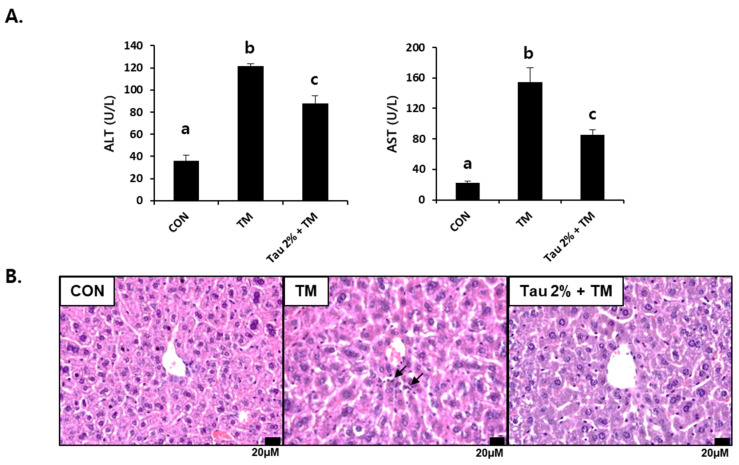
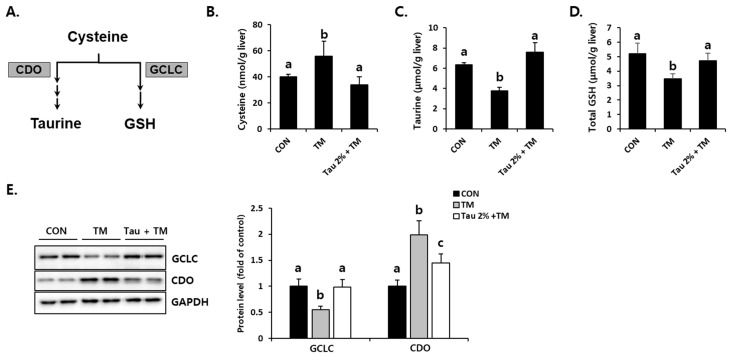
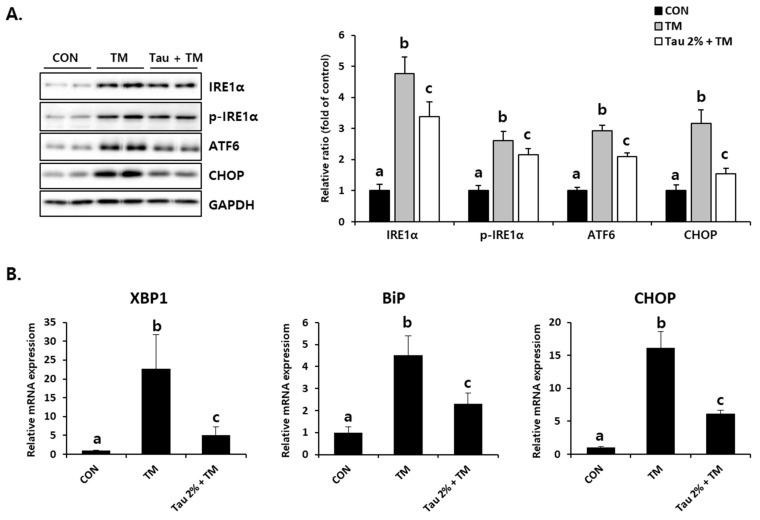
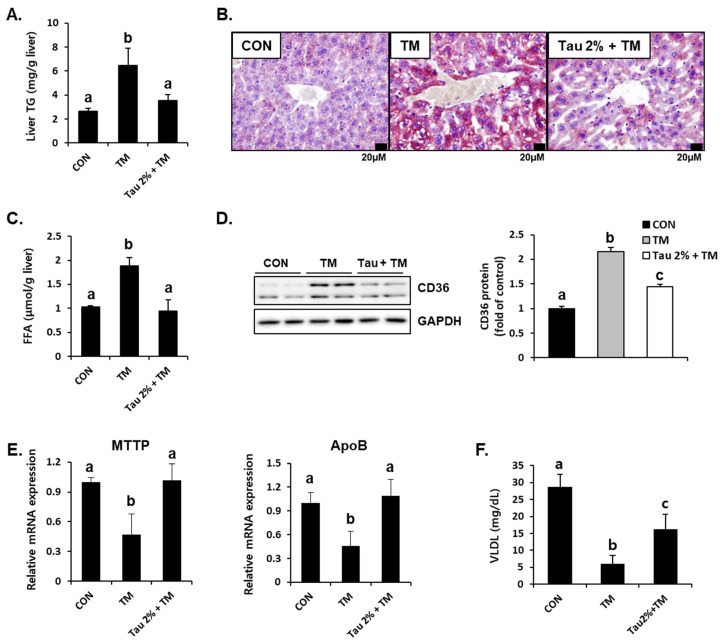
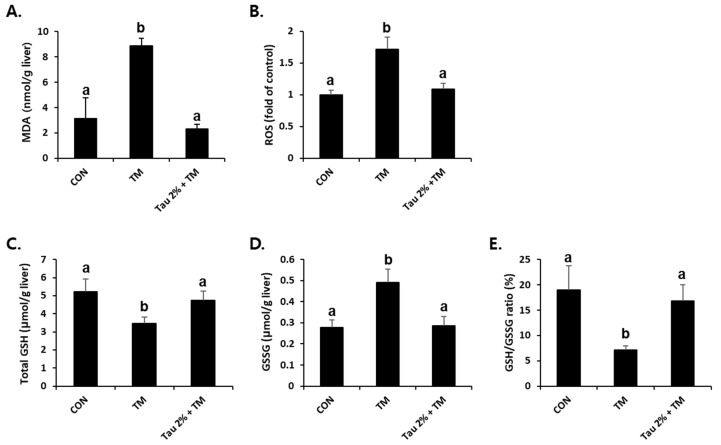
Non-alcoholic fatty liver disease (NAFLD) is a chronic liver dysfunction characterized by excess lipid accumulation; non-alcoholic steatohepatitis can transform into more severe conditions, such as cirrhosis and hepatocellular carcinoma. Although several pharmacologic approaches have been evaluated in clinical trials, there are no approved therapies for NAFLD. Previous studies have suggested that taurine supplementation alleviates fatty liver; however, the underlying mechanism remains obscure. In this study, we investigated the beneficial effects of taurine on fatty liver injury in vivo induced by tunicamycin, a chemical endoplasmic reticulum (ER) stressor. The mice were administered 2% taurine for 2 weeks prior to intraperitoneal tunicamycin injection; after 72 h of treatment, the mice were euthanized. Tunicamycin treatment significantly increased the levels of serum ALT and AST and hepatic triglycerides. Notably, these changes were alleviated by taurine supplementation. Taurine normalized the protein and/or mRNA levels involved in ER stress signaling (IRE1a, p-IRE1a, ATF6, XBP1, BiP, and CHOP) and lipid metabolism (CD36, MTTP, and ApoB), which were dysregulated by tunicamycin treatment. The stimulation of hepatic lipid export by taurine was evidenced by the recovery of blood VLDL levels. Furthermore, taurine supplementation prevented tunicamycin-induced lipid peroxidation and decreased glutathione (GSH) levels by correcting abnormal cysteine catabolism involved in the production of both taurine and GSH. Therefore, taurine supplementation can prevent tunicamycin-induced liver injury by counteracting oxidative and ER stress.
非酒精性脂肪性肝病(NAFLD)是一种以脂质过度蓄积为特征的慢性肝功能障碍;非酒精性脂肪性肝炎可转变为更严重的病症,如肝硬化和肝细胞癌。尽管在临床试验中已对几种药物治疗方法进行了评估,但尚无获批用于NAFLD的疗法。先前的研究表明,补充牛磺酸可减轻脂肪肝;然而,其潜在机制仍不清楚。在本研究中,我们研究了牛磺酸对衣霉素(一种化学性内质网(ER)应激源)在体内诱导的脂肪肝损伤的有益作用。在腹腔注射衣霉素前2周,给小鼠施用2%的牛磺酸;治疗72小时后,对小鼠实施安乐死。衣霉素治疗显著提高了血清ALT和AST水平以及肝脏甘油三酯水平。值得注意的是,补充牛磺酸可减轻这些变化。牛磺酸使衣霉素治疗失调的ER应激信号通路(IRE1α、p-IRE1α、ATF6、XBP1、BiP和CHOP)和脂质代谢(CD36、MTTP和ApoB)相关的蛋白质和/或mRNA水平恢复正常。血液中极低密度脂蛋白(VLDL)水平的恢复证明了牛磺酸对肝脏脂质输出的刺激作用。此外,补充牛磺酸可预防衣霉素诱导的脂质过氧化,并通过纠正参与牛磺酸和谷胱甘肽(GSH)生成的异常半胱氨酸分解代谢来降低GSH水平。因此,补充牛磺酸可通过对抗氧化应激和内质网应激来预防衣霉素诱导的肝损伤。