
对公开可用的转录组学数据进行计算机分析,确定甲状腺乳头状癌的潜在预后和治疗分子靶点。
In silico Analysis of Publicly Available Transcriptomics Data Identifies Putative Prognostic and Therapeutic Molecular Targets for Papillary Thyroid Carcinoma.
作者信息
Almansoori Asma, Bhamidimarri Poorna Manasa, Bendardaf Riyad, Hamoudi Rifat
机构信息
Sharjah Institute for Medical Research, University of Sharjah, Sharjah, United Arab Emirates.
College of Medicine, University of Sharjah, Sharjah, United Arab Emirates.
出版信息
Int J Gen Med. 2022 Mar 18;15:3097-3120. doi: 10.2147/IJGM.S345336. eCollection 2022.
BACKGROUND
Thyroid cancer is the most common endocrine malignancy. However, the molecular mechanism involved in its pathogenesis is not well characterized.
PURPOSE
The objective of this study is to identify key cellular pathways and differentially expressed genes along the thyroid cancer pathogenesis sequence as well as to identify potential prognostic and therapeutic targets.
METHODS
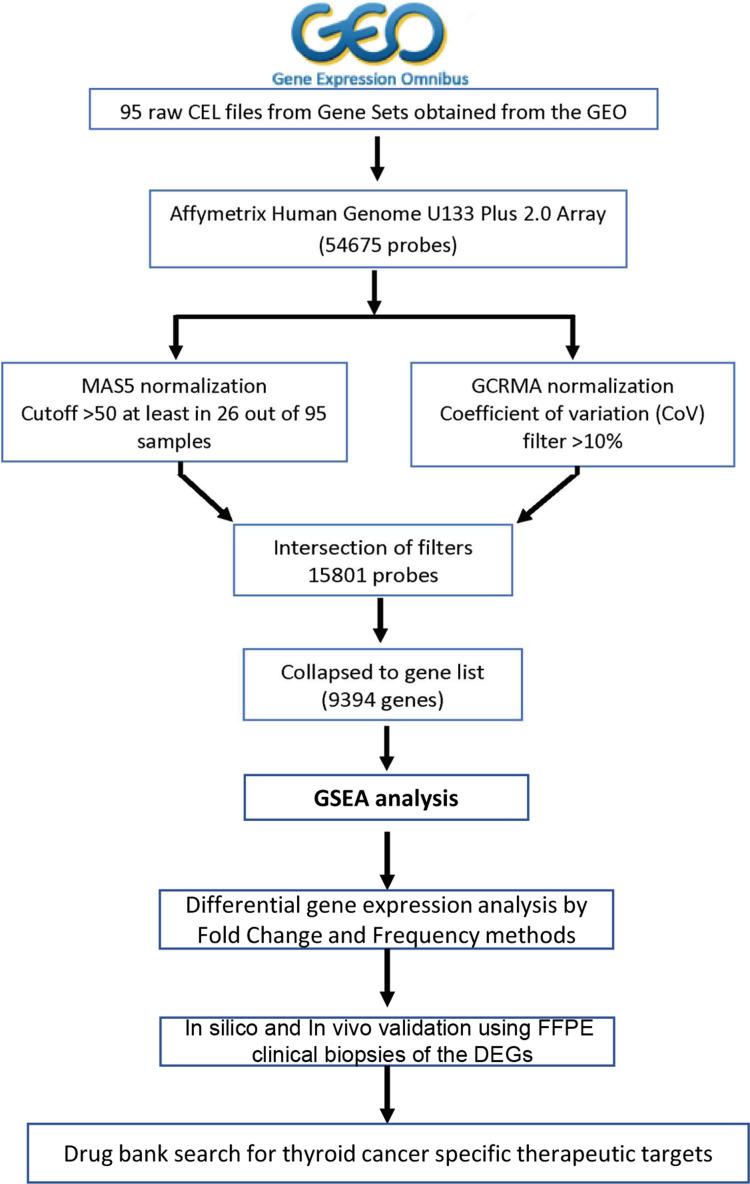
Publicly available transcriptomics data comprising a total of 95 samples consisting of 41 normal, 28 non-aggressive and 26 metastatic papillary thyroid carcinoma (PTC) cases were used. Transcriptomics data were normalized and filtered identifying 9394 differentially expressed genes. The genes identified were subjected to pathway analysis using absGSEA identifying PTC related pathways. Three of the genes identified were validated on 508 thyroid cancer biopsies using RNAseq and TNMplot.
RESULTS
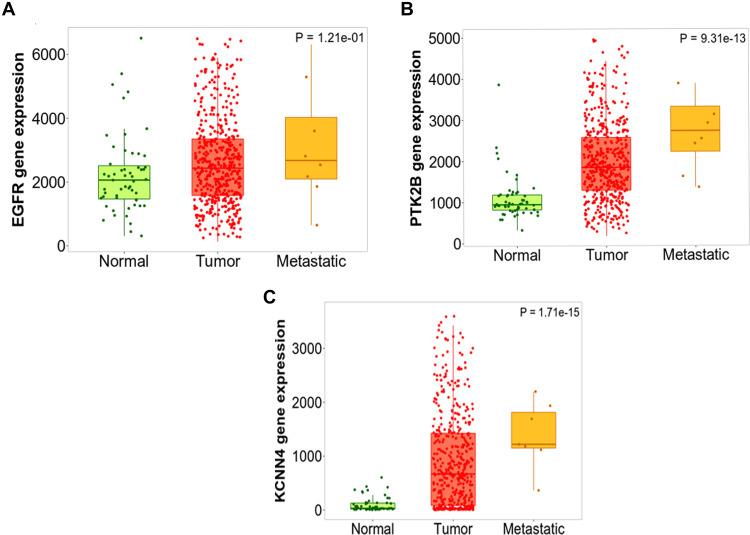
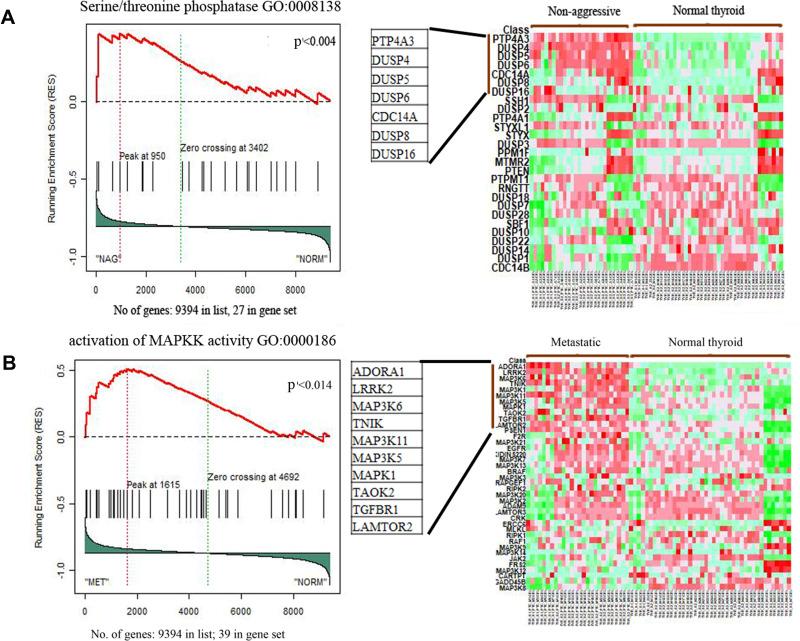
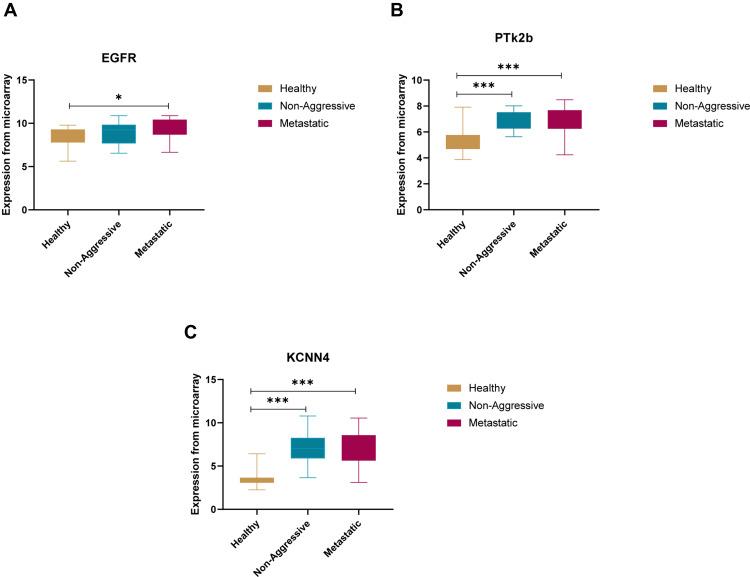
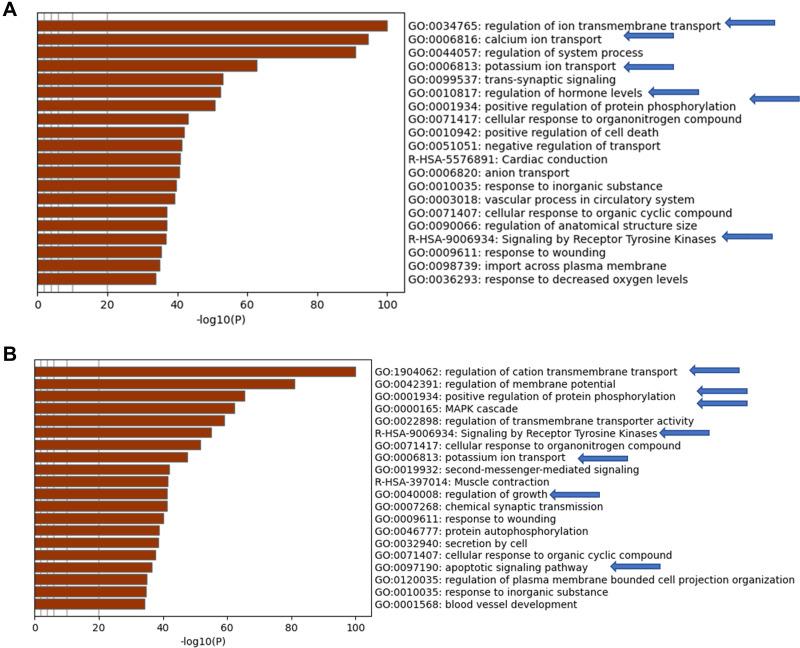
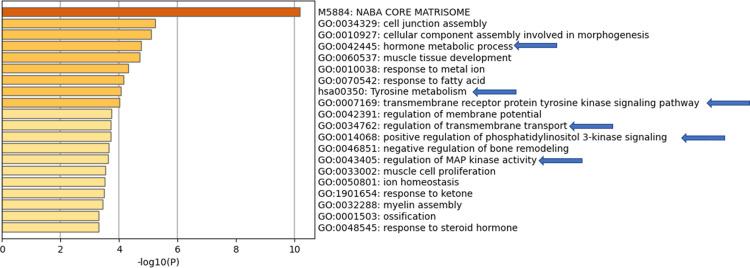
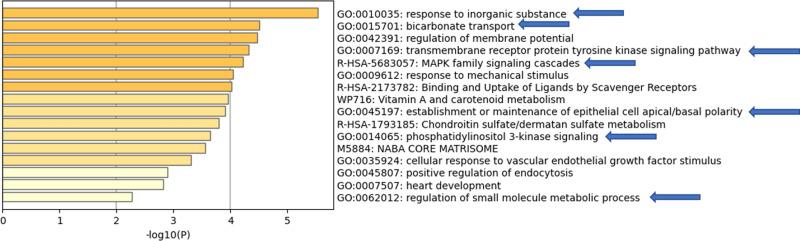
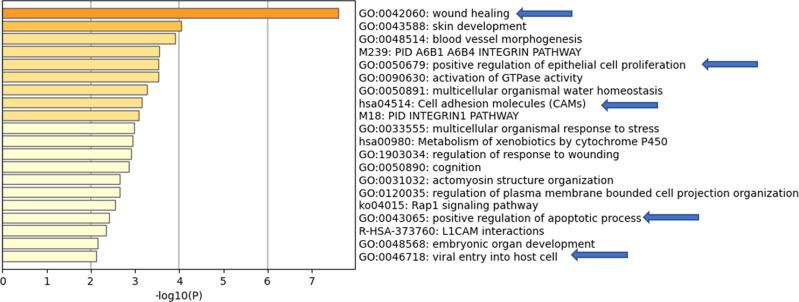
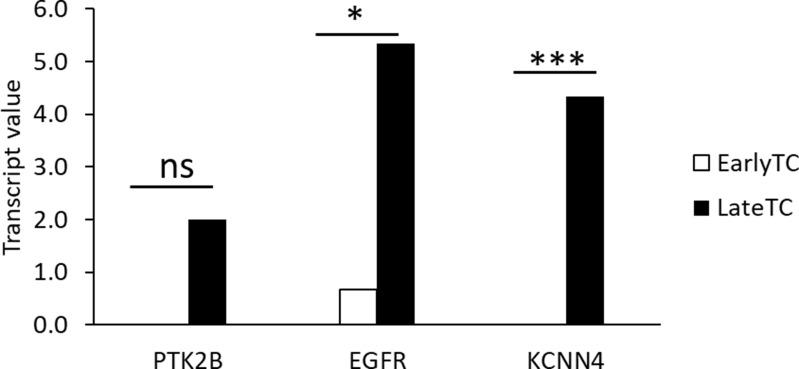
Pathway analysis revealed a total of 2193 differential pathways among non-aggressive samples and 1969 among metastatic samples compared to normal tissue. Pathways for non-aggressive PTC include calcium and potassium ion transport, hormone signaling, protein tyrosine phosphatase activity and protein tyrosine kinase activity. Metastatic pathways include growth, apoptosis, activation of MAPK and regulation of serine threonine kinase activity. Genes for non-aggressive are KCNQ1, CACNA1D, KCNN4, BCL2, and PTK2B and metastatic PTC are EGFR, PTK2B, KCNN4 and BCL2. Three of the genes identified were validated using clinical biopsies showing significant overexpression in aggressive compared to non-aggressive PTC; EGFR (p < 0.05), KCNN4 (p < 0.001) and PTK2B (p < 0.001). DrugBank database search identified several FDA approved drug targets including anti-EGFR Vandetanib used to treat thyroid cancer in addition to others that may prove useful in treating PTC.
CONCLUSION
Transcriptomics analysis identified putative prognostic targets including EGFR, PTK2B, BCL2, KCNQ1, KCNN4 and CACNA1D. EGFR, PTK2B and KCN44 were validated using thyroid cancer clinical biopsies. The drug search identified FDA approved drugs including Vandetanib in addition to others that may prove useful in treating the disease.
背景
甲状腺癌是最常见的内分泌恶性肿瘤。然而,其发病机制所涉及的分子机制尚未得到充分阐明。
目的
本研究的目的是确定甲状腺癌发病机制序列中的关键细胞通路和差异表达基因,并确定潜在的预后和治疗靶点。
方法
使用公开可用的转录组学数据,共95个样本,包括41个正常样本、28个非侵袭性和26个转移性乳头状甲状腺癌(PTC)病例。对转录组学数据进行标准化和过滤,确定9394个差异表达基因。使用absGSEA对鉴定出的基因进行通路分析,确定与PTC相关的通路。使用RNAseq和TNMplot在508例甲状腺癌活检样本上对鉴定出的三个基因进行验证。
结果
通路分析显示,与正常组织相比,非侵袭性样本中有2193条差异通路,转移性样本中有1969条差异通路。非侵袭性PTC的通路包括钙和钾离子转运、激素信号传导、蛋白酪氨酸磷酸酶活性和蛋白酪氨酸激酶活性。转移通路包括生长、凋亡、MAPK激活和丝氨酸苏氨酸激酶活性调节。非侵袭性PTC的基因有KCNQ1、CACNA1D、KCNN4、BCL2和PTK2B,转移性PTC的基因有EGFR、PTK2B、KCNN4和BCL2。使用临床活检对鉴定出的三个基因进行验证,结果显示与非侵袭性PTC相比,侵袭性PTC中这些基因显著过表达;EGFR(p < 0.05)、KCNN4(p < 0.001)和PTK2B(p < 0.001)。DrugBank数据库搜索确定了几个FDA批准的药物靶点,包括用于治疗甲状腺癌的抗EGFR药物凡德他尼,以及其他可能对治疗PTC有用的药物。
结论
转录组学分析确定了包括EGFR、PTK2B、BCL2、KCNQ1、KCNN4和CACNA1D在内的假定预后靶点。使用甲状腺癌临床活检对EGFR、PTK2B和KCN44进行了验证。药物搜索确定了FDA批准的药物,包括凡德他尼,以及其他可能对治疗该疾病有用的药物。
 Zotero 插件