Liu Yuanhu, Gao Shuwei, Jin Yaqiong, Yang Yeran, Tai Jun, Wang Shengcai, Yang Hui, Chu Ping, Han Shujing, Lu Jie, Ni Xin, Yu Yongbo, Guo Yongli
Department of Otolaryngology, Head and Neck Surgery, Beijing Children's Hospital, Capital Medical University, National Center for Children's Health, Beijing 100045, P.R. China.
Beijing Key Laboratory for Pediatric Diseases of Otolaryngology, Head and Neck Surgery, MOE Key Laboratory of Major Diseases in Children, Beijing Pediatric Research Institute, Beijing Children's Hospital, Capital Medical University, National Center for Children's Health, Beijing 100045, P.R. China.
Oncol Lett. 2020 Jan;19(1):195-204. doi: 10.3892/ol.2019.11100. Epub 2019 Nov 14.
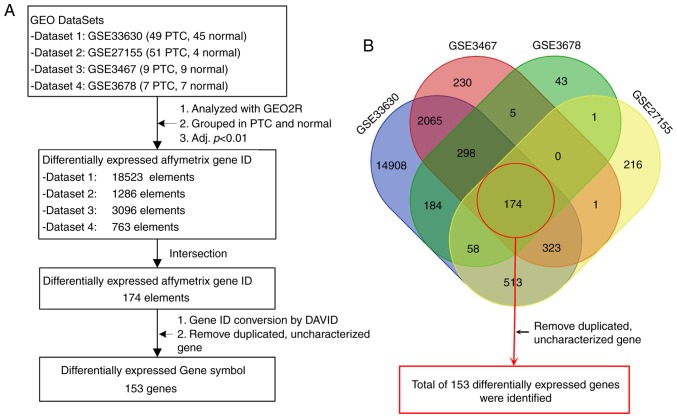
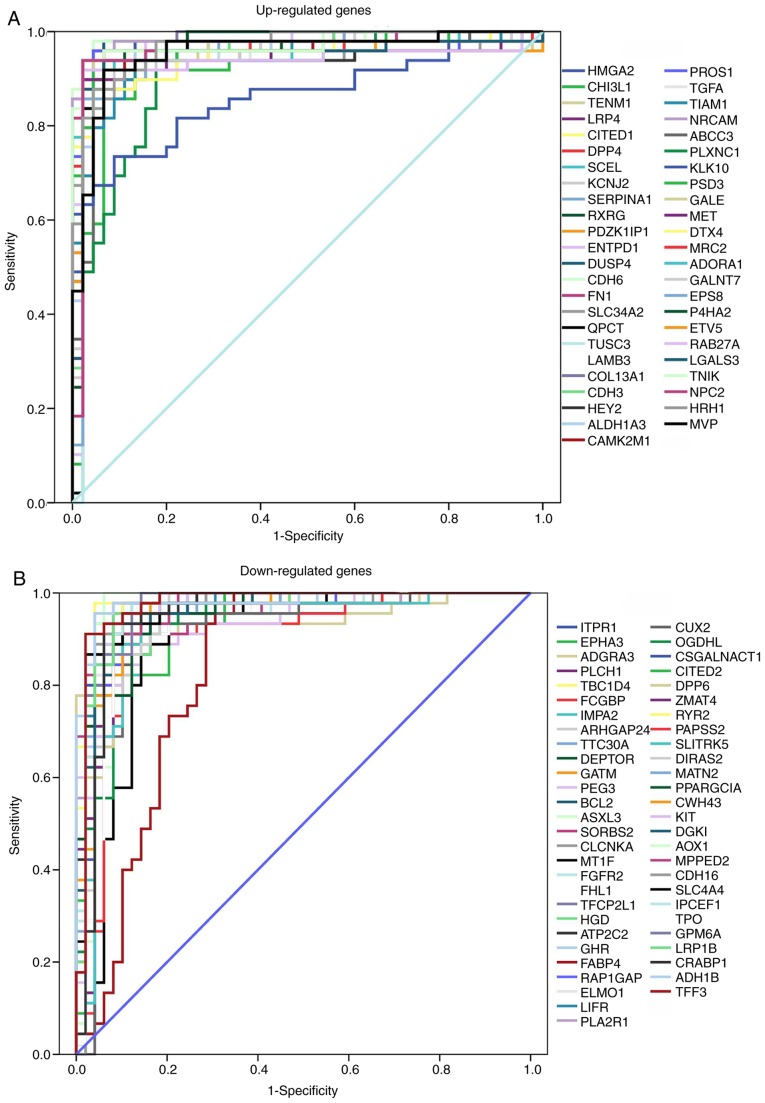
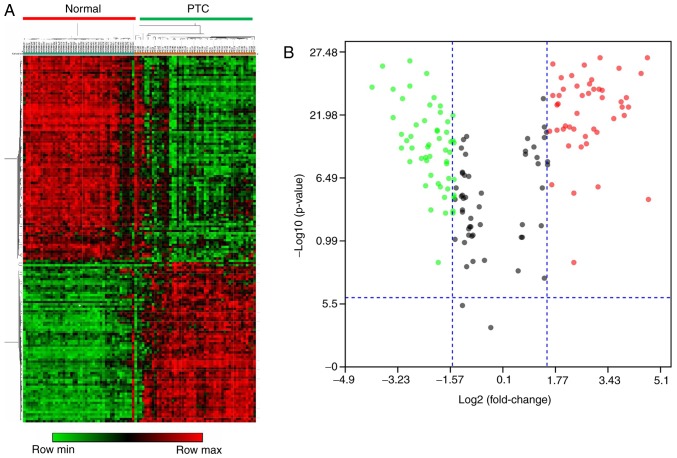
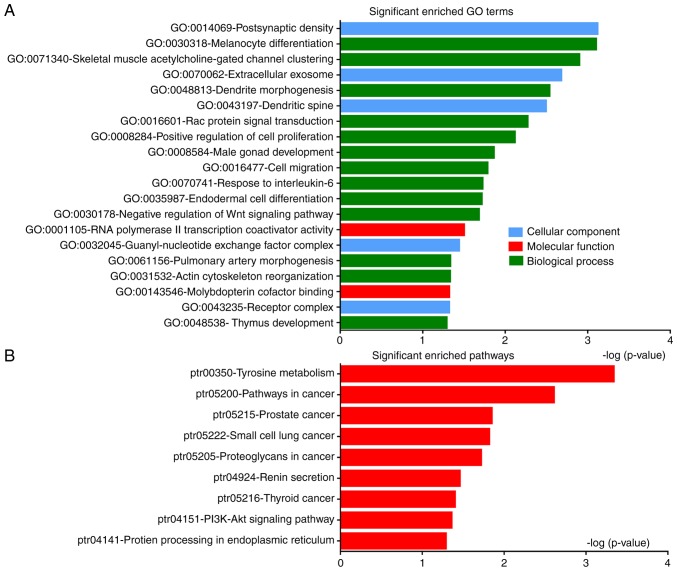
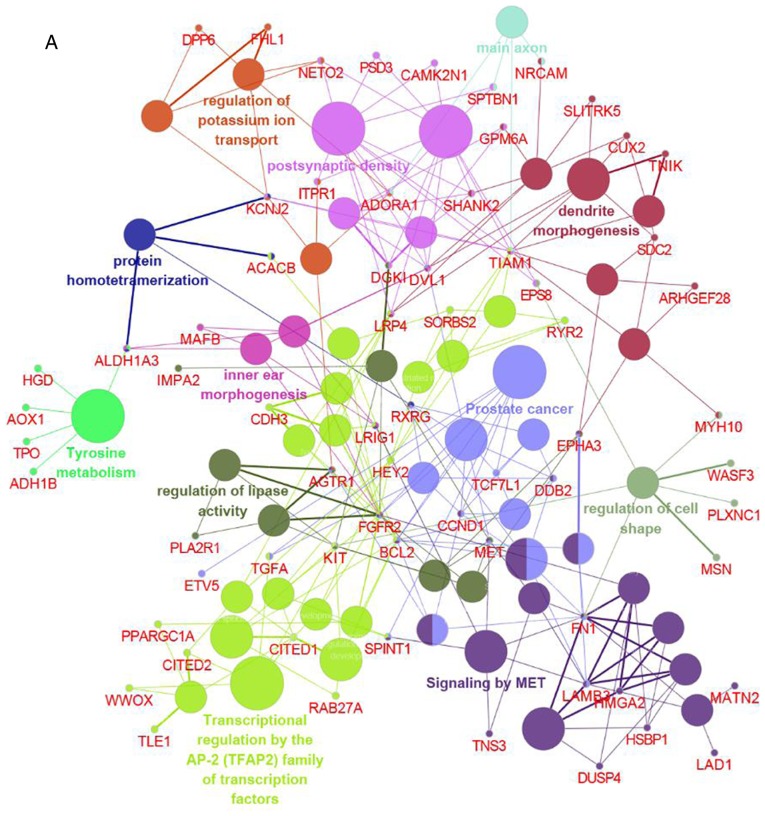
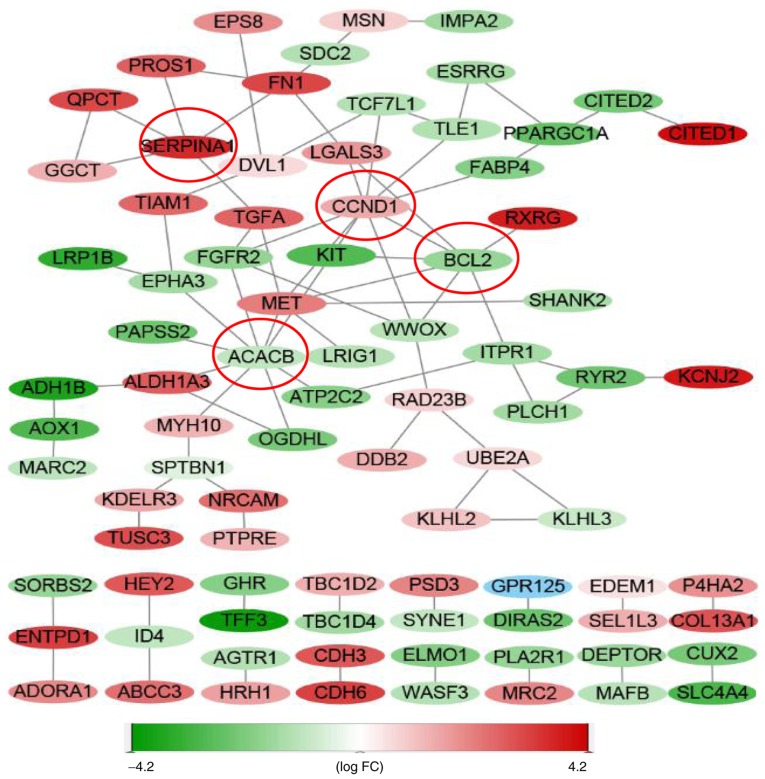
Papillary thyroid carcinoma (PTC) is the most common type of thyroid carcinoma, and its incidence has been on the increase in recent years. However, the molecular mechanism of PTC is unclear and misdiagnosis remains a major issue. Therefore, the present study aimed to investigate this mechanism, and to identify key prognostic biomarkers. Integrated analysis was used to explore differentially expressed genes (DEGs) between PTC and healthy thyroid tissue. To investigate the functions and pathways associated with DEGs, Gene Ontology, pathway and protein-protein interaction (PPI) network analyses were performed. The predictive accuracy of DEGs was evaluated using the receiver operating characteristic (ROC) curve. Based on the four microarray datasets obtained from the Gene Expression Omnibus database, namely GSE33630, GSE27155, GSE3467 and GSE3678, a total of 153 DEGs were identified, including 66 upregulated and 87 downregulated DEGs in PTC compared with controls. These DEGs were significantly enriched in cancer-related pathways and the phosphoinositide 3-kinase-AKT signaling pathway. PPI network analysis screened out key genes, including acetyl-CoA carboxylase beta, cyclin D1, BCL2, and serpin peptidase inhibitor clade A member 1, which may serve important roles in PTC pathogenesis. ROC analysis revealed that these DEGs had excellent predictive performance, thus verifying their potential for clinical diagnosis. Taken together, the findings of the present study suggest that these genes and related pathways are involved in key events of PTC progression and facilitate the identification of prognostic biomarkers.
乳头状甲状腺癌(PTC)是最常见的甲状腺癌类型,近年来其发病率一直在上升。然而,PTC的分子机制尚不清楚,误诊仍然是一个主要问题。因此,本研究旨在探讨这一机制,并确定关键的预后生物标志物。采用综合分析方法探讨PTC与健康甲状腺组织之间的差异表达基因(DEG)。为了研究与DEG相关的功能和通路,进行了基因本体论、通路和蛋白质-蛋白质相互作用(PPI)网络分析。使用受试者工作特征(ROC)曲线评估DEG的预测准确性。基于从基因表达综合数据库获得的四个微阵列数据集,即GSE33630、GSE27155、GSE3467和GSE3678,共鉴定出153个DEG,与对照组相比,PTC中有66个上调DEG和87个下调DEG。这些DEG在癌症相关通路和磷酸肌醇3-激酶-AKT信号通路中显著富集。PPI网络分析筛选出关键基因,包括乙酰辅酶A羧化酶β、细胞周期蛋白D1、BCL2和丝氨酸蛋白酶抑制剂A家族成员1,它们可能在PTC发病机制中起重要作用。ROC分析显示这些DEG具有优异的预测性能,从而验证了它们在临床诊断中的潜力。综上所述,本研究结果表明,这些基因和相关通路参与了PTC进展的关键事件,并有助于预后生物标志物的识别。