Norwegian Institute of Food, Fisheries and Aquaculture Research, Ås, Norway.
Department of Paraclinical Sciences, Faculty of Veterinary Medicine, Norwegian University of Life Sciences, Ås, Norway.
BMC Genomics. 2022 Mar 24;23(1):230. doi: 10.1186/s12864-022-08428-5.
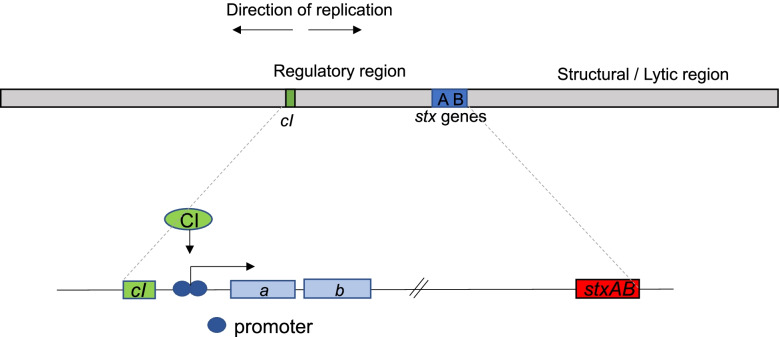
Enterohemorrhagic Escherichia coli (EHEC) is an emerging health challenge worldwide and outbreaks caused by this pathogen poses a serious public health concern. Shiga toxin (Stx) is the major virulence factor of EHEC, and the stx genes are carried by temperate bacteriophages (Stx phages). The switch between lysogenic and lytic life cycle of the phage, which is crucial for Stx production and for severity of the disease, is regulated by the CI repressor which maintain latency by preventing transcription of the replication proteins. Three EHEC phage replication units (Eru1-3) in addition to the classical lambdoid replication region have been described previously, and Stx phages carrying the Eru1 replication region were associated with highly virulent EHEC strains.
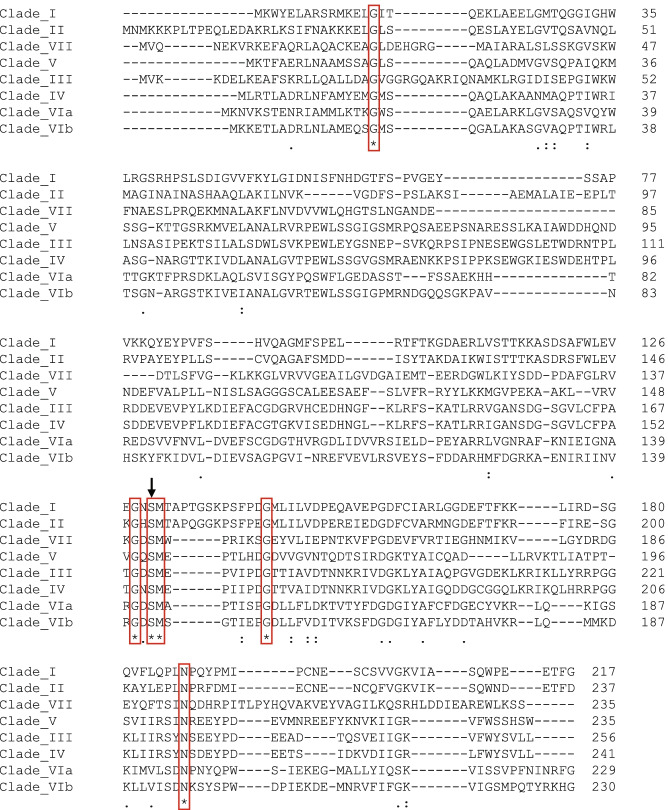
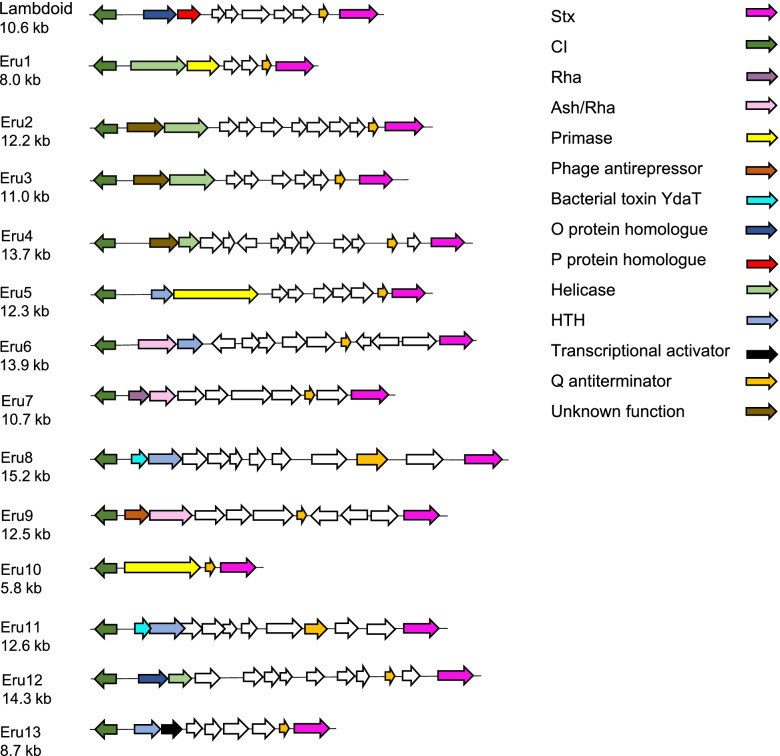
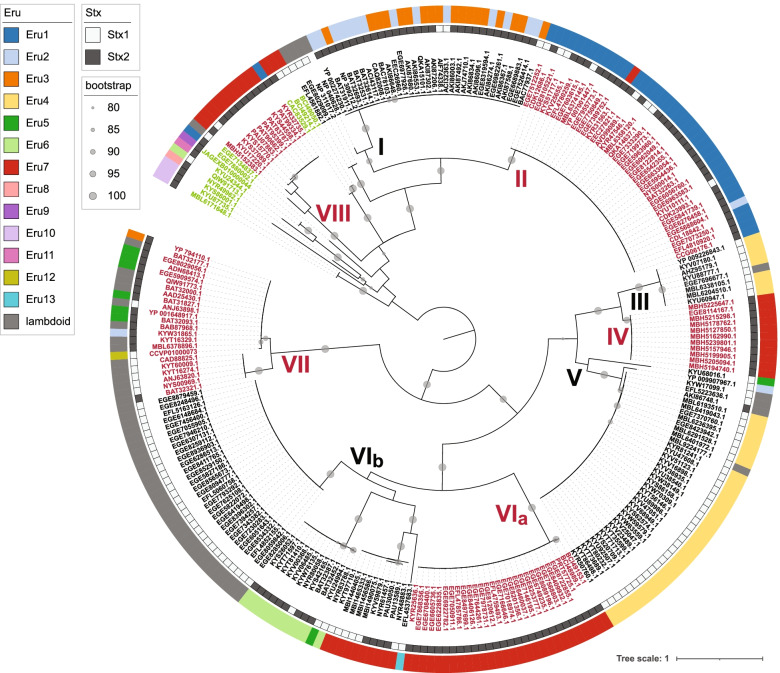
In this study, we have classified the Eru replication region of 419 Stx phages. In addition to the lambdoid replication region and three already described Erus, ten novel Erus (Eru4 to Eru13) were detected. The lambdoid type, Eru1, Eru4 and Eru7 are widely distributed in Western Europe. Notably, EHEC strains involved in severe outbreaks in England and Norway carry Stx phages with Eru1, Eru2, Eru5 and Eru7 replication regions. Phylogenetic analysis of CI repressors from Stx phages revealed eight major clades that largely separate according to Eru type.
The classification of replication regions and CI proteins of Stx phages provides an important platform for further studies aimed to assess how characteristics of the replication region influence the regulation of phage life cycle and, consequently, the virulence potential of the host EHEC strain.
肠出血性大肠杆菌(EHEC)是全球范围内新出现的健康挑战,由该病原体引起的暴发对公共健康构成严重威胁。志贺毒素(Stx)是 EHEC 的主要毒力因子,stx 基因由温和噬菌体(Stx 噬菌体)携带。噬菌体溶原和裂解生命周期之间的转换对于 Stx 的产生和疾病的严重程度至关重要,这种转换受 CI 阻遏物调节,CI 阻遏物通过阻止复制蛋白的转录来维持潜伏期。以前已经描述了除经典 lambda 复制区之外的三个 EHEC 噬菌体复制单元(Eru1-3),并且携带 Eru1 复制区的 Stx 噬菌体与高度毒力的 EHEC 菌株有关。
在本研究中,我们对 419 个 Stx 噬菌体的 Eru 复制区进行了分类。除了 lambda 复制区和三个已描述的 Erus 外,还检测到了十个新的 Erus(Eru4 到 Eru13)。lambda 型、Eru1、Eru4 和 Eru7 在西欧广泛分布。值得注意的是,在英格兰和挪威严重暴发中涉及的 EHEC 菌株携带带有 Eru1、Eru2、Eru5 和 Eru7 复制区的 Stx 噬菌体。Stx 噬菌体的 CI 阻遏物的系统发育分析显示出八个主要的分支,这些分支主要根据 Eru 类型分离。
Stx 噬菌体的复制区和 CI 蛋白的分类为进一步研究提供了重要平台,旨在评估复制区的特征如何影响噬菌体生命周期的调节,进而影响宿主 EHEC 菌株的毒力潜力。