Neurology Research Group, University of Cape Town Neuroscience Institute, Cape Town, South Africa.
E8-74 Neurology, Department of Medicine, Groote Schuur Hospital and the University of Cape Town Neuroscience Institute, University of Cape Town, Cape Town, South Africa.
Orphanet J Rare Dis. 2022 Mar 24;17(1):133. doi: 10.1186/s13023-022-02280-2.
Genetic investigations of inherited neuromuscular disorders in Africans, have been neglected. We aimed to summarise the published data and comment on the genetic evidence related to inherited neuropathies (Charcot-Marie-Tooth disease (CMT)), hereditary spastic paraplegias (HSP) and spinal muscular atrophy (SMA) in Africans.
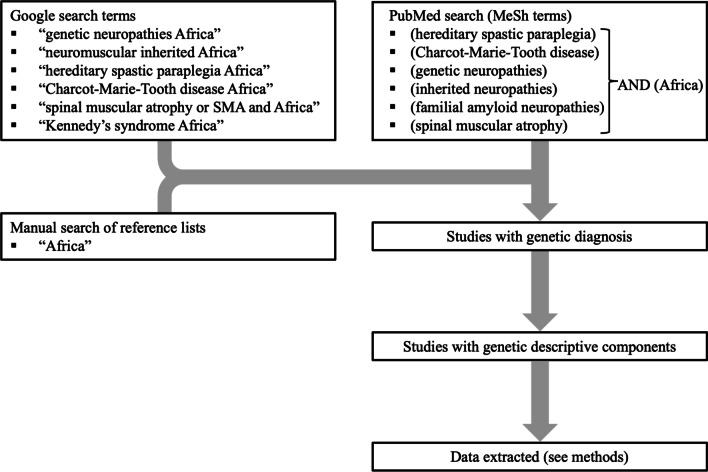
PubMed was searched for relevant articles and manual checking of references and review publications were performed for African-ancestry participants with relevant phenotypes and identified genetic variants. For each case report we extracted phenotype information, inheritance pattern, variant segregation and variant frequency in population controls (including up to date frequencies from the gnomAD database).
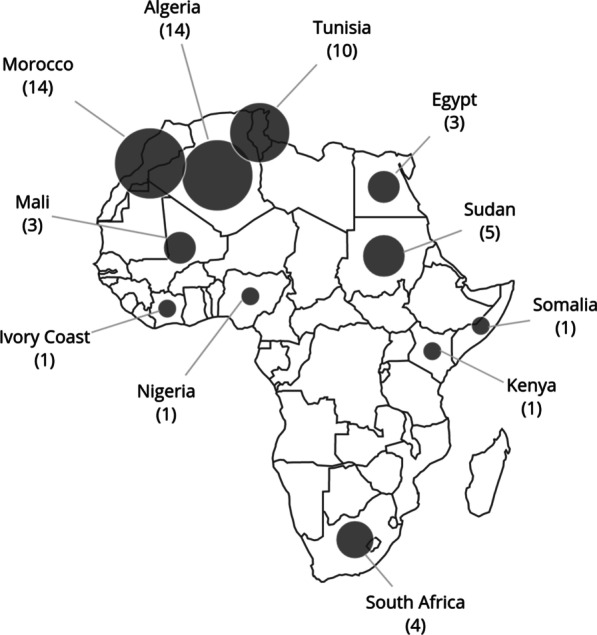
For HSP, 23 reports were found spanning the years 2000-2019 of which 19 related to North Africans, with high consanguinity, and six included sub-Saharan Africans. For CMT, 19 reports spanning years 2002-2021, of which 16 related to North Africans and 3 to sub-Saharan Africans. Most genetic variants had not been previously reported. There were 12 reports spanning years 1999-2020 related to SMN1-SMA caused by homozygous exon 7 ± 8 deletion. Interestingly, the population frequency of heterozygous SMN1-exon 7 deletion mutations appeared 2 × lower in Africans compared to Europeans, in addition to differences in the architecture of the SMN2 locus which may impact SMN1-SMA prognosis.
Overall, genetic data on inherited neuromuscular diseases in sub-Saharan Africa, are sparse. If African patients with rare neuromuscular diseases are to benefit from the expansion in genomics capabilities and therapeutic advancements, then it is critical to document the mutational spectrum of inherited neuromuscular disease in Africa.
Review of genetic variants reported in hereditary spastic paraplegia in Africans Review of genetic variants reported in genetic neuropathies in Africans Review of genetic underpinnings of spinal muscular atrophies in Africans Assessment of pathogenic evidence for candidate variants.
非洲人遗传性神经肌肉疾病的遗传研究一直被忽视。我们旨在总结已发表的数据,并就非洲人遗传性神经病(腓骨肌萎缩症(CMT))、遗传性痉挛性截瘫(HSP)和脊髓性肌萎缩症(SMA)相关的遗传证据进行评论。
在 PubMed 上搜索相关文章,并对非洲血统参与者的相关表型和已确定的遗传变异进行手动检查参考文献和综述出版物。对于每个病例报告,我们提取表型信息、遗传模式、变异分离和人群对照中的变异频率(包括 gnomAD 数据库中的最新频率)。
对于 HSP,发现了 23 份报告,跨度为 2000-2019 年,其中 19 份与北非有关,有很高的近亲结婚率,6 份包括撒哈拉以南非洲人。对于 CMT,发现了 19 份报告,跨度为 2002-2021 年,其中 16 份与北非有关,3 份与撒哈拉以南非洲有关。大多数遗传变异以前都没有报道过。有 12 份报告,跨度为 1999-2020 年,与由纯合子外显子 7±8 缺失引起的 SMN1-SMA 有关。有趣的是,与欧洲人相比,非洲人中杂合子 SMN1-外显子 7 缺失突变的频率低了 2 倍,此外,SMN2 基因座的结构差异也可能影响 SMN1-SMA 的预后。
总体而言,撒哈拉以南非洲遗传性神经肌肉疾病的遗传数据很少。如果要使非洲罕见神经肌肉疾病患者受益于基因组学能力的扩展和治疗进展,那么记录非洲遗传性神经肌肉疾病的突变谱至关重要。
综述非洲人遗传性痉挛性截瘫遗传变异的报道 综述非洲遗传性神经病遗传变异的报道 综述非洲脊髓性肌萎缩症遗传基础的评估候选变异的致病性证据。