Barioni Nicole O, Derakhshan Fatemeh, Tenorio Lopes Luana, Onimaru Hiroshi, Roy Arijit, McDonald Fiona, Scheibli Erika, Baghdadwala Mufaddal I, Heidari Negar, Bharadia Manisha, Ikeda Keiko, Yazawa Itaru, Okada Yasumasa, Harris Michael B, Dutschmann Mathias, Wilson Richard J A
Department of Physiology and Pharmacology, Hotchkiss Brain Institute and Alberta Children's Hospital Research Institute, Cumming School of Medicine, University of Calgary, Calgary, Alberta, Canada.
Department of Physiology, Showa University School of Medicine, Tokyo, Japan.
Sci Adv. 2022 Mar 25;8(12):eabm1444. doi: 10.1126/sciadv.abm1444.
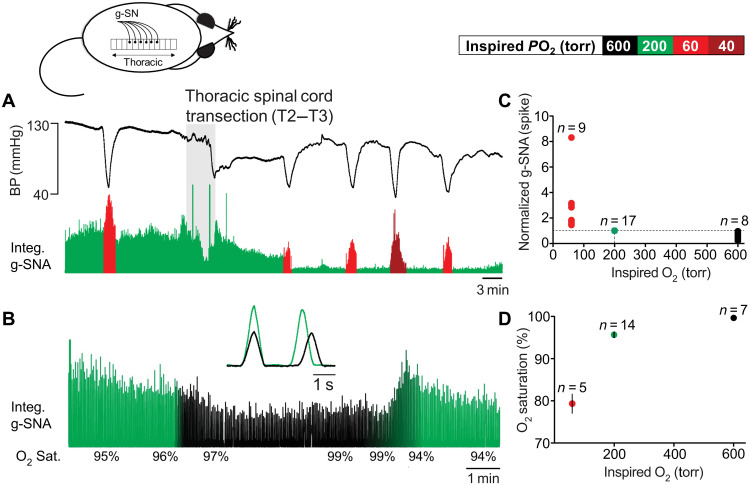
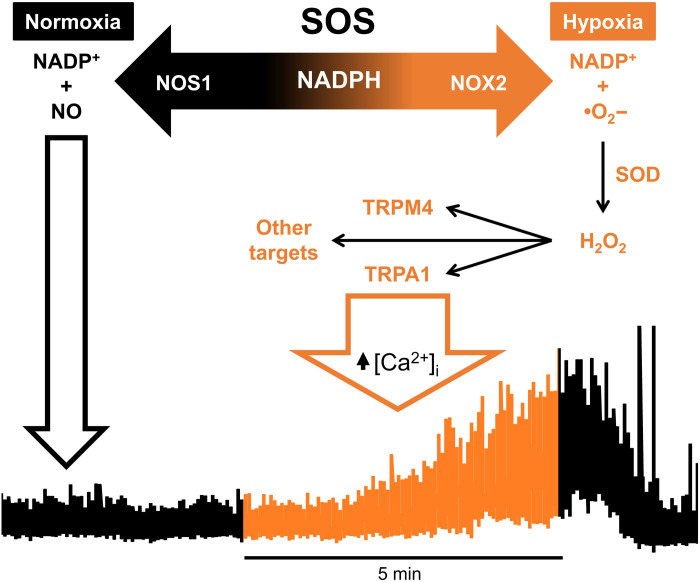
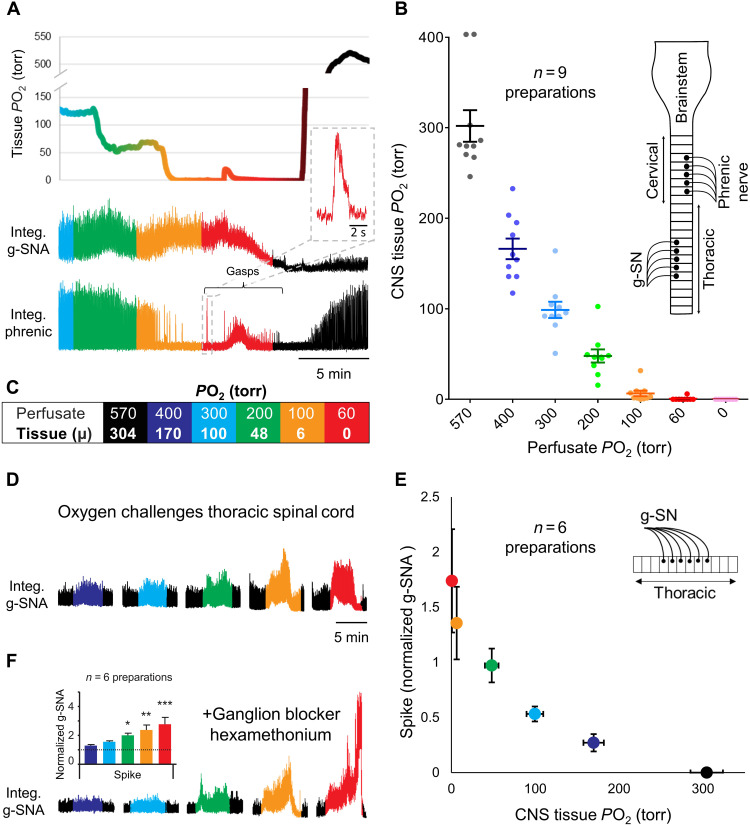
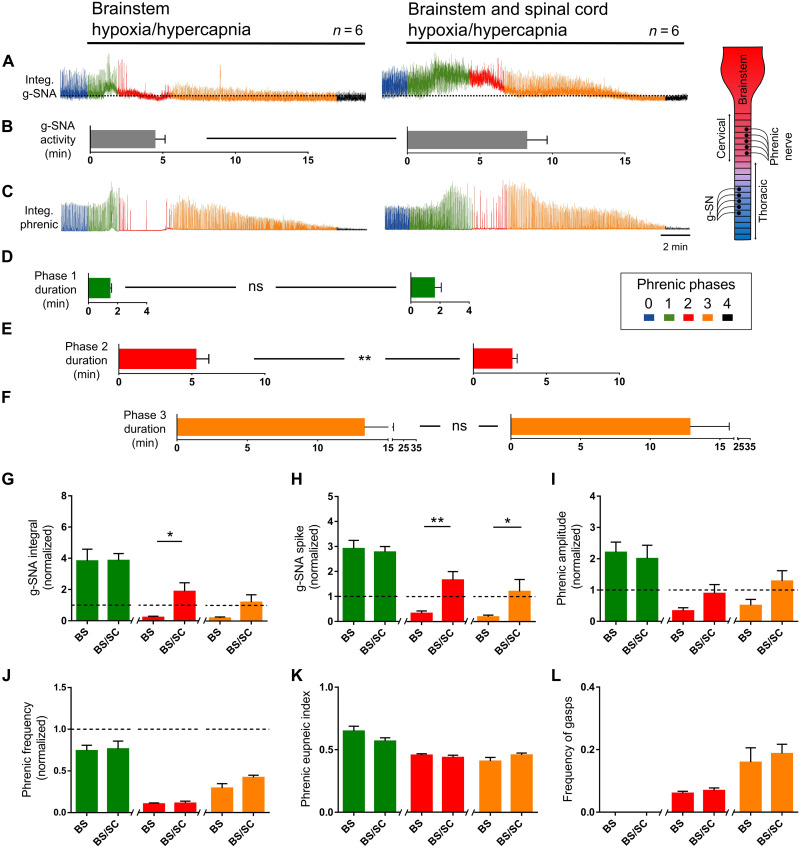
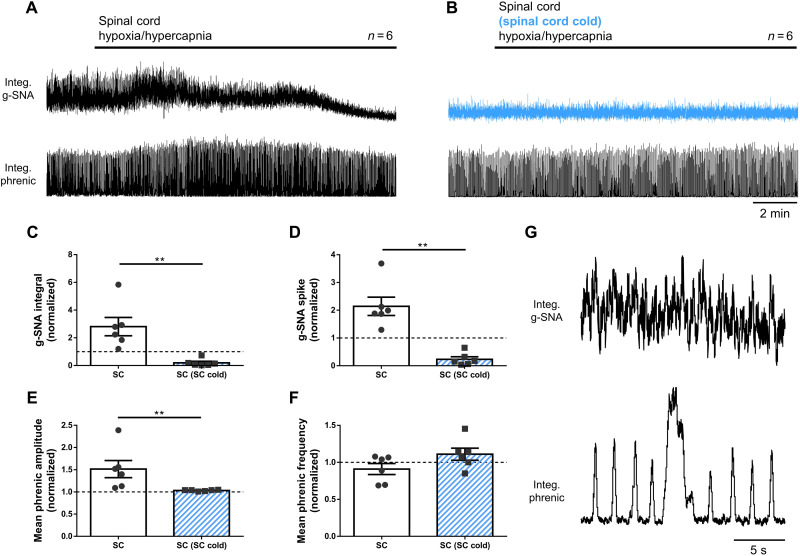
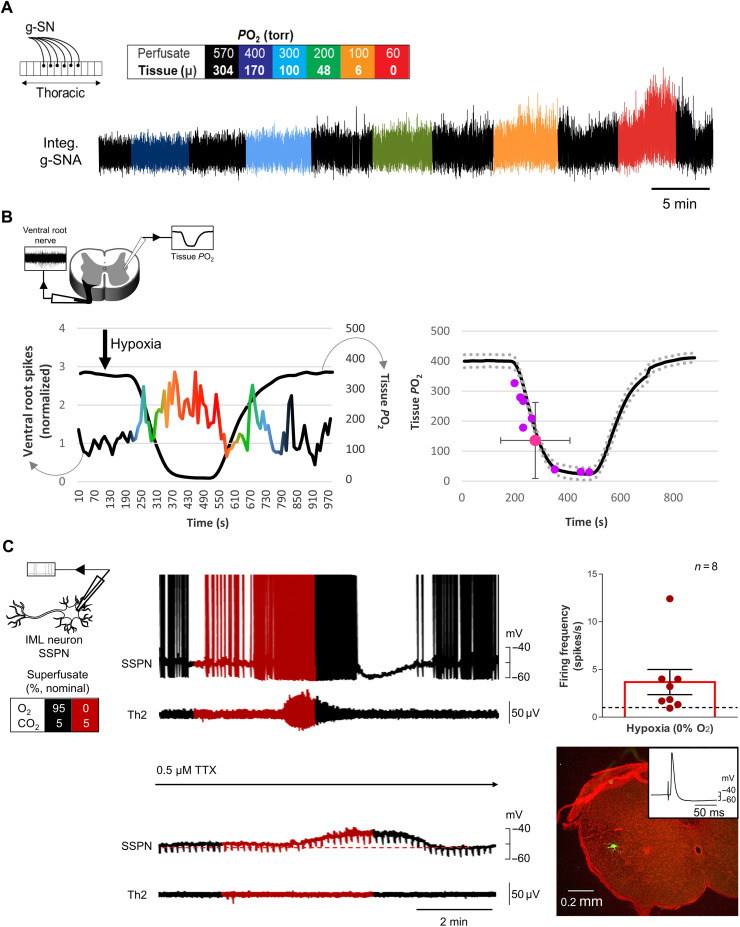
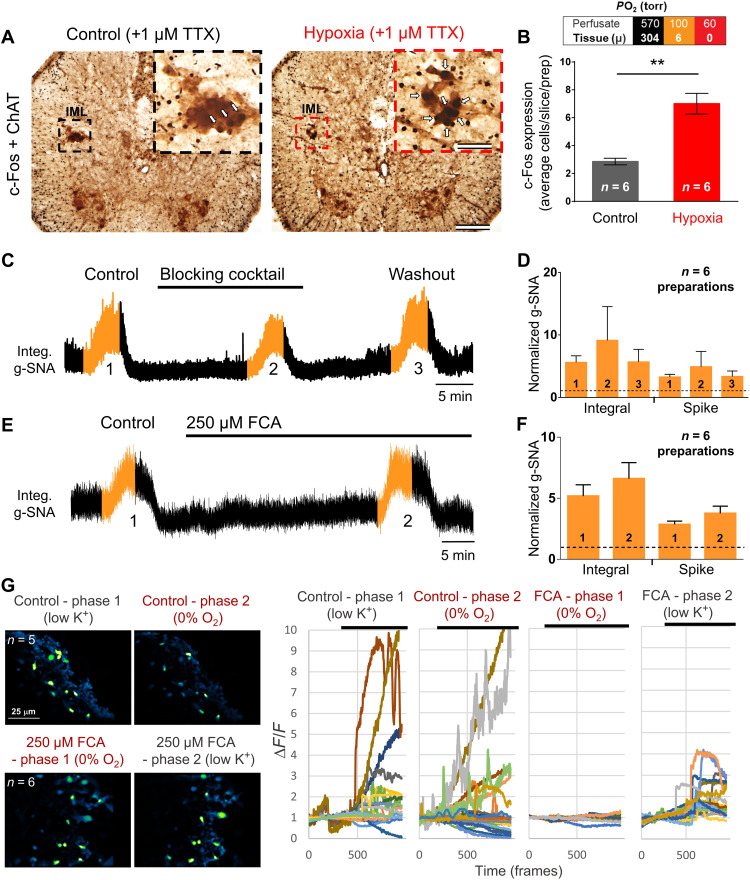
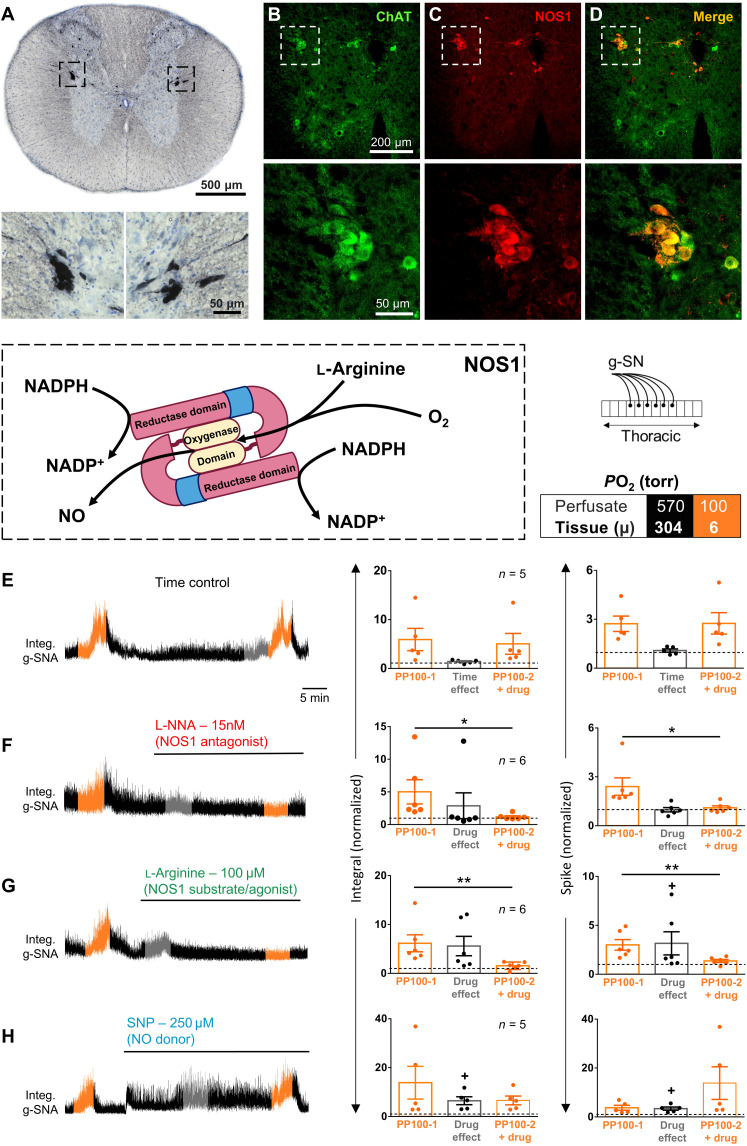
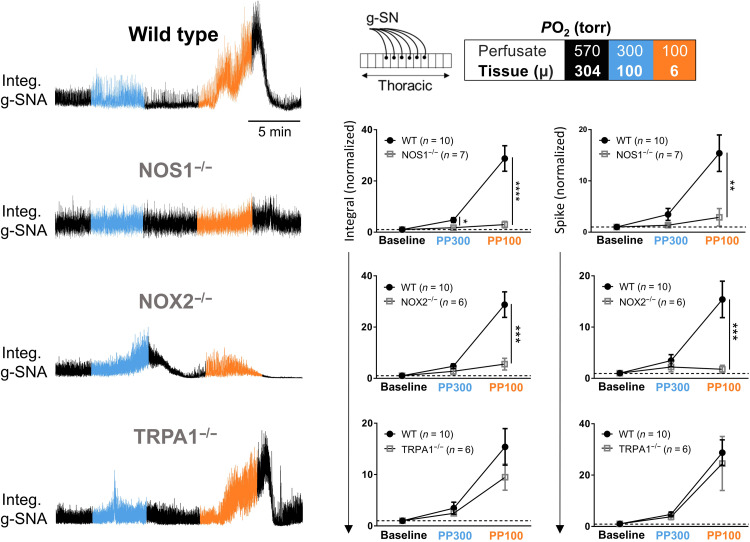
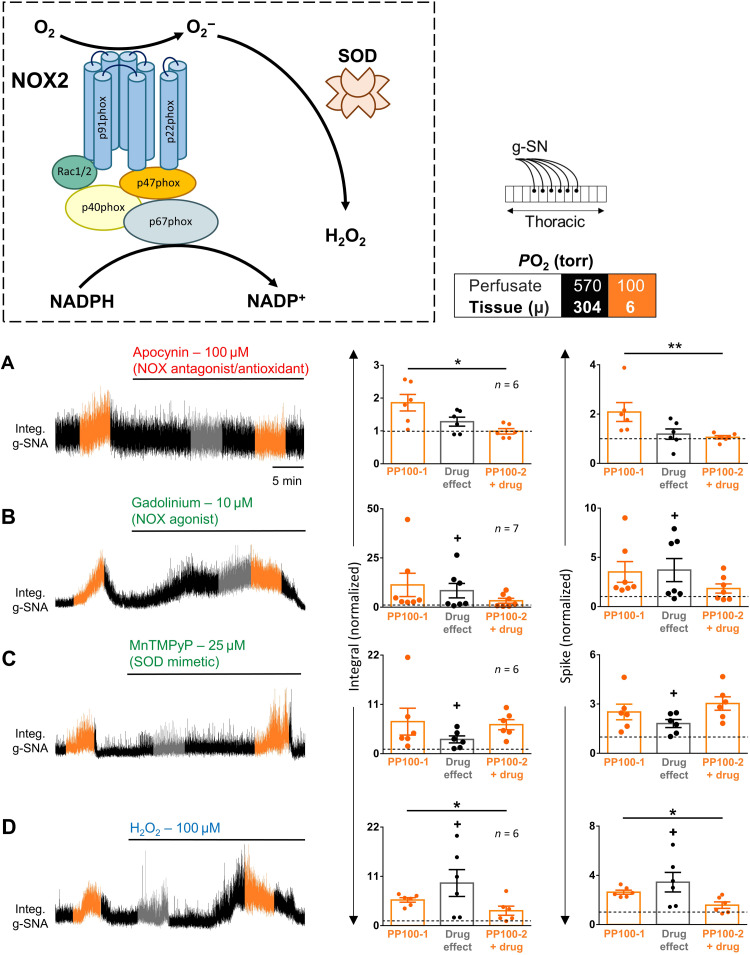
As blood oxygenation decreases (hypoxemia), mammals mount cardiorespiratory responses, increasing oxygen to vital organs. The carotid bodies are the primary oxygen chemoreceptors for breathing, but sympathetic-mediated cardiovascular responses to hypoxia persist in their absence, suggesting additional high-fidelity oxygen sensors. We show that spinal thoracic sympathetic preganglionic neurons are excited by hypoxia and silenced by hyperoxia, independent of surrounding astrocytes. These spinal oxygen sensors (SOS) enhance sympatho-respiratory activity induced by CNS asphyxia-like stimuli, suggesting they bestow a life-or-death advantage. Our data suggest the SOS use a mechanism involving neuronal nitric oxide synthase 1 (NOS1) and nicotinamide adenine dinucleotide phosphate (NADPH) oxidase (NOX). We propose NOS1 serves as an oxygen-dependent sink for NADPH in hyperoxia. In hypoxia, NADPH catabolism by NOS1 decreases, increasing availability of NADPH to NOX and launching reactive oxygen species-dependent processes, including transient receptor potential channel activation. Equipped with this mechanism, SOS are likely broadly important for physiological regulation in chronic disease, spinal cord injury, and cardiorespiratory crisis.
随着血液氧合作用降低(低氧血症),哺乳动物会产生心肺反应,增加对重要器官的氧气供应。颈动脉体是呼吸的主要氧化学感受器,但在其缺失的情况下,交感神经介导的对缺氧的心血管反应仍然存在,这表明存在其他高保真氧传感器。我们发现,脊髓胸段交感神经节前神经元受到缺氧刺激而兴奋,受到高氧刺激则沉默,且与周围星形胶质细胞无关。这些脊髓氧传感器(SOS)增强了由中枢神经系统类窒息刺激诱导的交感呼吸活动,表明它们赋予了生死攸关的优势。我们的数据表明,SOS使用了一种涉及神经元型一氧化氮合酶1(NOS1)和烟酰胺腺嘌呤二核苷酸磷酸(NADPH)氧化酶(NOX)的机制。我们提出,在高氧状态下,NOS1作为NADPH的氧依赖性汇。在缺氧状态下,NOS1对NADPH的分解代谢减少,增加了NADPH对NOX的可用性,并启动了依赖活性氧的过程,包括瞬时受体电位通道的激活。具备这种机制后,SOS可能在慢性疾病、脊髓损伤和心肺危机的生理调节中具有广泛的重要性。