Department of Orthopaedic Surgery, Osaka City University Graduate School of Medicine, Osaka 545-8585, Japan.
Medicina (Kaunas). 2022 Mar 4;58(3):384. doi: 10.3390/medicina58030384.
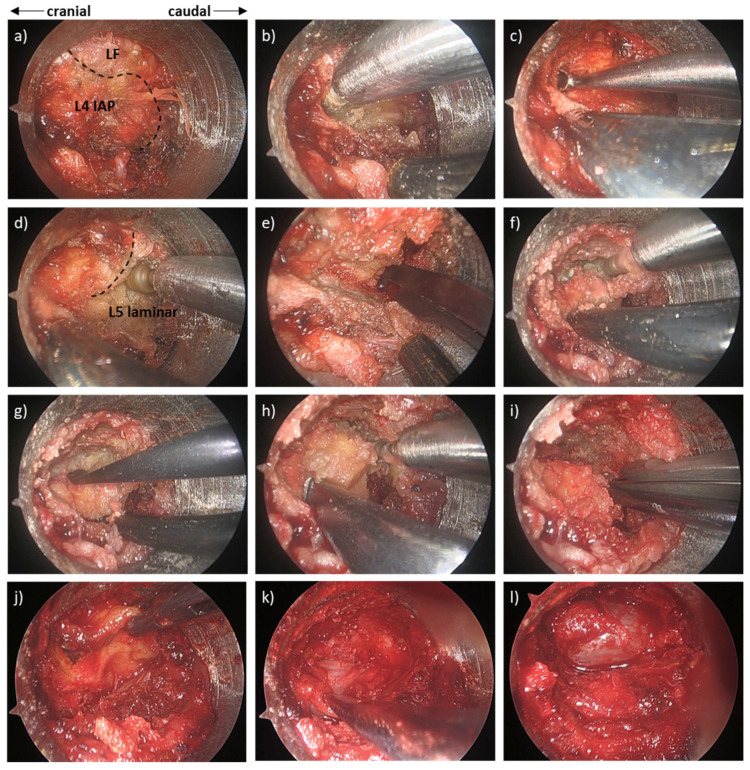
Lumbar spinal stenosis (LSS) is a common disease in the elderly, mostly due to degenerative changes in the lumbar spinal complex. Decompression surgery is the standard surgical treatment for LSS. Classically, total laminectomy-which involves resection of the spinous process, entire laminae and medial facet-has been the standard decompression technique; however, it can cause post-surgical instability. To overcome this disadvantage, various minimally invasive techniques that preserve the stabilization structures of the spine have been developed, and surgeons have begun to re-evaluate decompression surgery from the standpoint of reduced invasiveness and cost. More than two decades have passed since the introduction of microendoscopic spine surgery, and studies continue to shed light on its advantages and limitations as new knowledge becomes available. This article is a narrative review of the available literature, along with authors' experience, regarding the indications, surgical techniques, clinical outcomes, and limitations/complications of microendoscopic decompression for LSS.
腰椎管狭窄症(LSS)是老年人的常见病,主要是由于腰椎复合体的退行性改变引起的。减压手术是 LSS 的标准手术治疗方法。经典的全椎板切除术(包括棘突、整个椎板和内侧关节突的切除)一直是标准的减压技术;但它可能导致术后不稳定。为了克服这一缺点,已经开发了各种保留脊柱稳定结构的微创技术,外科医生开始从微创和成本的角度重新评估减压手术。自从微内窥镜脊柱手术问世以来已经过去了二十多年,随着新知识的出现,研究继续揭示其优缺点和局限性。本文对现有文献进行了叙述性综述,并结合作者的经验,介绍了微内窥镜减压治疗 LSS 的适应证、手术技术、临床结果以及局限性/并发症。