Zhai Lei, Gao Lingxiao, Wang Ziying, Dai Kejie, Wu Shuai, Mu Xiaojing
School of Mechanical Engineering, Hebei University of Technology, Tianjin 300401, China.
School of Electrical and Mechanical Engineering, Pingdingshan University, Pingdingshan 467000, China.
Nanomaterials (Basel). 2022 Mar 11;12(6):933. doi: 10.3390/nano12060933.
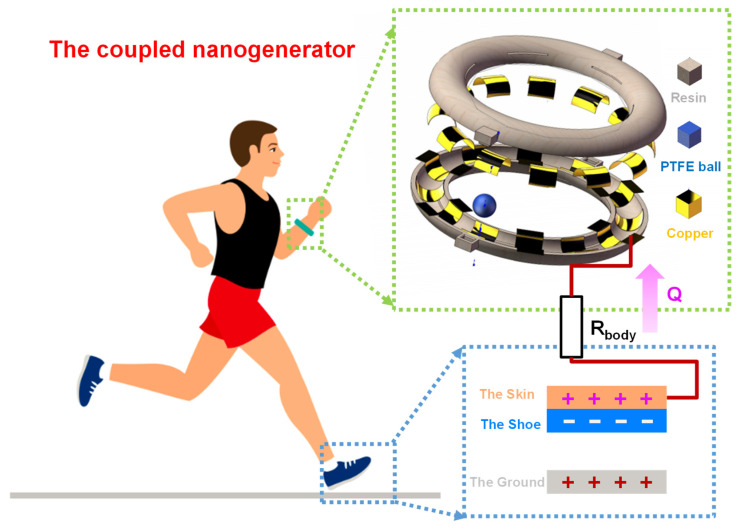
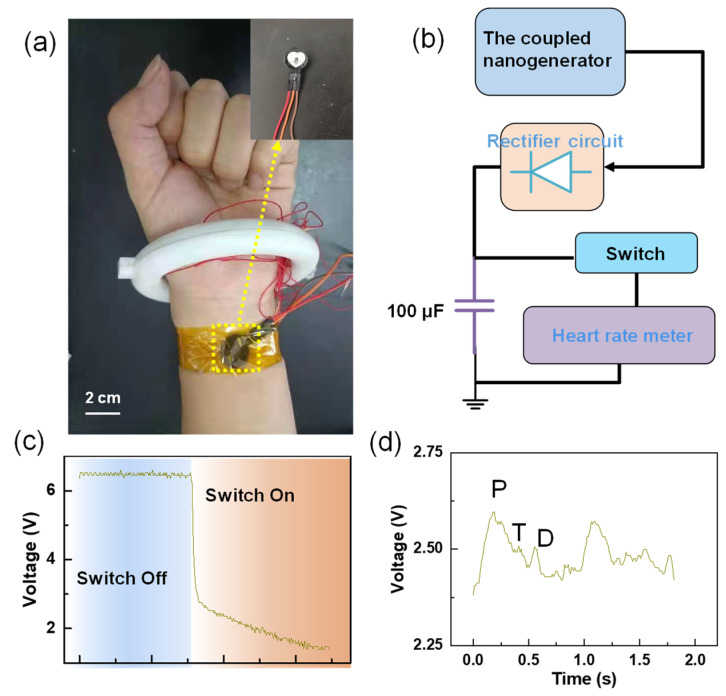
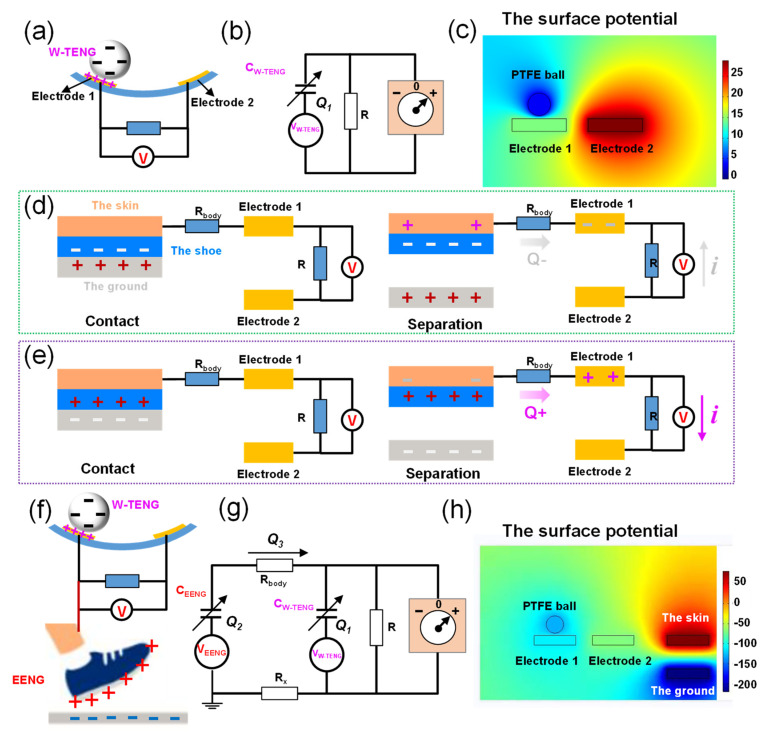
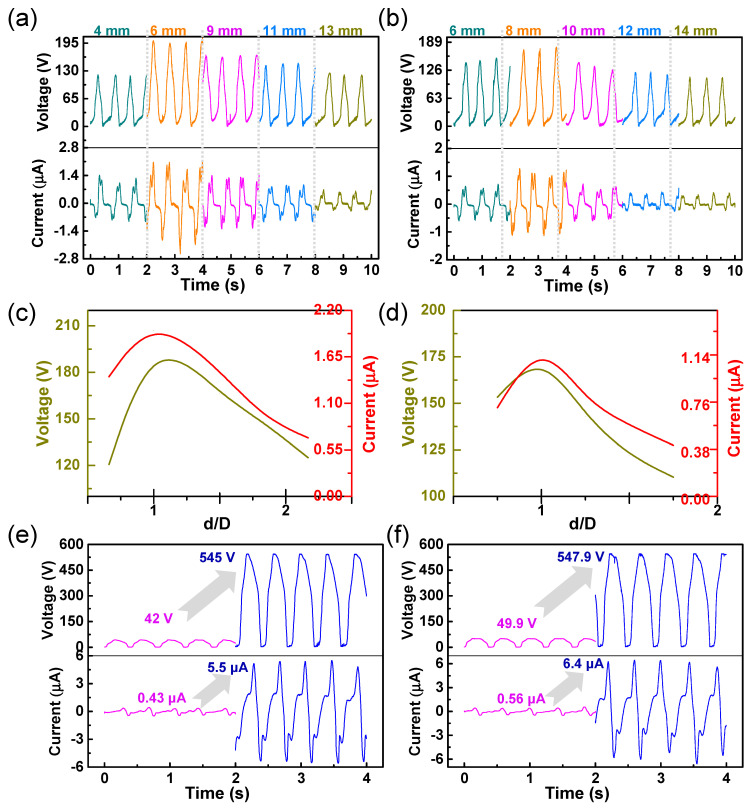
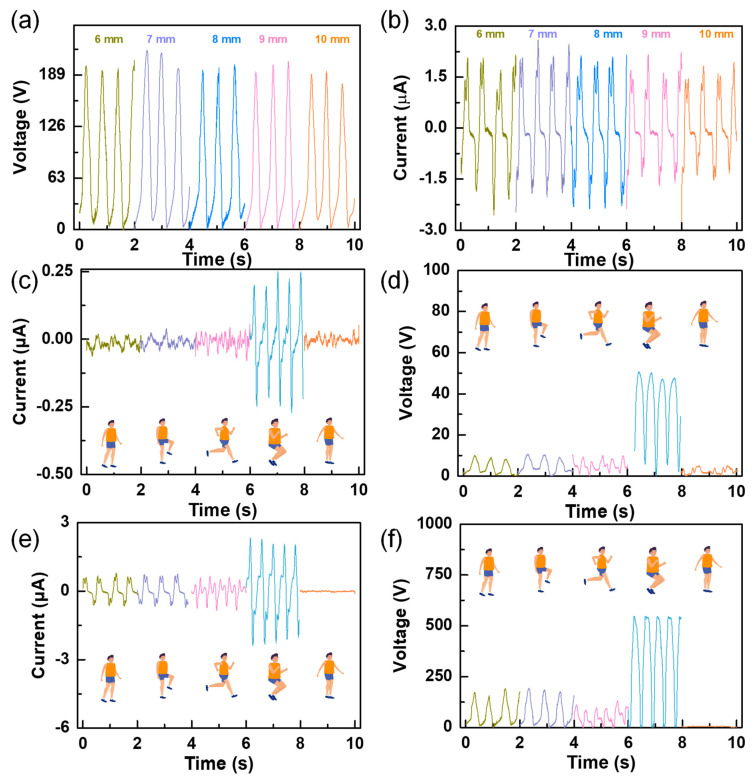
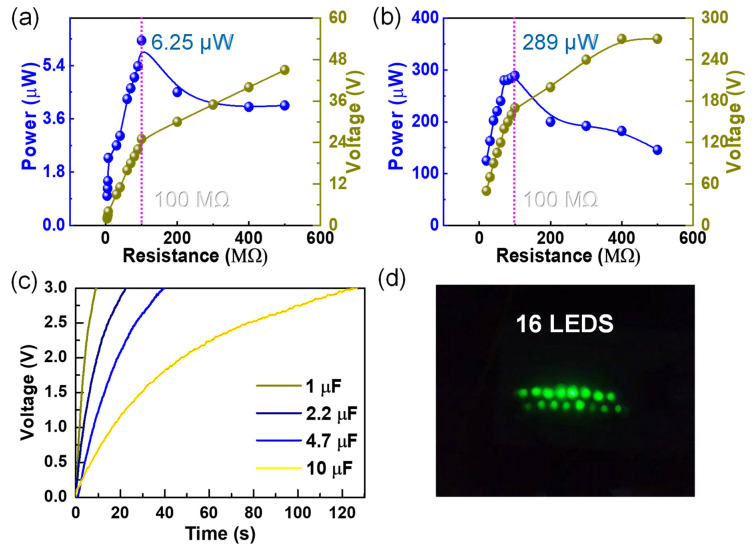
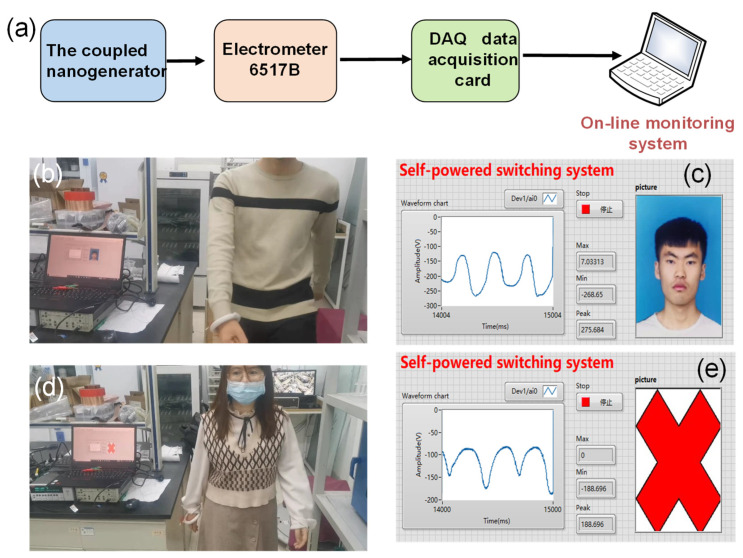
Energy-harvesting devices based on a single energy conversion mechanism generally have a low output and low conversion efficiency. To solve this problem, an energy harvester coupled with a triboelectric mechanism and electrostatic mechanism for biomechanical energy harvesting is presented. The output performances of the device coupled with a triboelectric mechanism and electrostatic mechanism were systematically studied through principle analysis, simulation, and experimental demonstration. Experiments showed that the output performance of the device was greatly improved by coupling the electrostatic induction mechanisms, and a sustainable and enhanced peak power of approximately 289 μW was produced when the external impedance was 100 MΩ, which gave over a 46-fold enhancement to the conventional single triboelectric conversion mechanism. Moreover, it showed higher resolution for motion states compared with the conventional triboelectric nanogenerator, and can precisely and constantly monitor and distinguish various motion states, including stepping, walking, running, and jumping. Furthermore, it can charge a capacitor of 10 μF to 3 V within 2 min and light up 16 LEDs. On this basis, a self-powered access control system, based on gait recognition, was successfully demonstrated. This work proposes a novel and cost-effective method for biomechanical energy harvesting, which provides a more convenient choice for human motion status monitoring and can be widely used in personnel identification systems.
基于单一能量转换机制的能量收集装置通常输出较低且转换效率低下。为解决此问题,本文提出了一种结合摩擦电机制和静电机制用于生物机械能收集的能量收集器。通过原理分析、模拟和实验论证,系统研究了结合摩擦电机制和静电机制的该装置的输出性能。实验表明,通过耦合静电感应机制,该装置的输出性能得到了极大提升,当外部阻抗为100 MΩ时,产生了约289 μW的可持续增强峰值功率,相较于传统单一摩擦电转换机制提高了46倍以上。此外,与传统摩擦电纳米发电机相比,它对运动状态具有更高的分辨率,能够精确且持续地监测和区分包括踏步、行走、跑步和跳跃在内的各种运动状态。此外,它能够在2分钟内将10 μF的电容器充电至3 V并点亮16个发光二极管。在此基础上,成功展示了一种基于步态识别的自供电门禁系统。这项工作提出了一种新颖且经济高效的生物机械能收集方法,为人体运动状态监测提供了更便捷的选择,并可广泛应用于人员识别系统。