Torrado-Salmeron Carlos, Laguna Almudena, Guillén Alicia, Saro Miguel G, Matji Antonio, Torrado Juan J, Serrano Dolores R
Department of Pharmaceutics and Food Technology, Complutense University of Madrid, 28240 Madrid, Spain.
Galenical and Industrial Pharmaceutical Institute, Complutense University of Madrid, 28240 Madrid, Spain.
Pharmaceutics. 2022 Mar 17;14(3):658. doi: 10.3390/pharmaceutics14030658.
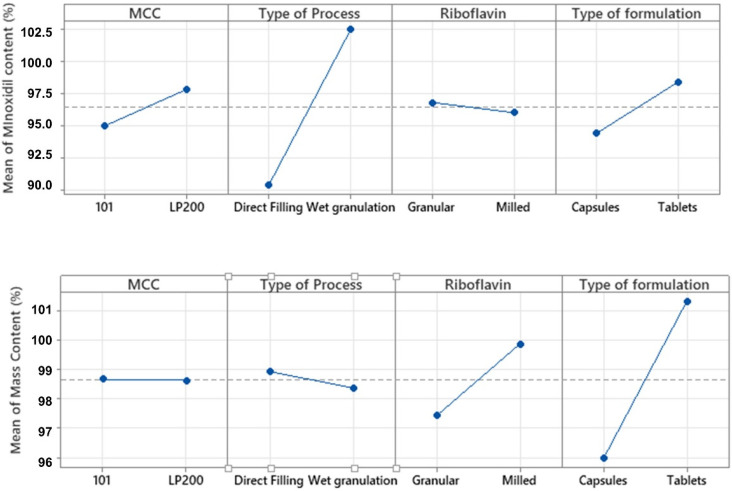
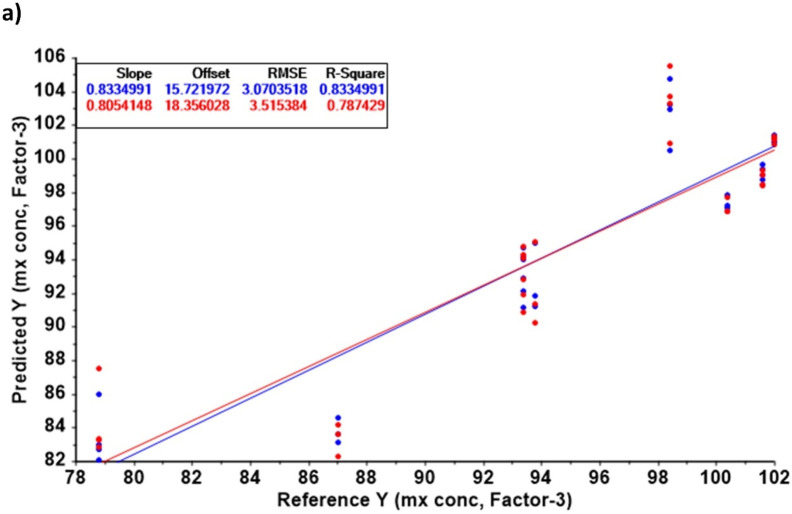
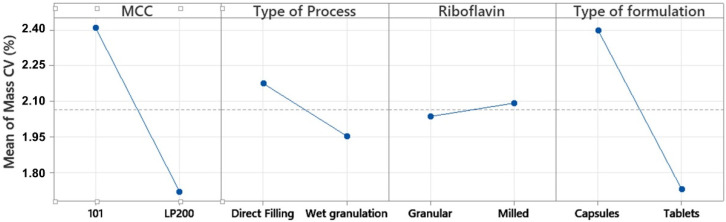
Low amounts of minoxidil in oral dosage forms are commonly prescribed as anti-alopecic pharmacological treatments. Side effects are usually related to individual susceptibility. However, poor drug content and mass uniformity can lead to a potential risk of overdosing, and higher chances to experience side effects. The impacts of four formulation variables on drug content and mass pharmaceutical quality attributes were studied with an experimental design at two levels. The first variable (A) was the particle size of the direct compression microcrystalline cellulose (MCC) used as a diluent (Avicel PH 101 vs. LP 200). The second variable (B) was the type of production process (direct filling vs. wet granulation). The third variable (C) was the particle size of riboflavin added as a color mixture indicator agent (granular vs. milled). The fourth variable (D) was the type of oral solid dosage form (capsule vs. tablet). In half of the formulations, the mean minoxidil content and minoxidil uniformity were out of the specification limits of the Pharmacopoeia, demonstrating the importance of carefully selecting the excipients as well as the utilized process when manufacturing low oral dosage minoxidil formulations. The best minoxidil content uniformity was achieved when using MCC LP 200, wet granulation, granular riboflavin, and capsules. However, tablets are the recommended dosage form when utilizing Avicel PH 101 or direct filling. Meeting these criteria, the content and mass uniformity are more likely to meet the specification limits of the Pharmacopeia. Techniques such as NIR spectroscopy should be implemented to control the quality of extemporaneous compounding formulations with a low dose of active ingredient.
口服剂型中低剂量的米诺地尔通常被用作抗脱发的药物治疗。副作用通常与个体易感性有关。然而,药物含量低和质量均匀性差可能导致过量用药的潜在风险以及出现副作用的几率增加。采用两水平的实验设计研究了四个制剂变量对药物含量和质量属性的影响。第一个变量(A)是用作稀释剂的直接压片微晶纤维素(MCC)的粒径(Avicel PH 101与LP 200)。第二个变量(B)是生产工艺类型(直接填充与湿法制粒)。第三个变量(C)是作为颜色混合指示剂添加的核黄素的粒径(颗粒状与研磨状)。第四个变量(D)是口服固体剂型的类型(胶囊与片剂)。在一半的制剂中,米诺地尔的平均含量和均匀度超出了药典的规格限度,这表明在生产低剂量口服米诺地尔制剂时,仔细选择辅料以及所采用的工艺非常重要。当使用MCC LP 200、湿法制粒、颗粒状核黄素和胶囊时,可实现最佳的米诺地尔含量均匀度。然而,在使用Avicel PH 101或直接填充时,推荐的剂型是片剂。满足这些标准时,含量和质量均匀度更有可能符合药典的规格限度。应采用近红外光谱等技术来控制低剂量活性成分的临时调配制剂的质量。