Advanced Research Center on Electronic Systems "Ercole De Castro" (ARCES), University of Bologna, 40136 Bologna, Italy.
Department of Electrical, Electronic and Information Engineering (DEI), University of Bologna, 40136 Bologna, Italy.
Sensors (Basel). 2022 Mar 14;22(6):2229. doi: 10.3390/s22062229.
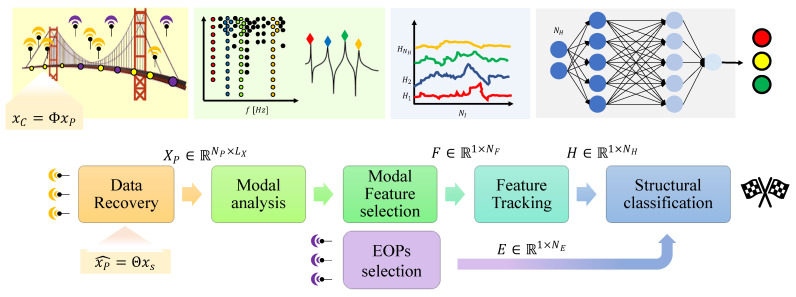
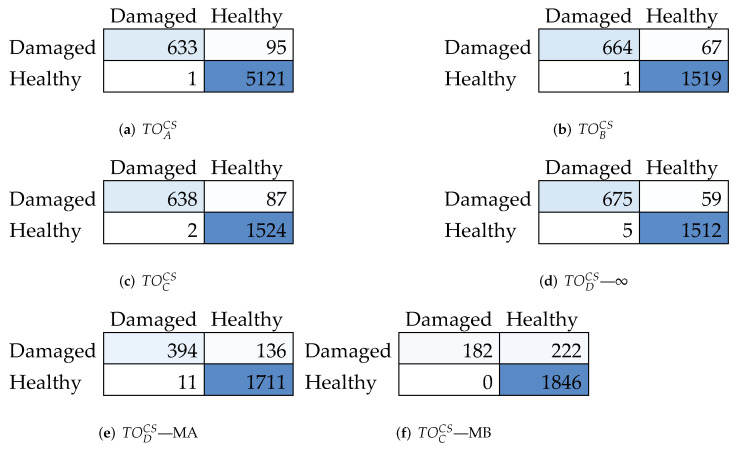
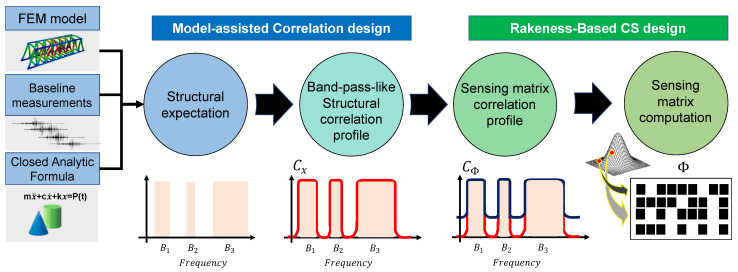
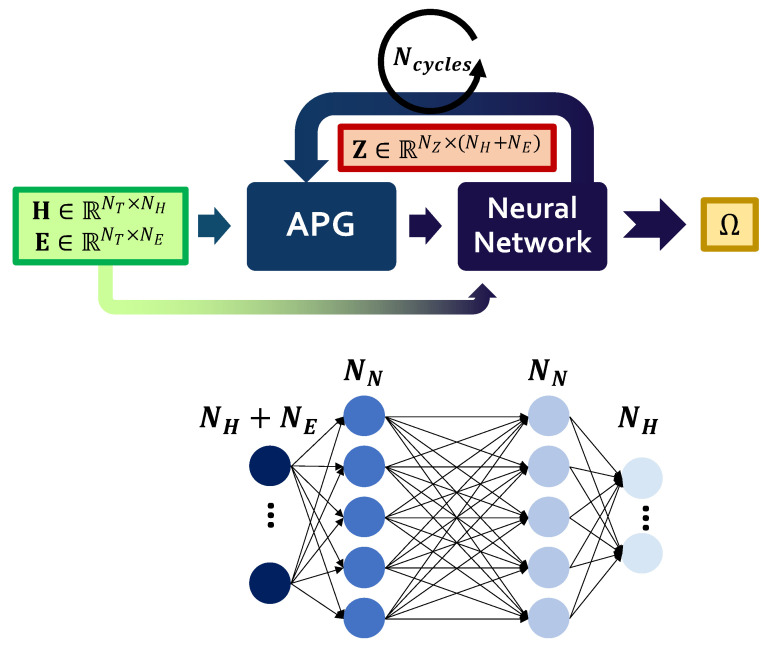
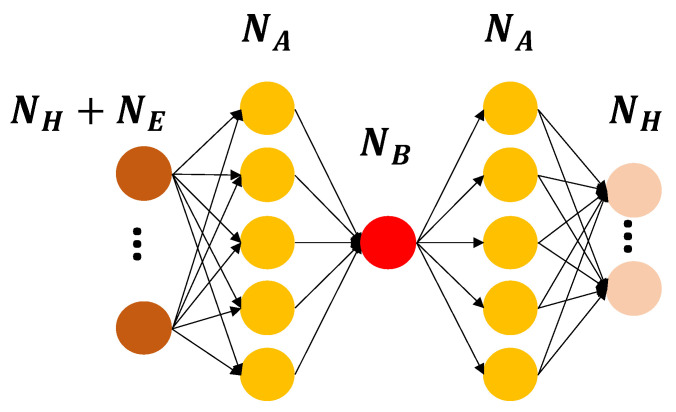
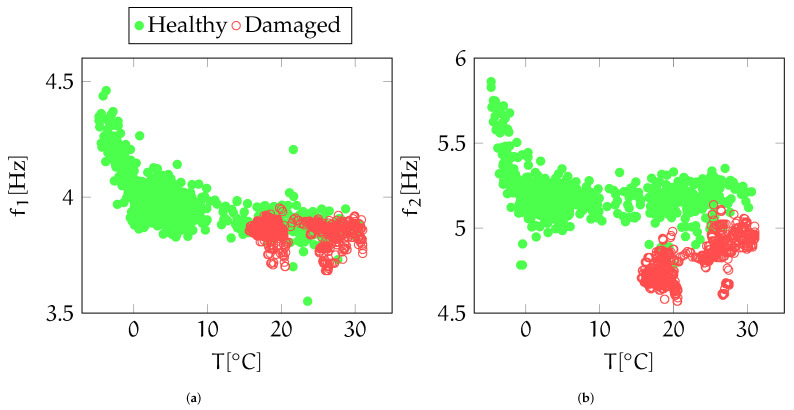
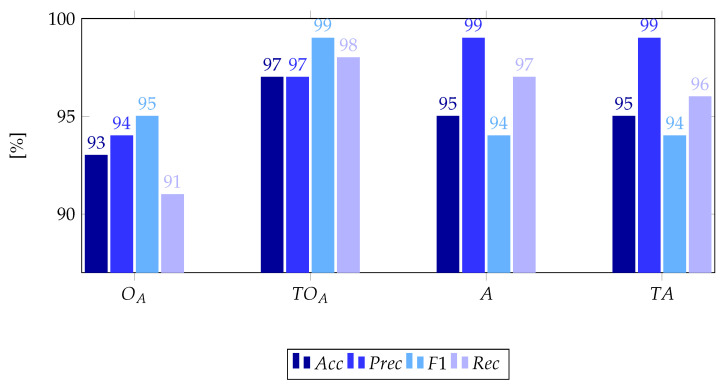
Artificial Intelligence applied to Structural Health Monitoring (SHM) has provided considerable advantages in the accuracy and quality of the estimated structural integrity. Nevertheless, several challenges still need to be tackled in the SHM field, which extended the monitoring process beyond the mere data analytics and structural assessment task. Besides, one of the open problems in the field relates to the communication layer of the sensor networks since the continuous collection of long time series from multiple sensing units rapidly consumes the available memory resources, and requires complicated protocol to avoid network congestion. In this scenario, the present work presents a comprehensive framework for vibration-based diagnostics, in which data compression techniques are firstly introduced as a means to shrink the dimension of the data to be managed through the system. Then, neural network models solving binary classification problems were implemented for the sake of damage detection, also encompassing the influence of environmental factors in the evaluation of the structural status. Moreover, the potential degradation induced by the usage of low cost sensors on the adopted framework was evaluated: Additional analyses were performed in which experimental data were corrupted with the noise characterizing MEMS sensors. The proposed solutions were tested with experimental data from the Z24 bridge use case, proving that the amalgam of data compression, optimized (i.e., low complexity) machine learning architectures and environmental information allows to attain high classification scores, i.e., accuracy and precision greater than 96% and 95%, respectively.
人工智能在结构健康监测(SHM)中的应用在估计结构完整性的准确性和质量方面提供了相当大的优势。然而,SHM 领域仍需要解决几个挑战,这些挑战将监测过程扩展到了数据分析和结构评估任务之外。此外,该领域的一个开放性问题涉及传感器网络的通信层,因为从多个传感单元连续采集长时间序列会迅速消耗可用的内存资源,并需要复杂的协议来避免网络拥塞。在这种情况下,本工作提出了一个基于振动的诊断的综合框架,其中首先引入了数据压缩技术作为通过系统管理数据的维度缩小的手段。然后,为了进行损伤检测,实现了用于解决二进制分类问题的神经网络模型,同时也考虑了环境因素对结构状态评估的影响。此外,还评估了在采用的框架中使用低成本传感器可能引起的潜在退化:进行了附加分析,其中用 MEMS 传感器的噪声对实验数据进行了损坏。所提出的解决方案已通过 Z24 桥用例的实验数据进行了测试,证明了数据压缩、优化(即低复杂度)机器学习架构和环境信息的融合可以达到高分类分数,即准确性和精度均大于 96%和 95%。