Li Jiannan, Wang Xinmeng, Yuan Bocong
Institute of Advanced Studies in Humanities and Social Sciences, Beijing Normal University, Zhuhai, China.
School of Tourism Management, Sun Yat-Sen University, West Xingang Rd. 135, Guangzhou, 510275, China.
Arch Public Health. 2022 Mar 25;80(1):93. doi: 10.1186/s13690-022-00858-7.
As a multi-ethnic country, the US is increasingly concerned about ethnic minorities facing disproportionate health risks of the coronavirus disease 2019 (COVID-19) pandemic. This study attempted to provide a macro picture of the associations between population distribution by ethnicity and the vulnerability to COVID-19 in terms of infection risk and vaccination coverage in the US.
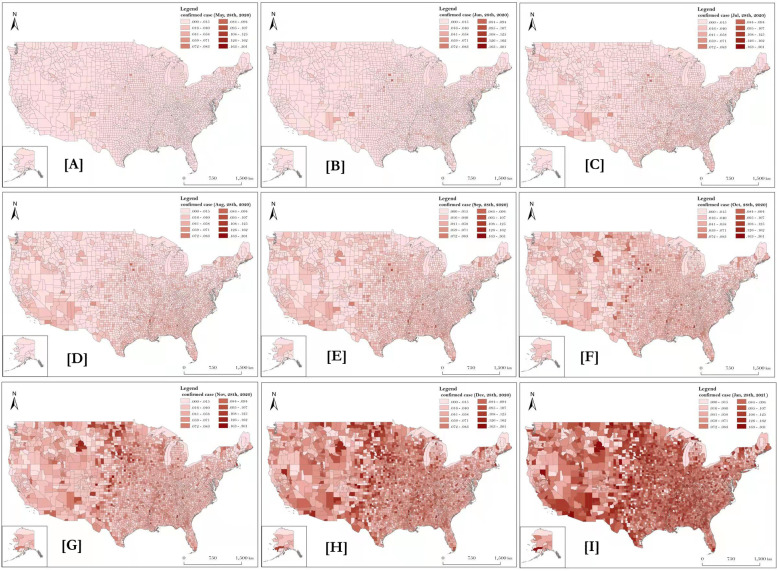
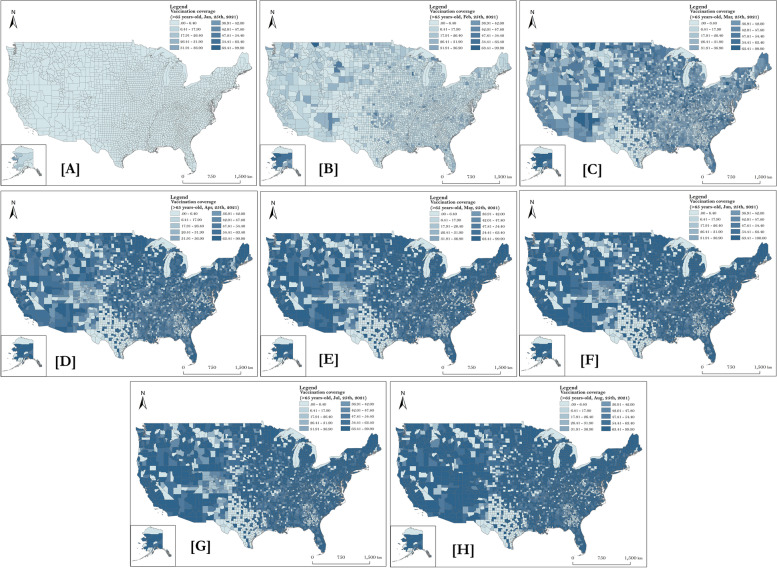
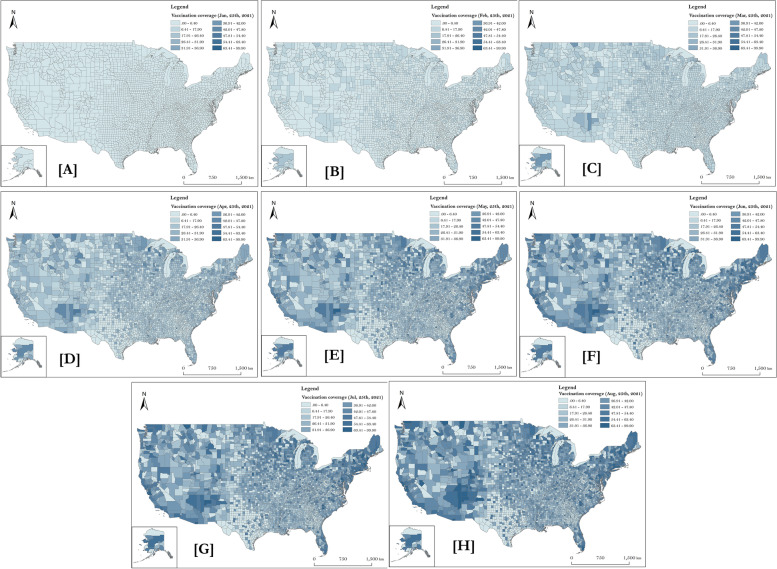
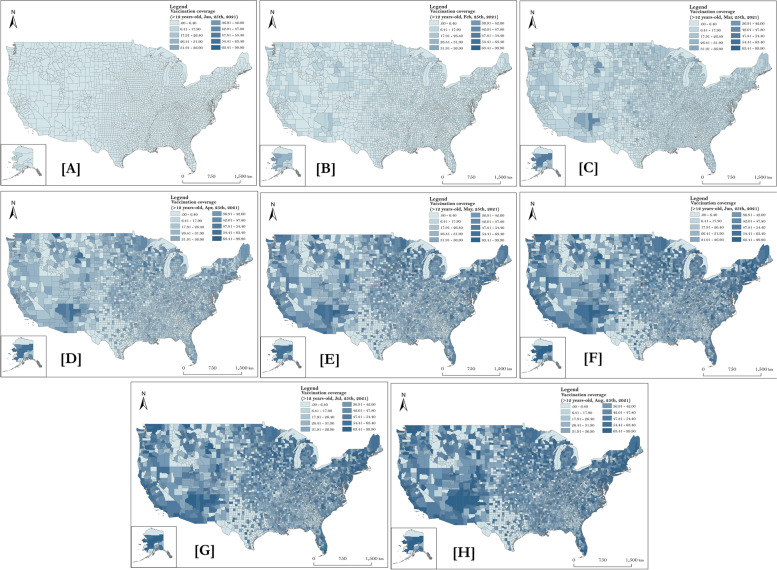
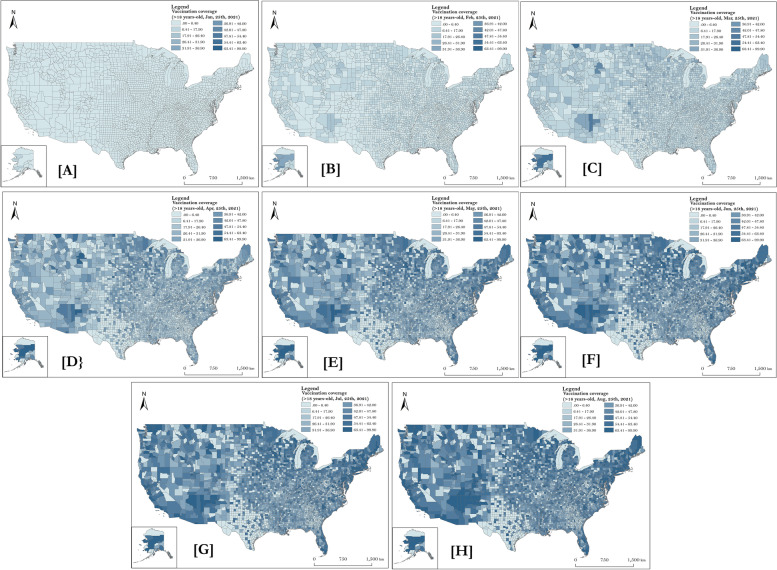
This study used multi-source data from New York Times, County Health Rankings & Roadmap Program (2020), and the Center for Disease Control and Prevention. Multiple linear regressions were performed at equidistant time points (May 2020-Jan 2021, with one-month interval between each time point) to reveal the association between population distribution by ethnicities and the infection risk and the dynamics over time. Besides, multiple linear regressions were also conducted at equidistant time points (Jan 2021-Aug 2021) to reveal whether health disparities between ethnicities would hold true for the COVID-19 vaccination coverage (in total population, and among those > 12, > 18, and > 65 years of age).
Both the COVID-19 confirmed cases (population standardized) and the vaccination coverage (in total population, and among those > 12, > 18, and > 65 years of age) were significantly associated with the population distribution by ethnicity (e.g., population percentage of ethnic minorities). Above associations were statistically significant for non-Hispanic blacks and Hispanics, but not for Asian Americans.
A proportion of socioeconomically-disadvantageous population could be a key intuitive reflection of the risk level of this public health crisis. The policy focusing on the vulnerable population is important in this pandemic.
作为一个多民族国家,美国越来越关注少数族裔在2019冠状病毒病(COVID-19)大流行中面临不成比例的健康风险。本研究试图从感染风险和疫苗接种覆盖率方面,提供美国按种族划分的人口分布与COVID-19易感性之间关联的宏观图景。
本研究使用了来自《纽约时报》、县卫生排名与路线图计划(2020年)以及疾病控制与预防中心的多源数据。在等距时间点(2020年5月至2021年1月,每个时间点间隔一个月)进行多元线性回归,以揭示按种族划分的人口分布与感染风险之间的关联以及随时间的动态变化。此外,还在等距时间点(2021年1月至2021年8月)进行多元线性回归,以揭示种族之间的健康差异在COVID-19疫苗接种覆盖率(总人口以及12岁以上、18岁以上和65岁以上人群)方面是否成立。
COVID-19确诊病例(人口标准化)和疫苗接种覆盖率(总人口以及12岁以上、18岁以上和65岁以上人群)均与按种族划分的人口分布(例如少数族裔人口百分比)显著相关。上述关联在非西班牙裔黑人和西班牙裔中具有统计学意义,但在亚裔美国人中不具有统计学意义。
一部分社会经济弱势群体可能是这场公共卫生危机风险水平的关键直观反映。在这场大流行中,关注弱势群体的政策很重要。