Wu Sizhong, Huang Yanchao, Selby Christopher P, Gao Meng, Sancar Aziz, Hu Jinchuan
Shanghai Fifth People's Hospital, Fudan University, and Shanghai Key Laboratory of Medical Epigenetics, International Co-laboratory of Medical Epigenetics and Metabolism (Ministry of Science and Technology), Institutes of Biomedical Sciences, Fudan University, Shanghai, China.
Department of Biochemistry and Biophysics, School of Medicine, University of North Carolina, Chapel Hill, North Carolina, USA.
J Biol Chem. 2022 May;298(5):101863. doi: 10.1016/j.jbc.2022.101863. Epub 2022 Mar 23.
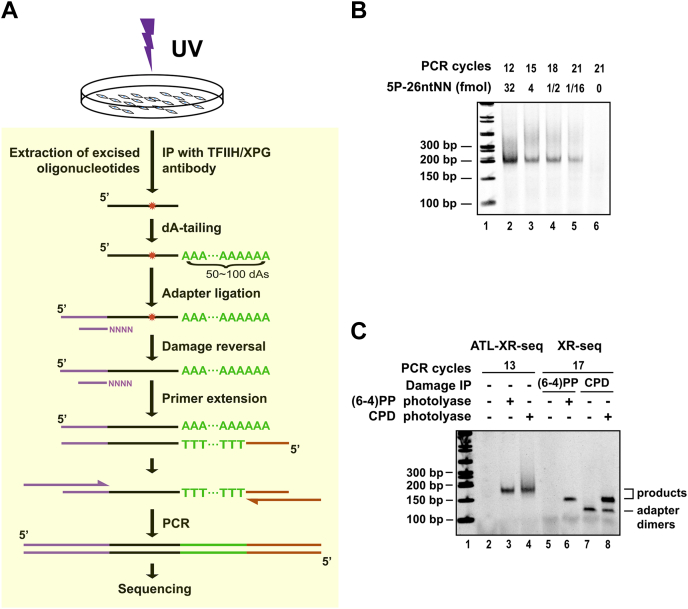
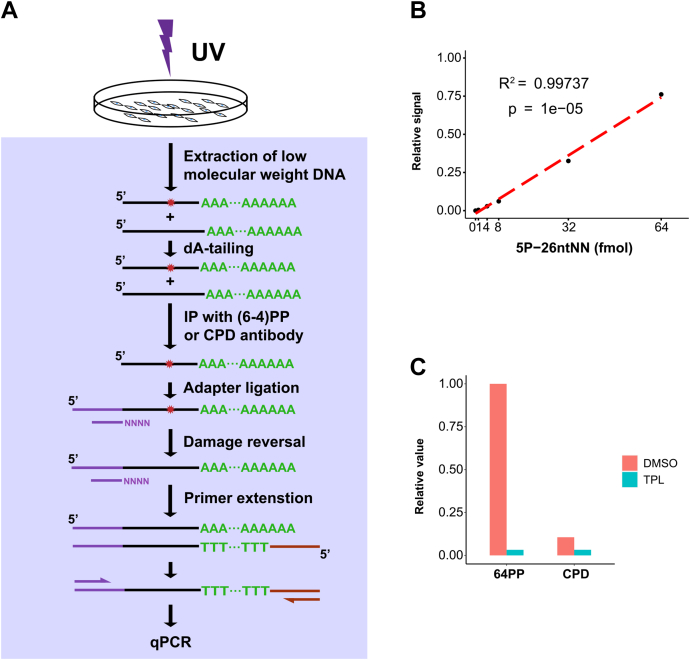
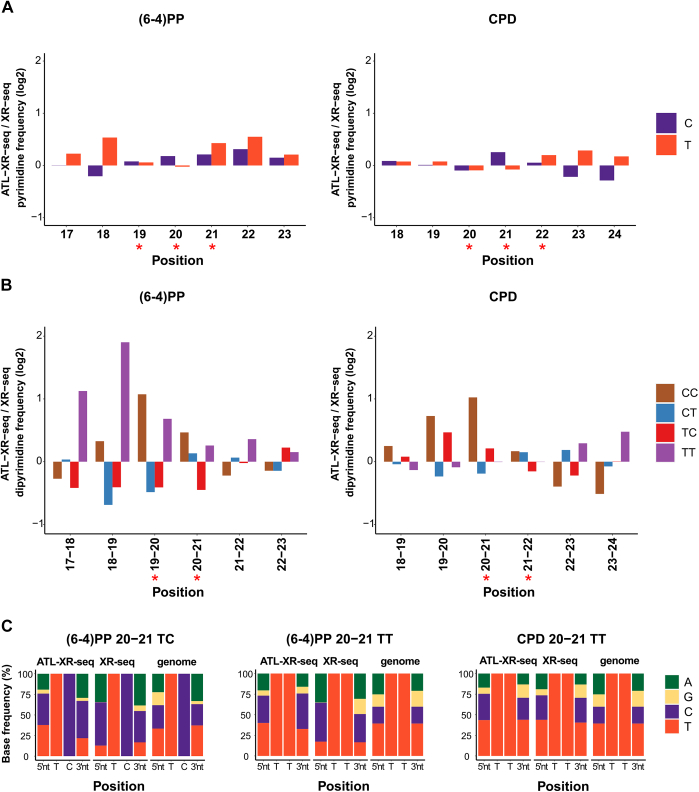
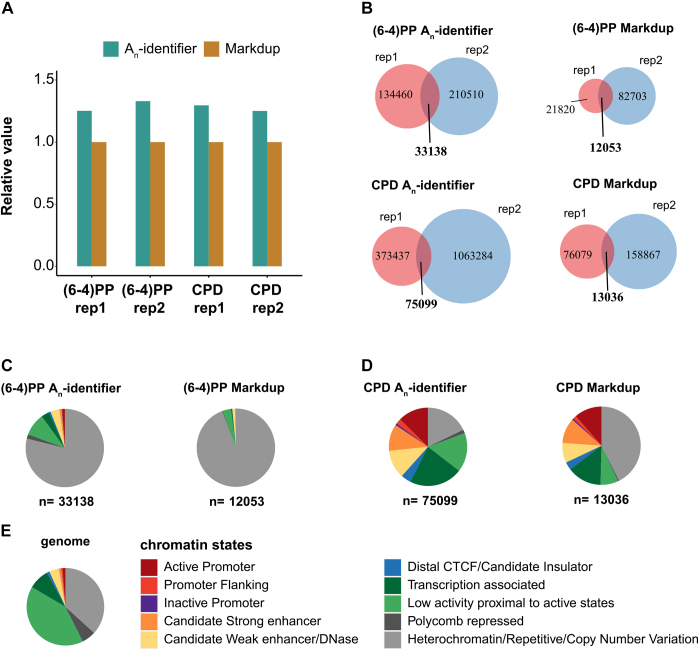
Nucleotide excision repair functions to protect genome integrity, and ongoing studies using excision repair sequencing (XR-seq) have contributed to our understanding of how cells prioritize repair across the genome. In this method, the products of excision repair bearing damaged DNA are captured, sequenced, and then mapped genome-wide at single-nucleotide resolution. However, reagent requirements and complex procedures have limited widespread usage of this technique. In addition to the expense of these reagents, it has been hypothesized that the immunoprecipitation step using antibodies directed against damaged DNA may introduce bias in different sequence contexts. Here, we describe a newly developed adaptation called dA-tailing and adaptor ligation (ATL)-XR-seq, a relatively simple XR-seq method that avoids the use of immunoprecipitation targeting damaged DNA. ATL-XR-seq captures repair products by 3'-dA-tailing and 5'-adapter ligation instead of the original 5'- and 3'-dual adapter ligation. This new approach avoids adapter dimer formation during subsequent PCR, omits inefficient and time-consuming purification steps, and is very sensitive. In addition, poly(dA) tail length heterogeneity can serve as a molecular identifier, allowing more repair hotspots to be mapped. Importantly, a comparison of both repair mapping methods showed that no major bias is introduced by the anti-UV damage antibodies used in the original XR-seq procedure. Finally, we also coupled the described dA-tailing approach with quantitative PCR in a new method to quantify repair products. These new methods provide powerful and user-friendly tools to qualitatively and quantitatively measure excision repair.
核苷酸切除修复功能在于保护基因组完整性,而目前使用切除修复测序(XR-seq)的研究有助于我们理解细胞如何在全基因组范围内优先进行修复。在这种方法中,携带受损DNA的切除修复产物被捕获、测序,然后以单核苷酸分辨率在全基因组范围内进行定位。然而,试剂需求和复杂的操作程序限制了该技术的广泛应用。除了这些试剂的成本外,有人推测使用针对受损DNA的抗体进行免疫沉淀步骤可能会在不同的序列背景中引入偏差。在此,我们描述了一种新开发的改进方法,称为dA加尾和接头连接(ATL)-XR-seq,这是一种相对简单的XR-seq方法,避免了使用针对受损DNA的免疫沉淀。ATL-XR-seq通过3'-dA加尾和5'-接头连接来捕获修复产物,而不是原来的5'-和3'-双接头连接。这种新方法避免了后续PCR过程中接头二聚体的形成,省略了低效且耗时的纯化步骤,并且非常灵敏。此外,聚(dA)尾长的异质性可以作为分子标识符,从而能够定位更多的修复热点。重要的是,两种修复定位方法的比较表明,原始XR-seq程序中使用的抗紫外线损伤抗体不会引入主要偏差。最后,我们还将所描述的dA加尾方法与定量PCR相结合,形成一种新方法来定量修复产物。这些新方法为定性和定量测量切除修复提供了强大且用户友好的工具。