Molecular Biology, Genetics & Bioengineering Program, Faculty of Engineering and Natural Sciences, Sabanci University, 34956, Istanbul, Turkey.
Department of Biochemistry and Biophysics, School of Medicine, University of North Carolina at Chapel Hill, Chapel Hill, North Carolina, 27599, USA.
BMC Genomics. 2021 Aug 6;22(1):600. doi: 10.1186/s12864-021-07898-3.
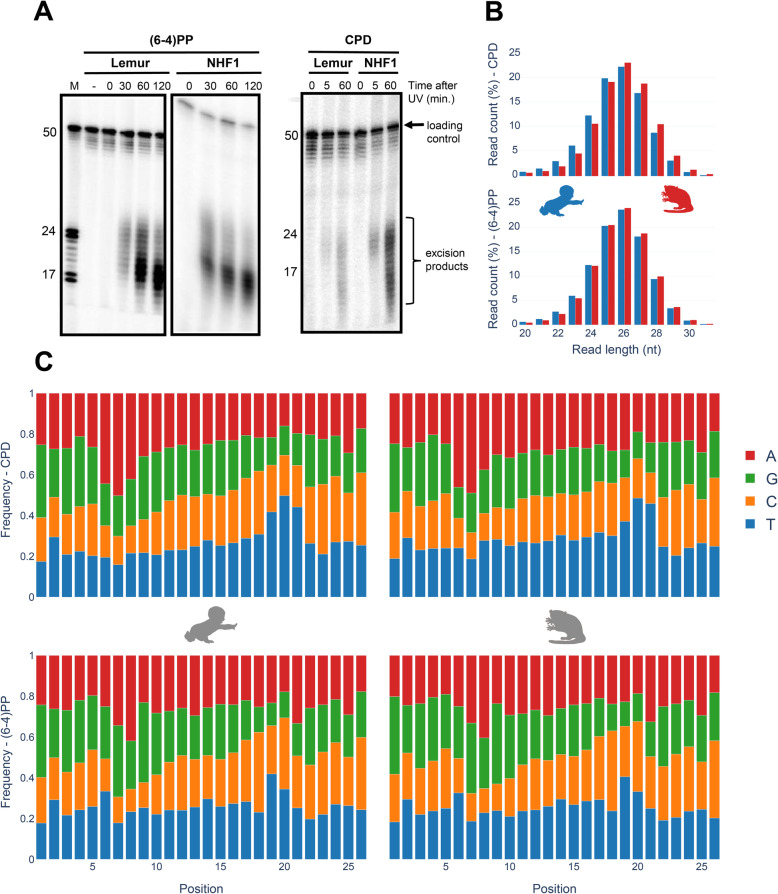
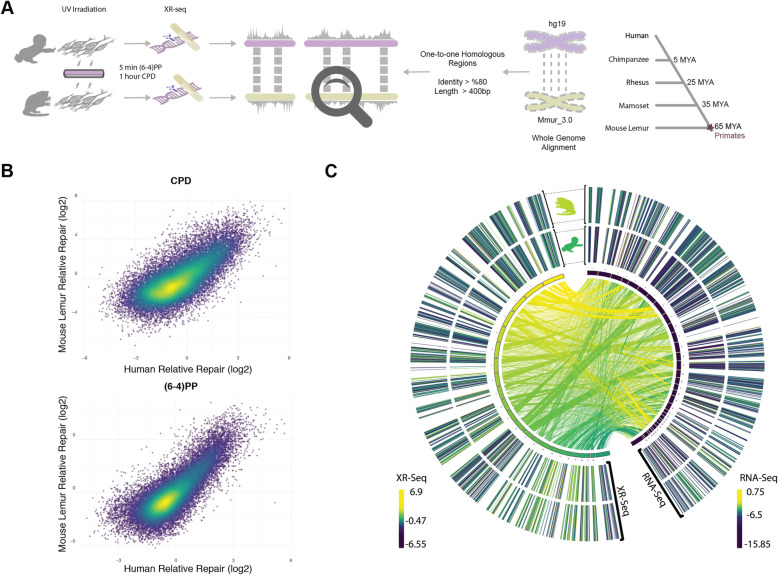
Nucleotide excision repair is the primary DNA repair mechanism that removes bulky DNA adducts such as UV-induced pyrimidine dimers. Correspondingly, genome-wide mapping of nucleotide excision repair with eXcision Repair sequencing (XR-seq), provides comprehensive profiling of DNA damage repair. A number of XR-seq experiments at a variety of conditions for different damage types revealed heterogenous repair in the human genome. Although human repair profiles were extensively studied, how repair maps vary between primates is yet to be investigated. Here, we characterized the genome-wide UV-induced damage repair in gray mouse lemur, Microcebus murinus, in comparison to human.
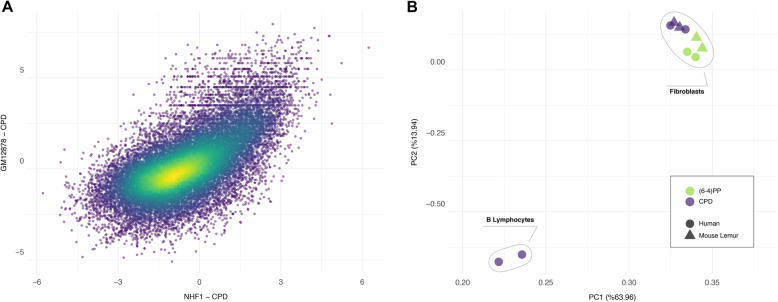
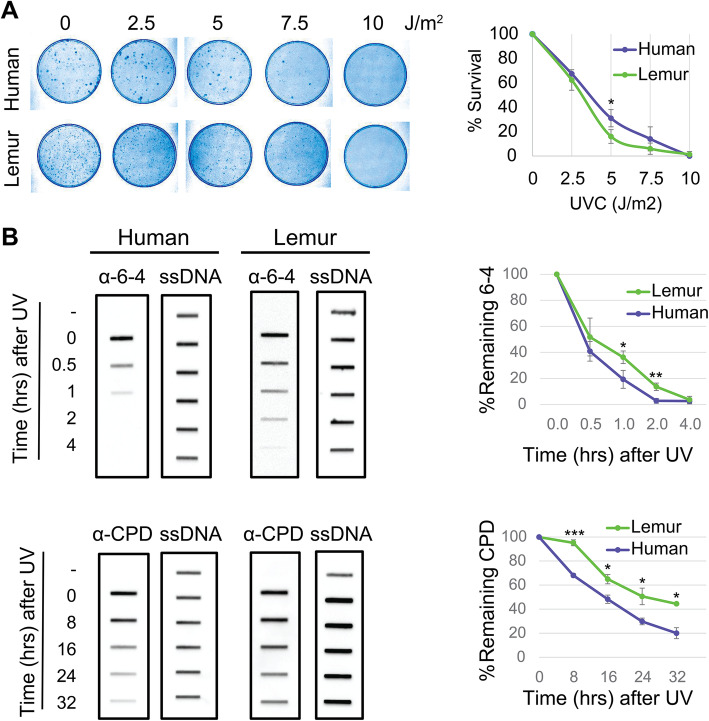
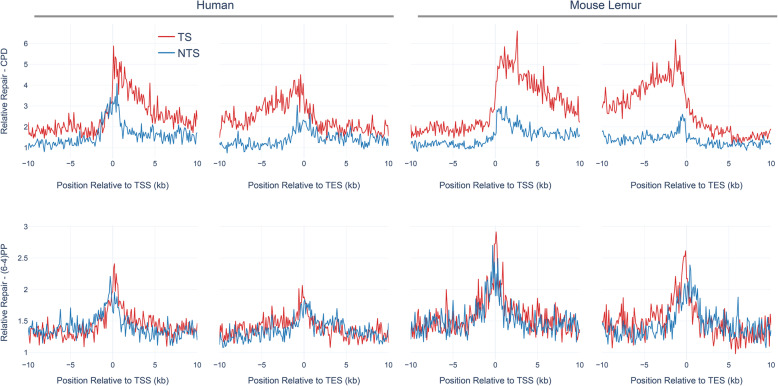
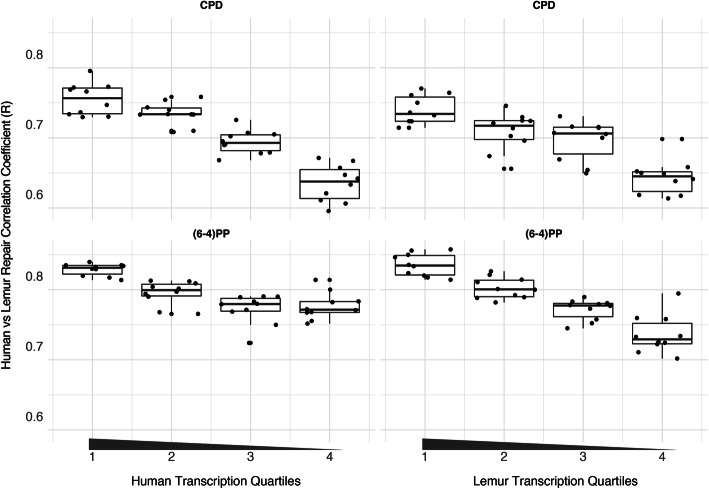
We derived fibroblast cell lines from mouse lemur, exposed them to UV irradiation, and analyzed the repair events genome-wide using the XR-seq protocol. Mouse lemur repair profiles were analyzed in comparison to the equivalent human fibroblast datasets. We found that overall UV sensitivity, repair efficiency, and transcription-coupled repair levels differ between the two primates. Despite this, comparative analysis of human and mouse lemur fibroblasts revealed that genome-wide repair profiles of the homologous regions are highly correlated, and this correlation is stronger for highly expressed genes. With the inclusion of an additional XR-seq sample derived from another human cell line in the analysis, we found that fibroblasts of the two primates repair UV-induced DNA lesions in a more similar pattern than two distinct human cell lines do.
Our results suggest that mouse lemurs and humans, and possibly primates in general, share a homologous repair mechanism as well as genomic variance distribution, albeit with their variable repair efficiency. This result also emphasizes the deep homologies of individual tissue types across the eukaryotic phylogeny.
核苷酸切除修复是一种主要的 DNA 修复机制,可去除大量的 DNA 加合物,如紫外线诱导的嘧啶二聚体。相应地,通过切除修复测序(XR-seq)对核苷酸切除修复进行全基因组作图,可以全面分析 DNA 损伤修复。在不同条件下对不同类型的损伤进行了许多 XR-seq 实验,结果表明人类基因组中的修复存在异质性。尽管人类的修复谱得到了广泛的研究,但修复图谱在灵长类动物之间如何变化尚未得到研究。在这里,我们对灰鼠狐猴(Microcebus murinus)的全基因组紫外线诱导损伤修复进行了特征描述,与人类进行了比较。
我们从灰鼠狐猴中分离出成纤维细胞系,使其暴露于紫外线照射下,然后使用 XR-seq 方案对全基因组的修复事件进行分析。将灰鼠狐猴的修复谱与等效的人类成纤维细胞数据集进行了比较。我们发现,两种灵长类动物之间的总体紫外线敏感性、修复效率和转录偶联修复水平存在差异。尽管如此,对人类和灰鼠狐猴成纤维细胞的比较分析表明,同源区域的全基因组修复谱高度相关,对于高表达的基因,这种相关性更强。在分析中纳入了另一个源自另一种人类细胞系的 XR-seq 样本,我们发现,这两种灵长类动物的成纤维细胞修复紫外线诱导的 DNA 损伤的模式比两种不同的人类细胞系更相似。
我们的研究结果表明,灰鼠狐猴和人类,以及可能一般的灵长类动物,都具有同源的修复机制以及基因组变异分布,尽管它们的修复效率存在差异。这一结果还强调了真核生物进化枝中个体组织类型之间的深刻同源性。