• 文献检索
  • 文档翻译
  • 深度研究
  • 学术资讯
  • Suppr Zotero 插件Zotero 插件
  • 邀请有礼
  • 套餐&价格
  • 历史记录
应用&插件
Suppr Zotero 插件Zotero 插件浏览器插件Mac 客户端Windows 客户端微信小程序
定价
高级版会员购买积分包购买API积分包
服务
文献检索文档翻译深度研究API 文档MCP 服务
关于我们
关于 Suppr公司介绍联系我们用户协议隐私条款
关注我们

Suppr 超能文献

核心技术专利:CN118964589B侵权必究
粤ICP备2023148730 号-1Suppr @ 2026

文献检索

告别复杂PubMed语法,用中文像聊天一样搜索,搜遍4000万医学文献。AI智能推荐,让科研检索更轻松。

立即免费搜索

文件翻译

保留排版,准确专业,支持PDF/Word/PPT等文件格式,支持 12+语言互译。

免费翻译文档

深度研究

AI帮你快速写综述,25分钟生成高质量综述,智能提取关键信息,辅助科研写作。

立即免费体验

安全合规的非接触式互动轮式助行机器人方法。

A Safe and Compliant Noncontact Interactive Approach for Wheeled Walking Aid Robot.

机构信息

School of Electrical Engineering, Shenyang University of Technology, Shenyang, China.

Shenyang Institute of Automation, Chinese Academy of Sciences, Shenyang, China.

出版信息

Comput Intell Neurosci. 2022 Mar 16;2022:3033920. doi: 10.1155/2022/3033920. eCollection 2022.

DOI:10.1155/2022/3033920
PMID:35341193
原文链接:https://pmc.ncbi.nlm.nih.gov/articles/PMC8942631/
Abstract

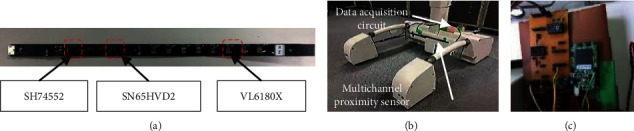
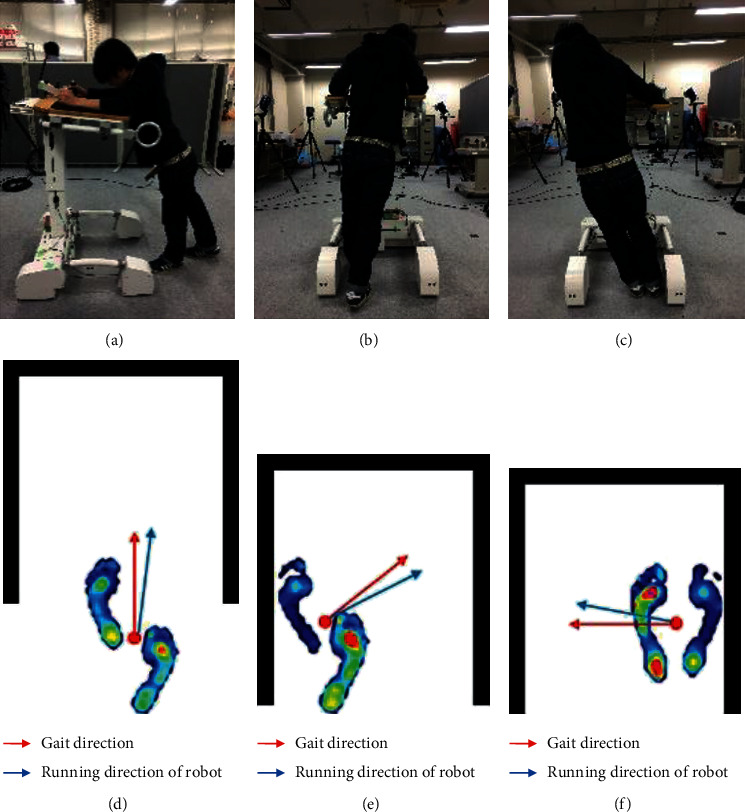
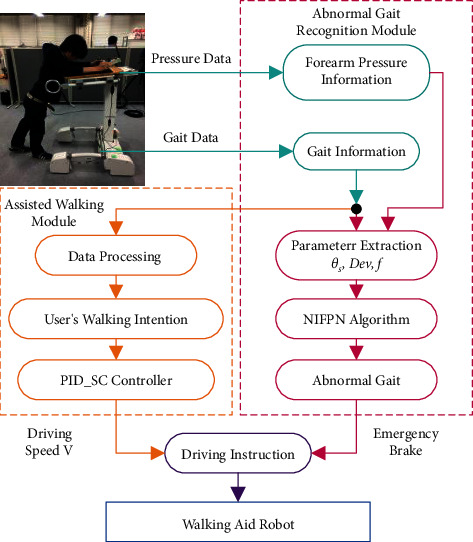
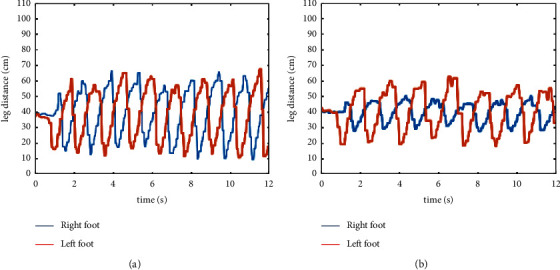
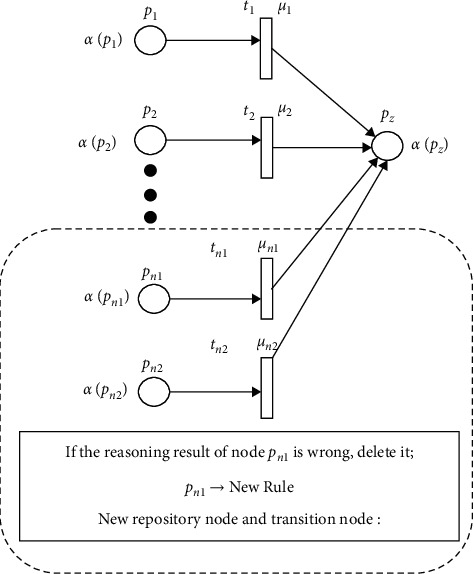
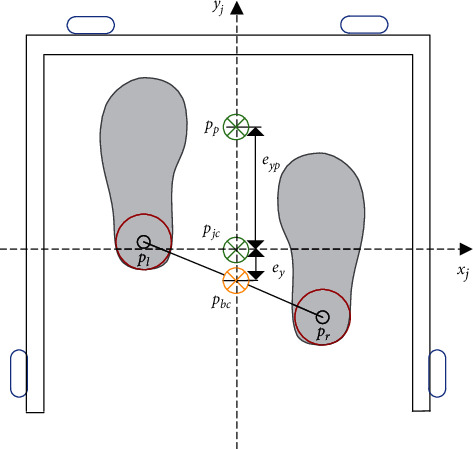
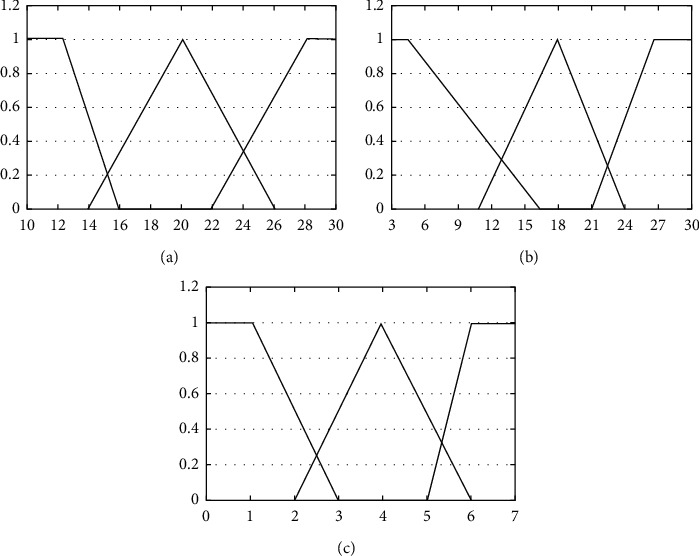
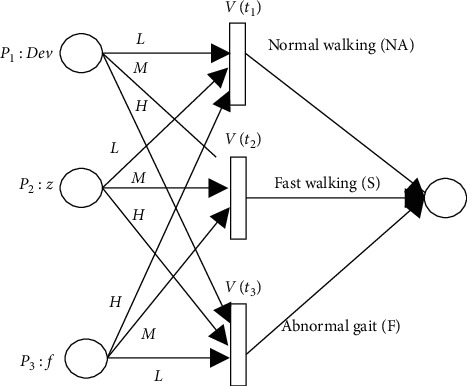
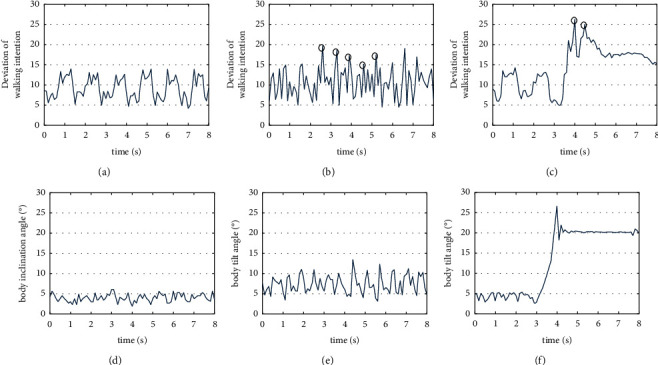
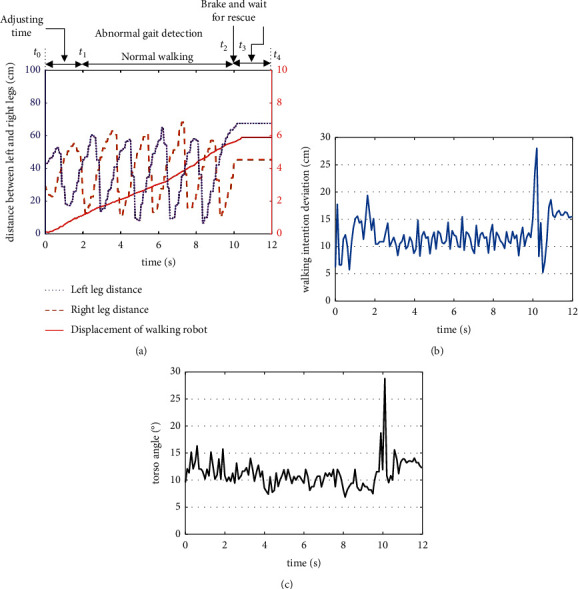
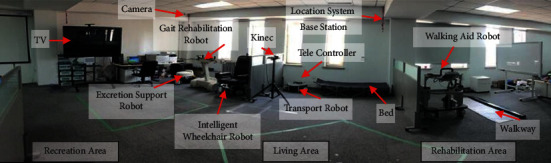
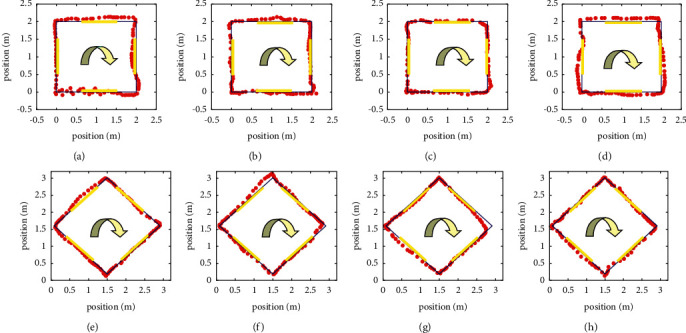
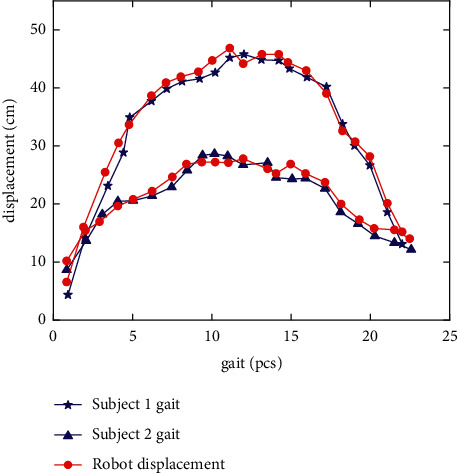
Aiming at promptly and accurately detecting falls and drag-to gaits induced by asynchronous human-robot movement speed during assisted walking, a noncontact interactive approach with generality, compliance and safety is proposed in this paper, and is applied to a wheeled walking aid robot. Firstly, the structure and the functions of the wheeled walking aid robot, including gait rehabilitation robot (GRR) and walking aid robot (WAR) are illustrated, and the characteristic futures of falls and the drag-to gait are shown by experiments. To obtain gait information, a multichannel proximity sensor array is developed, and a two-dimensional gait information detection system is established by combining four proximity sensors groups which are installed in the robot chassis. Additionally, a node-iterative fuzzy Petri net algorithm for abnormal gait recognition is proposed by generating the network trigger mechanism using the fuzzy membership function. It integrates the walking intention direction vector by taking gait deviation, frequency, and torso angle as input parameters of the system. Finally, to improve the compliance of the robot during human-robot interaction, a PID_SC controller is designed by integrating the gait speed compensation, which enables the WAR to track human gait closely. Abnormal gait recognition and assisted walking experiments are carried out respectively. Experimental results show that the proposed algorithm can accurately identify abnormal gaits of different groups of users with different walking habits, and the recognition rate of abnormal gait reaches 91.2%. Results also show that the developed method can guarantee safety in human robot interaction because of user gate follow-up accuracy and compliant movements. The noncontact interactive approach can be applied to robots with similar structure for usage in walking assistance and gait rehabilitation.

摘要

针对辅助行走过程中人与机器人异步运动速度引起的跌倒和拖拽步态,本文提出了一种通用、顺应性和安全性的非接触式交互方法,并将其应用于轮式助行机器人。首先,说明了轮式助行机器人的结构和功能,包括步态康复机器人(GRR)和助行机器人(WAR),并通过实验展示了跌倒和拖拽步态的特点。为了获取步态信息,开发了多通道接近传感器阵列,并通过结合安装在机器人底盘上的四个接近传感器组,建立了二维步态信息检测系统。此外,通过使用模糊隶属函数生成网络触发机制,提出了一种用于异常步态识别的节点迭代模糊 Petri 网算法。它通过将步态偏差、频率和躯干角度作为系统的输入参数,整合行走意图方向向量。最后,为了提高机器人在人机交互过程中的顺应性,通过整合步态速度补偿,设计了 PID_SC 控制器,使 WAR 能够紧密跟踪人体步态。分别进行了异常步态识别和辅助行走实验。实验结果表明,所提出的算法可以准确识别不同行走习惯的不同用户群体的异常步态,异常步态的识别率达到 91.2%。结果还表明,所开发的方法可以保证人机交互的安全性,因为用户门跟随精度和顺应性运动。这种非接触式交互方法可应用于具有类似结构的机器人,用于行走辅助和步态康复。
https://cdn.ncbi.nlm.nih.gov/pmc/blobs/c2a2/8942631/05b5a05eeb51/CIN2022-3033920.019.jpg
https://cdn.ncbi.nlm.nih.gov/pmc/blobs/c2a2/8942631/f5bf0aac558d/CIN2022-3033920.001.jpg
https://cdn.ncbi.nlm.nih.gov/pmc/blobs/c2a2/8942631/69e3e91fdf0b/CIN2022-3033920.002.jpg
https://cdn.ncbi.nlm.nih.gov/pmc/blobs/c2a2/8942631/ec3e97ae4f1b/CIN2022-3033920.003.jpg
https://cdn.ncbi.nlm.nih.gov/pmc/blobs/c2a2/8942631/c5a2c7f41695/CIN2022-3033920.004.jpg
https://cdn.ncbi.nlm.nih.gov/pmc/blobs/c2a2/8942631/618cf0f50fb3/CIN2022-3033920.005.jpg
https://cdn.ncbi.nlm.nih.gov/pmc/blobs/c2a2/8942631/2d0c94b6b2c9/CIN2022-3033920.006.jpg
https://cdn.ncbi.nlm.nih.gov/pmc/blobs/c2a2/8942631/cb9b6c2503b9/CIN2022-3033920.007.jpg
https://cdn.ncbi.nlm.nih.gov/pmc/blobs/c2a2/8942631/2415718d2366/CIN2022-3033920.008.jpg
https://cdn.ncbi.nlm.nih.gov/pmc/blobs/c2a2/8942631/e336fece250d/CIN2022-3033920.009.jpg
https://cdn.ncbi.nlm.nih.gov/pmc/blobs/c2a2/8942631/665468b2af67/CIN2022-3033920.010.jpg
https://cdn.ncbi.nlm.nih.gov/pmc/blobs/c2a2/8942631/295afee699e8/CIN2022-3033920.011.jpg
https://cdn.ncbi.nlm.nih.gov/pmc/blobs/c2a2/8942631/d6bff3445f1f/CIN2022-3033920.012.jpg
https://cdn.ncbi.nlm.nih.gov/pmc/blobs/c2a2/8942631/2f995962aa12/CIN2022-3033920.013.jpg
https://cdn.ncbi.nlm.nih.gov/pmc/blobs/c2a2/8942631/8303ebf239e3/CIN2022-3033920.014.jpg
https://cdn.ncbi.nlm.nih.gov/pmc/blobs/c2a2/8942631/09458c1f63e8/CIN2022-3033920.015.jpg
https://cdn.ncbi.nlm.nih.gov/pmc/blobs/c2a2/8942631/fe79500011af/CIN2022-3033920.016.jpg
https://cdn.ncbi.nlm.nih.gov/pmc/blobs/c2a2/8942631/52e7388734d7/CIN2022-3033920.017.jpg
https://cdn.ncbi.nlm.nih.gov/pmc/blobs/c2a2/8942631/bceef79f9ef2/CIN2022-3033920.018.jpg
https://cdn.ncbi.nlm.nih.gov/pmc/blobs/c2a2/8942631/05b5a05eeb51/CIN2022-3033920.019.jpg
https://cdn.ncbi.nlm.nih.gov/pmc/blobs/c2a2/8942631/f5bf0aac558d/CIN2022-3033920.001.jpg
https://cdn.ncbi.nlm.nih.gov/pmc/blobs/c2a2/8942631/69e3e91fdf0b/CIN2022-3033920.002.jpg
https://cdn.ncbi.nlm.nih.gov/pmc/blobs/c2a2/8942631/ec3e97ae4f1b/CIN2022-3033920.003.jpg
https://cdn.ncbi.nlm.nih.gov/pmc/blobs/c2a2/8942631/c5a2c7f41695/CIN2022-3033920.004.jpg
https://cdn.ncbi.nlm.nih.gov/pmc/blobs/c2a2/8942631/618cf0f50fb3/CIN2022-3033920.005.jpg
https://cdn.ncbi.nlm.nih.gov/pmc/blobs/c2a2/8942631/2d0c94b6b2c9/CIN2022-3033920.006.jpg
https://cdn.ncbi.nlm.nih.gov/pmc/blobs/c2a2/8942631/cb9b6c2503b9/CIN2022-3033920.007.jpg
https://cdn.ncbi.nlm.nih.gov/pmc/blobs/c2a2/8942631/2415718d2366/CIN2022-3033920.008.jpg
https://cdn.ncbi.nlm.nih.gov/pmc/blobs/c2a2/8942631/e336fece250d/CIN2022-3033920.009.jpg
https://cdn.ncbi.nlm.nih.gov/pmc/blobs/c2a2/8942631/665468b2af67/CIN2022-3033920.010.jpg
https://cdn.ncbi.nlm.nih.gov/pmc/blobs/c2a2/8942631/295afee699e8/CIN2022-3033920.011.jpg
https://cdn.ncbi.nlm.nih.gov/pmc/blobs/c2a2/8942631/d6bff3445f1f/CIN2022-3033920.012.jpg
https://cdn.ncbi.nlm.nih.gov/pmc/blobs/c2a2/8942631/2f995962aa12/CIN2022-3033920.013.jpg
https://cdn.ncbi.nlm.nih.gov/pmc/blobs/c2a2/8942631/8303ebf239e3/CIN2022-3033920.014.jpg
https://cdn.ncbi.nlm.nih.gov/pmc/blobs/c2a2/8942631/09458c1f63e8/CIN2022-3033920.015.jpg
https://cdn.ncbi.nlm.nih.gov/pmc/blobs/c2a2/8942631/fe79500011af/CIN2022-3033920.016.jpg
https://cdn.ncbi.nlm.nih.gov/pmc/blobs/c2a2/8942631/52e7388734d7/CIN2022-3033920.017.jpg
https://cdn.ncbi.nlm.nih.gov/pmc/blobs/c2a2/8942631/bceef79f9ef2/CIN2022-3033920.018.jpg
https://cdn.ncbi.nlm.nih.gov/pmc/blobs/c2a2/8942631/05b5a05eeb51/CIN2022-3033920.019.jpg

相似文献

1
A Safe and Compliant Noncontact Interactive Approach for Wheeled Walking Aid Robot.安全合规的非接触式互动轮式助行机器人方法。
Comput Intell Neurosci. 2022 Mar 16;2022:3033920. doi: 10.1155/2022/3033920. eCollection 2022.
2
Walking motion generation, synthesis, and control for biped robot by using PGRL, LPI, and fuzzy logic.基于PGRL、LPI和模糊逻辑的双足机器人步行运动生成、合成与控制
IEEE Trans Syst Man Cybern B Cybern. 2011 Jun;41(3):736-48. doi: 10.1109/TSMCB.2010.2089978. Epub 2010 Nov 18.
3
Compliant gait assistance triggered by user intention.由用户意图触发的顺应性步态辅助。
Annu Int Conf IEEE Eng Med Biol Soc. 2015;2015:3885-8. doi: 10.1109/EMBC.2015.7319242.
4
Spontaneous gait phase synchronization of human to a wheeled mobile robot with replicating gait-induced upper body oscillating motion.人体与具有复制步态诱导上身摆动运动的轮式移动机器人的自然步态相位同步。
Sci Rep. 2022 Sep 29;12(1):16275. doi: 10.1038/s41598-022-20481-4.
5
A reflexive neural network for dynamic biped walking control.一种用于动态双足步行控制的自反神经网络。
Neural Comput. 2006 May;18(5):1156-96. doi: 10.1162/089976606776241057.
6
Mobile Robotic Balance Assistant (MRBA): a gait assistive and fall intervention robot for daily living.移动机器人平衡辅助器(MRBA):一款用于日常生活的步态辅助和跌倒干预机器人。
J Neuroeng Rehabil. 2023 Mar 1;20(1):29. doi: 10.1186/s12984-023-01149-0.
7
Recent Advances in Bipedal Walking Robots: Review of Gait, Drive, Sensors and Control Systems.双足行走机器人的最新进展:步态、驱动、传感器和控制系统综述。
Sensors (Basel). 2022 Jun 12;22(12):4440. doi: 10.3390/s22124440.
8
Adaptive Gait Training of a Lower Limb Rehabilitation Robot Based on Human-Robot Interaction Force Measurement.基于人机交互力测量的下肢康复机器人自适应步态训练
Cyborg Bionic Syst. 2024 Jun 21;5:0115. doi: 10.34133/cbsystems.0115. eCollection 2024.
9
A Poincare map based analysis of stroke patients' walking after a rehabilitation by a robot.基于庞加莱映射的分析研究机器人康复治疗后中风患者的行走。
Math Biosci. 2018 May;299:73-84. doi: 10.1016/j.mbs.2018.03.001. Epub 2018 Mar 5.
10
Feasibility and effects of patient-cooperative robot-aided gait training applied in a 4-week pilot trial.患者合作型机器人辅助步态训练的可行性和效果:一项为期 4 周的试点研究。
J Neuroeng Rehabil. 2012 May 31;9:31. doi: 10.1186/1743-0003-9-31.

引用本文的文献

1
Designing for flourishing: a conceptual model for enhancing older adults' well-being with social robots.为蓬勃发展而设计:一个利用社交机器人提升老年人幸福感的概念模型。
Front Robot AI. 2025 Aug 20;12:1607373. doi: 10.3389/frobt.2025.1607373. eCollection 2025.

本文引用的文献

1
Bringing Psychological Strategies to Robot-Assisted Physiotherapy for Enhanced Treatment Efficacy.将心理策略应用于机器人辅助物理治疗以提高治疗效果。
Front Neurosci. 2019 Sep 18;13:984. doi: 10.3389/fnins.2019.00984. eCollection 2019.
2
Passive BCI based on drowsiness detection: an fNIRS study.基于困倦检测的被动脑机接口:一项功能近红外光谱研究。
Biomed Opt Express. 2015 Sep 22;6(10):4063-78. doi: 10.1364/BOE.6.004063. eCollection 2015 Oct 1.
3
Vision-Based Human Tracking Control of a Wheeled Inverted Pendulum Robot.基于视觉的轮式倒立摆机器人的人体跟踪控制。
IEEE Trans Cybern. 2016 Nov;46(11):2423-2434. doi: 10.1109/TCYB.2015.2478154. Epub 2015 Oct 1.
4
A novel walking speed estimation scheme and its application to treadmill control for gait rehabilitation.一种新型的步行速度估计方案及其在跑步机控制中的应用 gait rehabilitation.
J Neuroeng Rehabil. 2012 Aug 28;9:62. doi: 10.1186/1743-0003-9-62.
5
Physiological and subjective evaluation of a human-robot object hand-over task.人类-机器人物体交接任务的生理和主观评估。
Appl Ergon. 2011 Nov;42(6):785-91. doi: 10.1016/j.apergo.2010.12.005. Epub 2011 Feb 5.
6
Simultaneous and proportional force estimation for multifunction myoelectric prostheses using mirrored bilateral training.镜像双边训练的多功能肌电假肢的同步和比例力估计
IEEE Trans Biomed Eng. 2011 Mar;58(3):681-8. doi: 10.1109/TBME.2010.2068298. Epub 2010 Aug 19.