Macêdo Rafael Lacerda, Sousa Francisco Diogo R, Dumont Henri J, Rietzler Arnola C, Rocha Odete, Elmoor-Loureiro Lourdes M A
Núcleo de Estudos Limnológicos, Universidade Federal do Estado do Rio de Janeiro - UNIRIO, Av. 8 Pasteur, 458, Rio de Janeiro, RJ CEP 22290-240 Brazil.
Graduate Program in Ecology and Natural Resources, and Department of Ecology and Evolutionary Biology, Federal University of São Carlos - UFSCar, São Carlos, Brazil.
Hydrobiologia. 2022;849(17-18):4015-4027. doi: 10.1007/s10750-022-04835-7. Epub 2022 Mar 22.
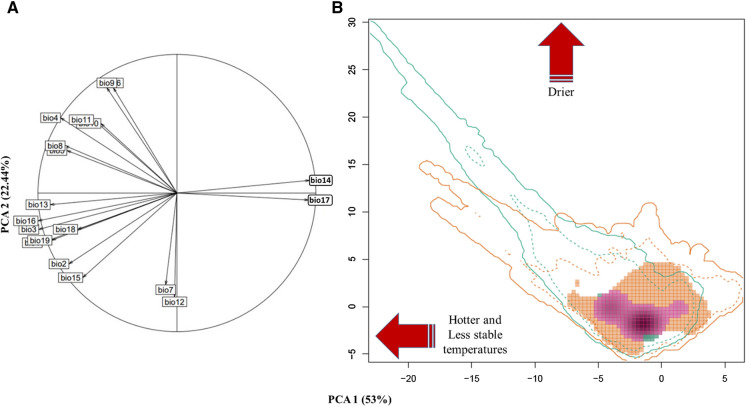
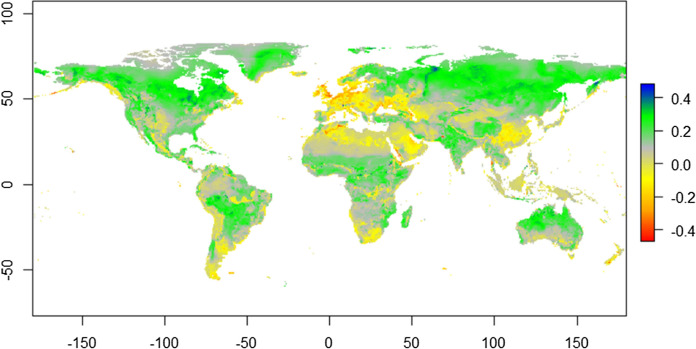
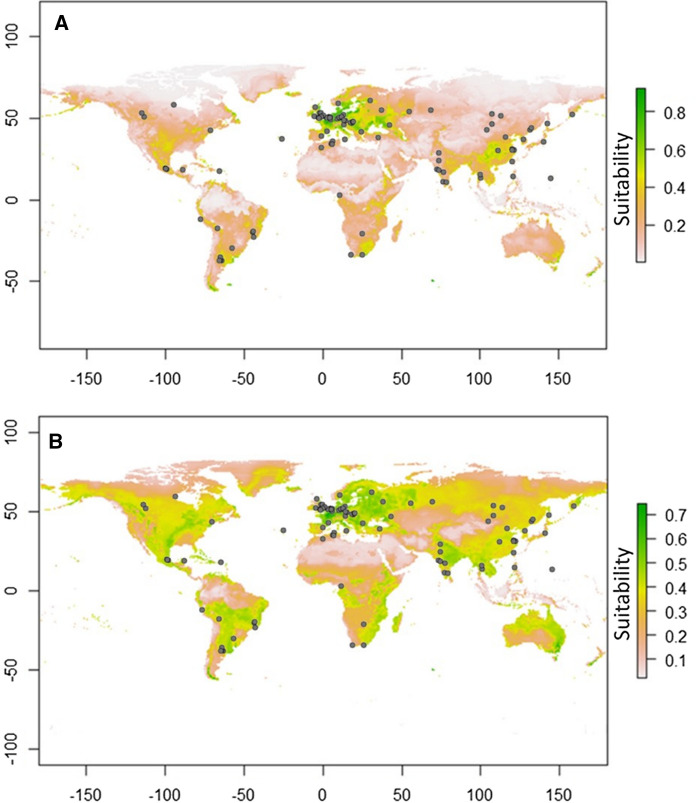
Non-native species' introductions have increased in the last decades primarily due to anthropogenic causes such as climate change and globalization of trade. , a stress-tolerant cladoceran widely used in bioassays and aquaculture, is spreading in temporary and semi-temporary natural ponds outside its natural range. Here, we characterize the variations in the climatic niche of during its invasions outside the native Palearctic range following introduction into the American continent. Specifically, we examined to what extent the climatic responses of this species have diverged from those characteristics for its native range. We also made predictions for its potential distribution under current and future scenarios. We found that the environmental space occupied by this species in its native and introduced distribution areas shares more characteristics than randomly expected. However, the introduced niche has a high degree of unfilling when displacing its original space towards the extension to drier and hotter conditions. Accordingly, can invade new areas where it has not yet been recorded in response to warming temperatures and decreasing winter precipitation. In particular, temporary ponds are more vulnerable environments where climatic and environmental stresses may also lower biotic resistance.
The online version contains supplementary material available at 10.1007/s10750-022-04835-7.
在过去几十年中,非本地物种的引入主要由于气候变化和贸易全球化等人为原因而增加。大型溞是一种广泛用于生物测定和水产养殖的耐胁迫枝角类动物,正在其自然分布范围之外的临时和半临时天然池塘中扩散。在此,我们描述了大型溞在被引入美洲大陆后,在其原生古北区范围之外入侵期间气候生态位的变化。具体而言,我们研究了该物种的气候响应与其原生范围特征的差异程度。我们还预测了其在当前和未来情景下的潜在分布。我们发现,该物种在其原生和引入分布区域所占据的环境空间比随机预期的具有更多共同特征。然而,当将其原始空间向更干燥和更炎热条件的扩展方向移动时,引入的生态位存在高度的未填充情况。因此,大型溞可以入侵尚未有记录的新区域,以应对气温升高和冬季降水减少的情况。特别是,临时池塘是更脆弱的环境,气候和环境压力也可能降低生物抗性。
在线版本包含可在10.1007/s10750-022-04835-7获取的补充材料。