Rodrigues-Filho Jorge L, Macêdo Rafael L, Sarmento Hugo, Pimenta Victor R A, Alonso Cecilia, Teixeira Clarissa R, Pagliosa Paulo R, Netto Sérgio A, Santos Natália C L, Daura-Jorge Fábio G, Rocha Odete, Horta Paulo, Branco Joaquim O, Sartor Rodrigo, Muller Jean, Cionek Vivian M
Laboratório de Ecologia Aplicada e Conservação, Departamento de Engenharia de Pesca e Ciências Biológicas, Universidade Do Estado de Santa Catarina, Laguna, SC Brazil.
Programa de Pós-Graduação em Planejamento Territorial e Desenvolvimento Socioambiental (PPGPLAN)/UDESC/FAED, Universidade do Estado de Santa Catarina, Florianópolis, SC Brazil.
Hydrobiologia. 2023;850(12-13):2611-2653. doi: 10.1007/s10750-023-05171-0. Epub 2023 Mar 10.
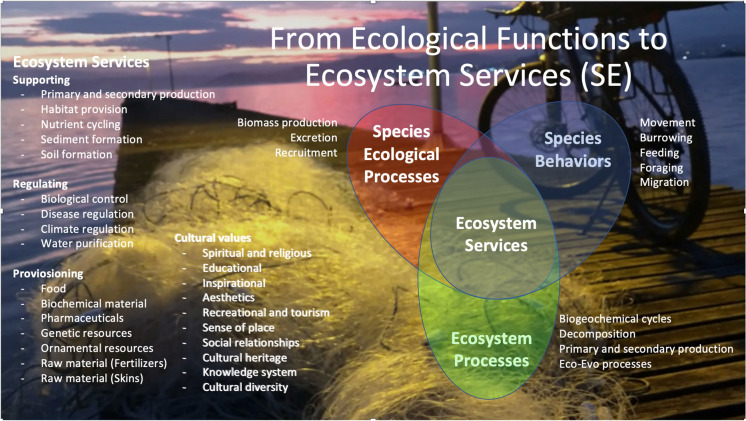
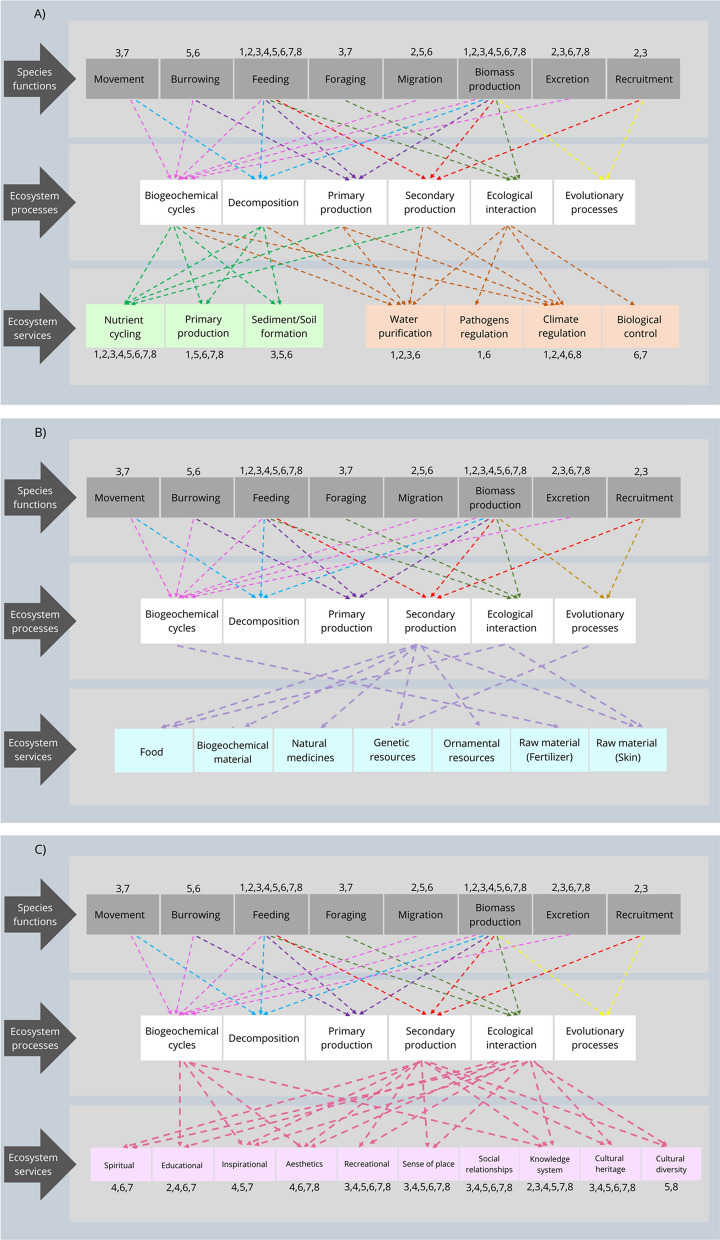
In this review we highlight the relevance of biodiversity that inhabit coastal lagoons, emphasizing how species functions foster processes and services associated with this ecosystem. We identified 26 ecosystem services underpinned by ecological functions performed by bacteria and other microbial organisms, zooplankton, polychaetae worms, mollusks, macro-crustaceans, fishes, birds, and aquatic mammals. These groups present high functional redundancy but perform complementary functions that result in distinct ecosystem processes. Because coastal lagoons are located in the interface between freshwater, marine and terrestrial ecosystems, the ecosystem services provided by the biodiversity surpass the lagoon itself and benefit society in a wider spatial and historical context. The species loss in coastal lagoons due to multiple human-driven impacts affects the ecosystem functioning, influencing negatively the provision of all categories of services (i.e., supporting, regulating, provisioning and cultural). Because animals' assemblages have unequal spatial and temporal distribution in coastal lagoons, it is necessary to adopt ecosystem-level management plans to protect habitat heterogeneity and its biodiversity, ensuring the provision of services for human well-being to multi-actors in the coastal zone.
在本综述中,我们强调了栖息在沿海泻湖中的生物多样性的相关性,着重阐述了物种功能如何促进与该生态系统相关的过程和服务。我们确定了26种生态系统服务,这些服务由细菌和其他微生物、浮游动物、多毛类蠕虫、软体动物、大型甲壳类动物、鱼类、鸟类和水生哺乳动物所执行的生态功能支撑。这些群体具有高度的功能冗余,但执行互补功能,从而产生不同的生态系统过程。由于沿海泻湖位于淡水、海洋和陆地生态系统的交界处,生物多样性提供的生态系统服务超越了泻湖本身,并在更广泛的空间和历史背景下造福社会。由于多种人为驱动的影响导致沿海泻湖物种丧失,这影响了生态系统功能,对所有类别的服务(即支持、调节、供给和文化服务)的提供产生了负面影响。由于动物群落在沿海泻湖中的空间和时间分布不均,有必要采用生态系统层面的管理计划来保护栖息地的异质性及其生物多样性,确保为沿海地区的多个行为主体提供促进人类福祉的服务。