Eshghi Sahraei Shadi, Furneaux Brendan, Kluting Kerri, Zakieh Mustafa, Rydin Håkan, Hytteborn Håkan, Rosling Anna
Department of Ecology and Genetics Uppsala University Uppsala Sweden.
Department of Plant Breeding Swedish University of Agricultural Sciences Alnarp Sweden.
Ecol Evol. 2022 Mar 8;12(3):e8676. doi: 10.1002/ece3.8676. eCollection 2022 Mar.
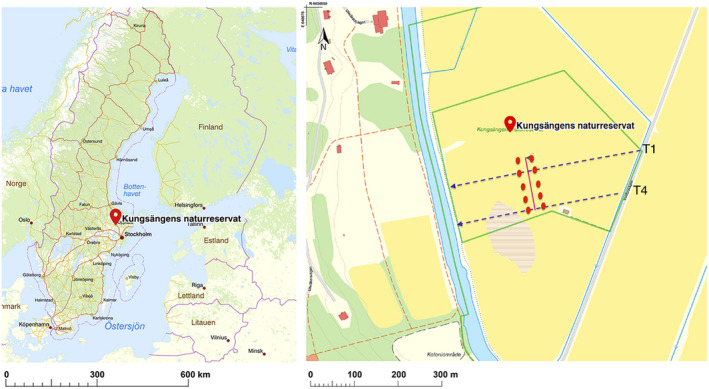
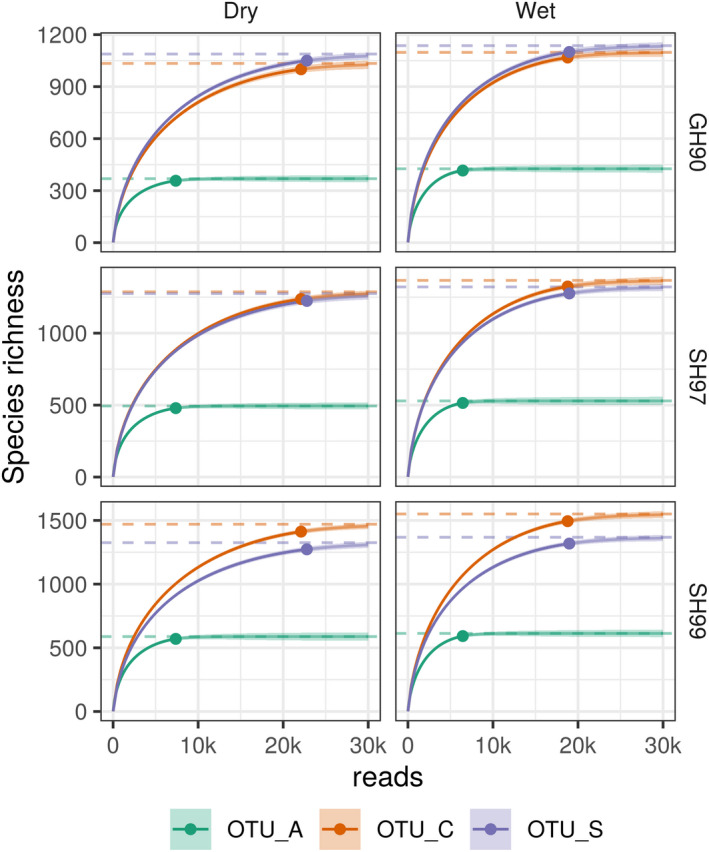
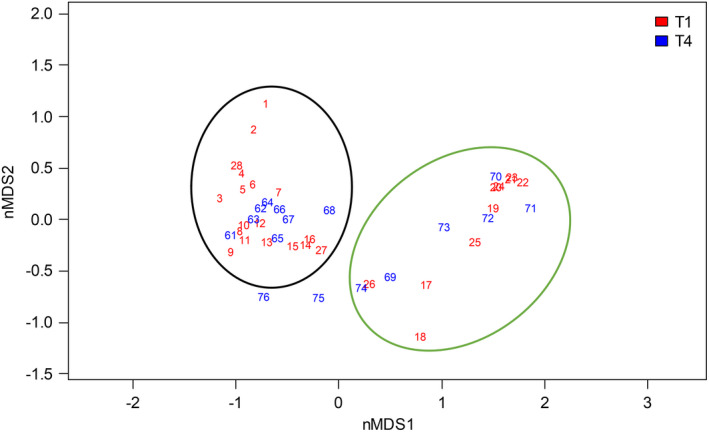
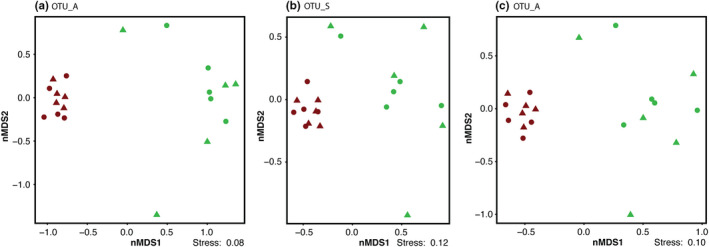
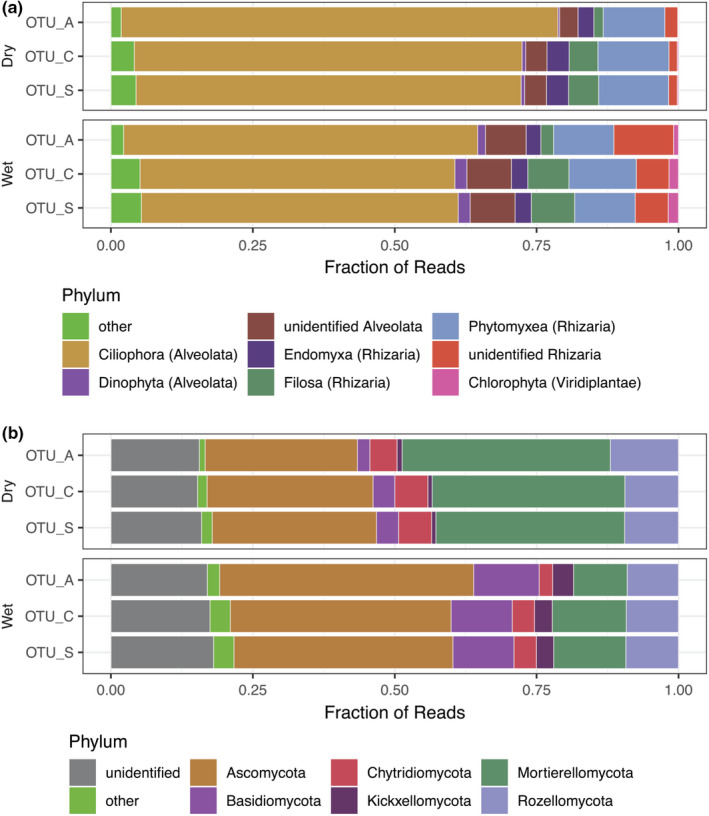
Long amplicon metabarcoding has opened the door for phylogenetic analysis of the largely unknown communities of microeukaryotes in soil. Here, we amplified and sequenced the ITS and LSU regions of the rDNA operon (around 1500 bp) from grassland soils using PacBio SMRT sequencing. We tested how three different methods for generation of operational taxonomic units (OTUs) effected estimated richness and identified taxa, and how well large-scale ecological patterns associated with shifting environmental conditions were recovered in data from the three methods. The field site at Kungsängen Nature Reserve has drawn frequent visitors since Linnaeus's time, and its species rich vegetation includes the largest population of in Sweden. To test the effect of different OTU generation methods, we sampled soils across an abrupt moisture transition that divides the meadow community into a dominated plant community with low species richness in the wetter part, which is visually distinct from the mesic-dry part that has a species rich grass-dominated plant community including a high frequency of . . We used the moisture and plant community transition as a framework to investigate how detected belowground microeukaryotic community composition was influenced by OTU generation methods. Soil communities in both moisture regimes were dominated by protists, a large fraction of which were taxonomically assigned to Ciliophora (Alveolata) while 30%-40% of all reads were assigned to kingdom Fungi. Ecological patterns were consistently recovered irrespective of OTU generation method used. However, different methods strongly affect richness estimates and the taxonomic and phylogenetic resolution of the characterized community with implications for how well members of the microeukaryotic communities can be recognized in the data.
长扩增子宏条形码技术为土壤中大部分未知的微真核生物群落的系统发育分析打开了大门。在此,我们使用PacBio SMRT测序技术从草地土壤中扩增并测序了rDNA操纵子的ITS和LSU区域(约1500 bp)。我们测试了三种不同的操作分类单元(OTU)生成方法如何影响估计的丰富度和已识别的分类群,以及与不断变化的环境条件相关的大规模生态模式在这三种方法的数据中恢复得如何。自林奈时代以来,孔森根自然保护区的实地考察点吸引了众多游客,其物种丰富的植被包括瑞典最大的[具体物种]种群。为了测试不同OTU生成方法的效果,我们在一个突然的水分过渡带对土壤进行了采样,该过渡带将草甸群落分为较湿润部分以[具体物种]为主导、物种丰富度较低的植物群落,这在视觉上与中生 - 干燥部分不同,中生 - 干燥部分有一个物种丰富的以草为主导的植物群落,包括高频率的[具体物种]。我们以水分和植物群落过渡为框架,研究OTU生成方法如何影响检测到的地下微真核生物群落组成。两种水分状况下的土壤群落均以原生生物为主,其中很大一部分在分类学上被归类为纤毛虫纲(囊泡虫类),而所有读数的30% - 40%被归类为真菌界。无论使用哪种OTU生成方法,生态模式都能持续恢复。然而,不同的方法强烈影响丰富度估计以及所表征群落的分类和系统发育分辨率,这对在数据中识别微真核生物群落成员的能力有影响。