Department of Neuroscience, Graduate School, Kyung Hee University, Seoul, South Korea.
Department of Life & Nanopharmaceutical Science, Graduate School, Kyung Hee University, Seoul, South Korea.
Physiol Rep. 2022 Mar;10(6):e15227. doi: 10.14814/phy2.15227.
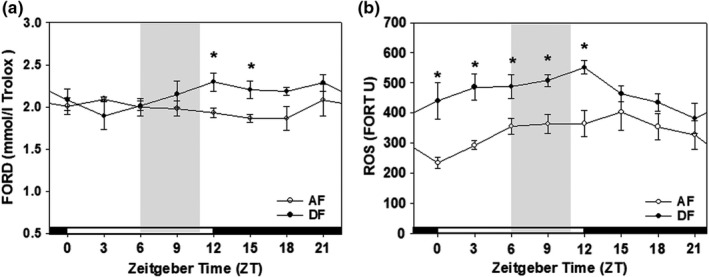
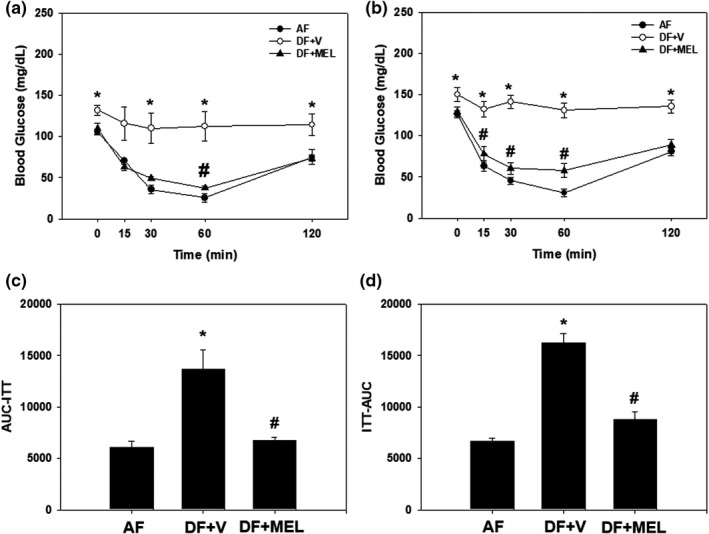
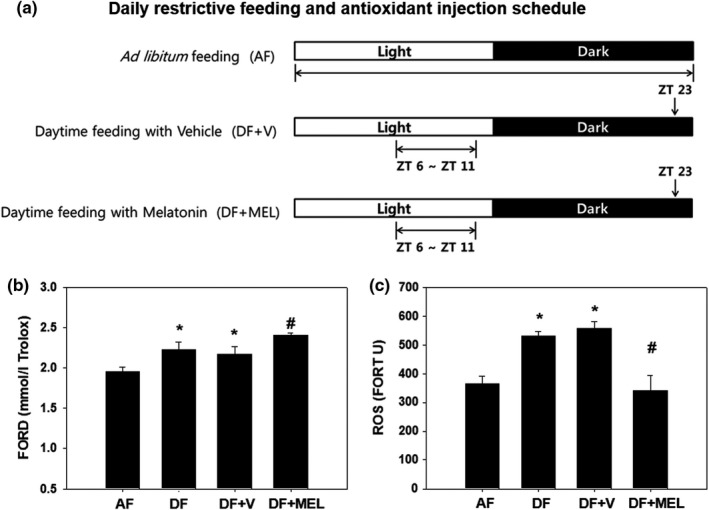
Shift work disorders have become an emerging concern worldwide. Shift disorders encompass a wide range of illnesses that have yet to be identified. The study focused on the relationship between shift work disorders and insulin resistance. Previously, it was reported that advancing the usual mealtime of mice triggered insulin resistance. Here, the hypothesis that chronic mealtime shifts induce oxidative damage leading to chronic diseases such as type 2 diabetes was tested. It was found that mealtime shift causes imbalances between anti-oxidative capacity and reactive oxygen species (ROS) levels, indicating increased oxidative damage during the light/rest phase. This study further demonstrated that daily supplementation of antioxidants at the appropriate time of day inhibited insulin resistance caused by chronic mealtime shifts, suggesting significant and chronic health implications for shift workers. In conclusion, it was confirmed that increased ROS levels caused by mealtime shift induce insulin resistance, which is inhibited by the antioxidant melatonin.
轮班工作障碍已成为全球关注的新兴问题。轮班障碍包括一系列尚未确定的广泛疾病。本研究专注于轮班工作障碍与胰岛素抵抗之间的关系。此前有报道称,提前通常的进餐时间会引发小鼠的胰岛素抵抗。在这里,研究人员测试了这样一个假设,即慢性进餐时间变化会引发氧化损伤,从而导致 2 型糖尿病等慢性疾病。结果发现,进餐时间的变化导致抗氧化能力和活性氧(ROS)水平之间的失衡,表明在光照/休息阶段氧化损伤增加。本研究进一步表明,在一天中的适当时间补充抗氧化剂可抑制慢性进餐时间变化引起的胰岛素抵抗,这表明轮班工人存在显著且慢性的健康影响。总之,研究证实,进餐时间的变化导致 ROS 水平升高,从而引发胰岛素抵抗,而抗氧化剂褪黑素可以抑制这种胰岛素抵抗。