Department of Anesthesiology, Hospital (T.C.M) Affiliated to Southwest Medical University, Chunhui Road 182#, Luzhou, Sichuan, 646000, China.
BMC Anesthesiol. 2022 Mar 28;22(1):84. doi: 10.1186/s12871-022-01628-2.
This study investigates the effects of COMTval158met gene polymorphism on maternal anxiety and pain during delivery and on the analgesic and anxiety efficacy of dexmedetomidine during delivery.
Sixty-one pregnant women, who were hospitalized in our hospital from January to November of 2016 were recruited and randomly divided into two groups, F and D groups. The pregnant women in the F group were given labor analgesia with ropivacaine combined with fentanyl. The pregnant women in the D group were given labor analgesia with ropivacaine combined with dexmedetomidine. Before and after labor analgesia, the genotype of COMT in the blood from two groups was detected, and the situation of labor anxiety and analgesia was analyzed. Then, the relationship between labor anxiety, analgesia, and COMT polymorphism was analyzed.
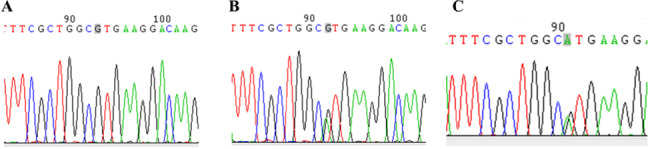
In the 61 pregnant women, there were 30 women of wild homozygotes (GG) of COMT, 22 women of mutant heterozygotes (GA), and nine women of mutant homozygotes (AA), the mutation rate of allele A was 23.77%. The anxiety status score, anxiety trait score, and pain score in the AA genotype were significantly higher than those in the GG and GA genotype (p < 0.05). There was a significant difference in the efficacy of GG and AA genotypes between groups D and F for treating labor anxiety (p < 0.05), the efficacy of group D was better than that of group F in treating delivery anxiety, there was no significant difference in anxiety scores between the two groups in GA genotypes (p > 0.05); there was no significant difference in pain between group D and F in GG, GA, and AA genotypes (p > 0.05). There was no significant difference in pain and anxiety scores between the three genotypes in group D (p > 0.05), there was significant difference in pain scores among the three genotypes in group F (p < 0.05), but there was no significant difference in anxiety (p > 0.05).
The mutation of the COMTval158met gene leads to increased anxiety and pain during childbirth. The effect of dexmedetomidine on the anxiety of GG and AA genotypes is better than that of fentanyl, and the mutation of the COMTval158met gene has no impact on dexmedetomidine effect.
本研究旨在探讨 COMTval158met 基因多态性对产妇分娩时焦虑和疼痛的影响,以及右美托咪定在分娩时的镇痛和焦虑效果。
选取 2016 年 1 月至 11 月在我院住院的 61 例孕妇,随机分为 F 组和 D 组。F 组孕妇给予罗哌卡因联合芬太尼分娩镇痛,D 组孕妇给予罗哌卡因联合右美托咪定分娩镇痛。两组孕妇在分娩镇痛前、后检测血液中 COMT 基因型,并分析分娩时的焦虑和镇痛情况,然后分析分娩焦虑、镇痛与 COMT 多态性的关系。
在 61 例孕妇中,COMT 野生纯合子(GG)30 例,突变杂合子(GA)22 例,突变纯合子(AA)9 例,等位基因 A 的突变率为 23.77%。AA 基因型的焦虑状态评分、焦虑特质评分和疼痛评分均显著高于 GG 和 GA 基因型(p<0.05)。D 组和 F 组 GG 和 AA 基因型的治疗分娩焦虑的疗效有显著差异(p<0.05),D 组治疗分娩焦虑的疗效优于 F 组,GA 基因型两组焦虑评分无显著差异(p>0.05);GG、GA 和 AA 基因型 D 组和 F 组的疼痛无显著差异(p>0.05)。D 组三组基因型的疼痛和焦虑评分无显著差异(p>0.05),F 组三组基因型的疼痛评分有显著差异(p<0.05),但焦虑无显著差异(p>0.05)。
COMTval158met 基因突变导致分娩时焦虑和疼痛增加。右美托咪定对 GG 和 AA 基因型的焦虑作用优于芬太尼,COMTval158met 基因突变对右美托咪定的作用无影响。