Maramba Inocencio Daniel, Jones Ray, Austin Daniela, Edwards Katie, Meinert Edward, Chatterjee Arunangsu
Centre for Health Technology, University of Plymouth, Plymouth, United Kingdom.
JMIR Med Inform. 2022 Mar 29;10(3):e26511. doi: 10.2196/26511.
Health kiosks are publicly accessible computing devices that provide access to services, including health information provision, clinical measurement collection, patient self-check-in, telemonitoring, and teleconsultation. Although the increase in internet access and ownership of smart personal devices could make kiosks redundant, recent reports have predicted that the market will continue to grow.
We seek to clarify the current and future roles of health kiosks by investigating the settings, roles, and clinical domains in which kiosks are used; whether usability evaluations of health kiosks are being reported, and if so, what methods are being used; and what the barriers and facilitators are for the deployment of kiosks.
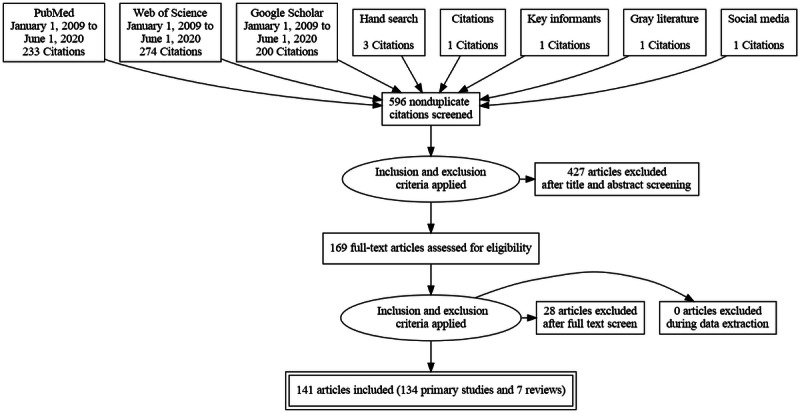
We conducted a scoping review using a bibliographic search of Google Scholar, PubMed, and Web of Science databases for studies and other publications between January 2009 and June 2020. Eligible papers described the implementation as primary studies, systematic reviews, or news and feature articles. Additional reports were obtained by manual searching and querying the key informants. For each article, we abstracted settings, purposes, health domains, whether the kiosk was opportunistic or integrated with a clinical pathway, and whether the kiosk included usability testing. We then summarized the data in frequency tables.
A total of 141 articles were included, of which 134 (95%) were primary studies, and 7 (5%) were reviews. Approximately 47% (63/134) of the primary studies described kiosks in secondary care settings. Other settings included community (32/134, 23.9%), primary care (24/134, 17.9%), and pharmacies (8/134, 6%). The most common roles of the health kiosks were providing health information (47/134, 35.1%), taking clinical measurements (28/134, 20.9%), screening (17/134, 12.7%), telehealth (11/134, 8.2%), and patient registration (8/134, 6.0%). The 5 most frequent health domains were multiple conditions (33/134, 24.6%), HIV (10/134, 7.5%), hypertension (10/134, 7.5%), pediatric injuries (7/134, 5.2%), health and well-being (6/134, 4.5%), and drug monitoring (6/134, 4.5%). Kiosks were integrated into the clinical pathway in 70.1% (94/134) of studies, opportunistic kiosks accounted for 23.9% (32/134) of studies, and in 6% (8/134) of studies, kiosks were used in both. Usability evaluations of kiosks were reported in 20.1% (27/134) of papers. Barriers (e.g., use of expensive proprietary software) and enablers (e.g., handling of on-demand consultations) of deploying health kiosks were identified.
Health kiosks still play a vital role in the health care system, including collecting clinical measurements and providing access to web-based health services and information to those with little or no digital literacy skills and others without personal internet access. We identified research gaps, such as training needs for teleconsultations and scant reporting on usability evaluation methods.
健康信息亭是可供公众使用的计算设备,可提供多种服务,包括提供健康信息、收集临床测量数据、患者自助挂号、远程监测和远程会诊。尽管互联网接入的增加和智能个人设备的普及可能会使信息亭变得多余,但最近的报告预测该市场将持续增长。
我们旨在通过调查健康信息亭的使用场景、作用和临床领域;是否有关于健康信息亭可用性评估的报告,若有,采用了何种方法;以及信息亭部署的障碍和促进因素,来阐明其当前和未来的作用。
我们进行了一项范围综述,通过对谷歌学术、PubMed和科学网数据库进行文献检索,查找2009年1月至2020年6月期间的研究及其他出版物。符合条件的论文将实施情况描述为原始研究、系统综述或新闻与专题文章。通过手动搜索和向关键信息提供者询问获取了其他报告。对于每篇文章,我们提取了场景、目的、健康领域、信息亭是机会性使用还是与临床路径整合,以及信息亭是否包括可用性测试。然后我们在频率表中总结了数据。
共纳入141篇文章,其中134篇(95%)为原始研究,7篇(5%)为综述。约47%(63/134)的原始研究描述了二级医疗环境中的信息亭。其他场景包括社区(32/134,23.9%)、初级医疗(24/134,17.9%)和药房(8/134,6%)。健康信息亭最常见的作用是提供健康信息(47/134,35.1%)、进行临床测量(28/134,20.9%)、筛查(17/134,12.7%)、远程医疗(11/134,8.2%)和患者登记(8/134,6.0%)。最常涉及的5个健康领域是多种疾病(33/134,24.6%)、艾滋病毒(10/134,7.5%)、高血压(10/134,7.5%)、儿童损伤(7/134,5.2%)、健康与幸福(6/134,4.5%)以及药物监测(6/134,4.5%)。70.1%(94/134)的研究将信息亭整合到临床路径中,机会性使用信息亭的研究占23.9%(32/134),6%(8/134)的研究同时采用了这两种方式。20.1%(27/134)的论文报告了信息亭的可用性评估。确定了部署健康信息亭的障碍(如使用昂贵的专有软件)和促进因素(如按需会诊的处理)。
健康信息亭在医疗保健系统中仍发挥着重要作用,包括收集临床测量数据以及为数字素养技能很少或没有、且无法个人接入互联网的人群提供基于网络的健康服务和信息。我们发现了研究空白,如远程会诊的培训需求以及可用性评估方法的报告较少。
