UPMC Cancer Institute and Department of Pharmacology and Chemical Biology at the University of Pittsburgh, Hillman Cancer Center, 5115 Centre Avenue, Pittsburgh, PA, 15213, USA.
Department of Biochemistry and Molecular Biology, Thomas Jefferson University, 233 S. 10th street, Philadelphia, PA, 19107, USA.
Cell Mol Life Sci. 2022 Mar 29;79(4):215. doi: 10.1007/s00018-022-04235-z.
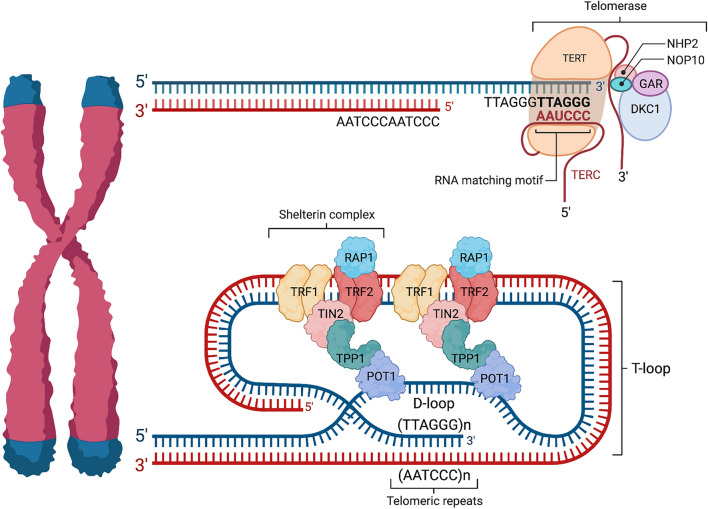
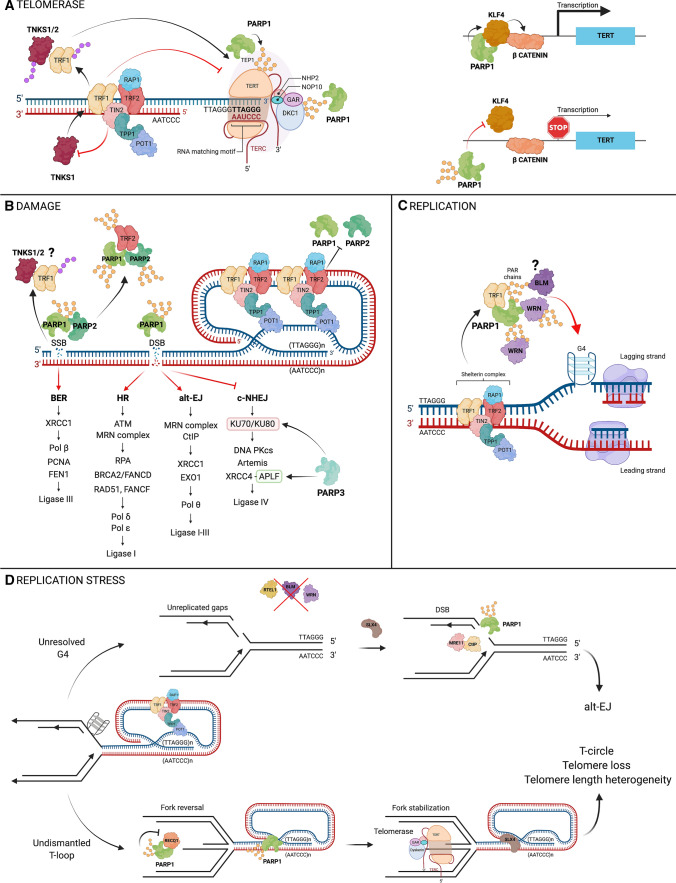
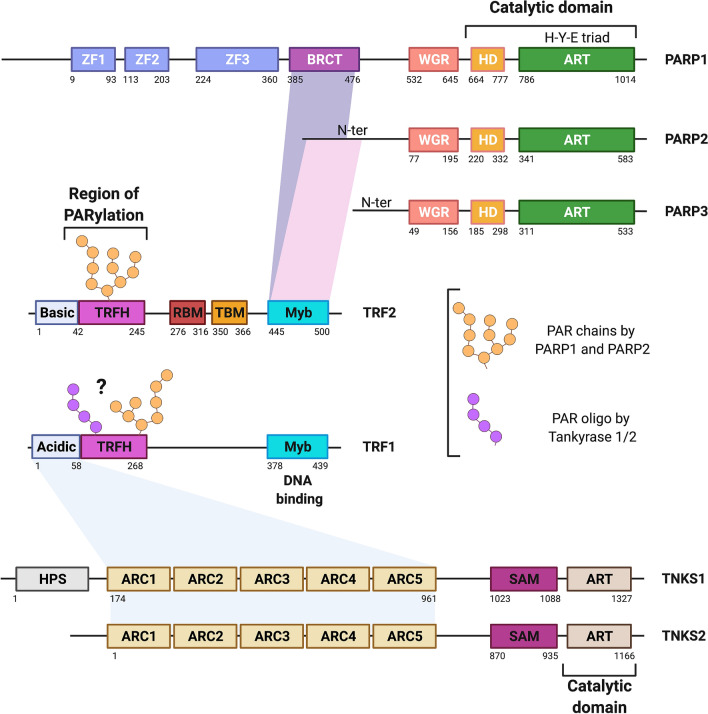
The ADP-ribose transferase (ART) family comprises 17 enzymes that catalyze mono- or poly-ADP-ribosylation, a post-translational modification of proteins. Present in all subcellular compartments, ARTs are implicated in a growing number of biological processes including DNA repair, replication, transcription regulation, intra- and extra-cellular signaling, viral infection and cell death. Five members of the family, PARP1, PARP2, PARP3, tankyrase 1 and tankyrase 2 are mainly described for their crucial functions in the maintenance of genome stability. It is well established that the most describedrole of PARP1, 2 and 3 is the repair of DNA lesions while tankyrases 1 and 2 are crucial for maintaining the integrity of telomeres. Telomeres, nucleoprotein complexes located at the ends of eukaryotic chromosomes, utilize their unique structure and associated set of proteins to orchestrate the mechanisms necessary for their own protection and replication. While the functions of tankyrases 1 and 2 at telomeres are well known, several studies have also brought PARP1, 2 and 3 to the forefront of telomere protection. The singular quality of the telomeric environment has highlighted protein interactions and molecular pathways distinct from those described throughout the genome. The aim of this review is to provide an overview of the current knowledge on the multiple roles of PARP1, PARP2, PARP3, tankyrase 1 and tankyrase 2 in the maintenance and preservation of telomere integrity.
ADP-核糖基转移酶(ART)家族由 17 种酶组成,这些酶催化单聚或多聚 ADP-核糖基化,这是蛋白质的一种翻译后修饰。ART 存在于所有亚细胞区室中,参与越来越多的生物学过程,包括 DNA 修复、复制、转录调控、细胞内和细胞外信号转导、病毒感染和细胞死亡。该家族的五个成员,PARP1、PARP2、PARP3、端锚聚合酶 1 和端锚聚合酶 2,主要因其在维持基因组稳定性方面的关键功能而被描述。众所周知,PARP1、2 和 3 的最主要作用是修复 DNA 损伤,而端锚聚合酶 1 和 2 对于维持端粒的完整性至关重要。端粒是位于真核染色体末端的核蛋白复合物,利用其独特的结构和相关的一组蛋白质来协调自身保护和复制所需的机制。虽然端粒中端锚聚合酶 1 和 2 的功能已广为人知,但多项研究也将 PARP1、2 和 3 推向了端粒保护的前沿。端粒环境的独特性质突出了与整个基因组中描述的不同的蛋白质相互作用和分子途径。本综述的目的是提供对 PARP1、PARP2、PARP3、端锚聚合酶 1 和端锚聚合酶 2 在维持和保护端粒完整性方面的多种作用的最新认识。