Division of Rheumatology and Clinical Autoimmunity Center of Excellence, Department of Internal Medicine, and.
Department of Neurology, University of Michigan, Ann Arbor, Michigan, USA.
JCI Insight. 2022 May 9;7(9):e150871. doi: 10.1172/jci.insight.150871.
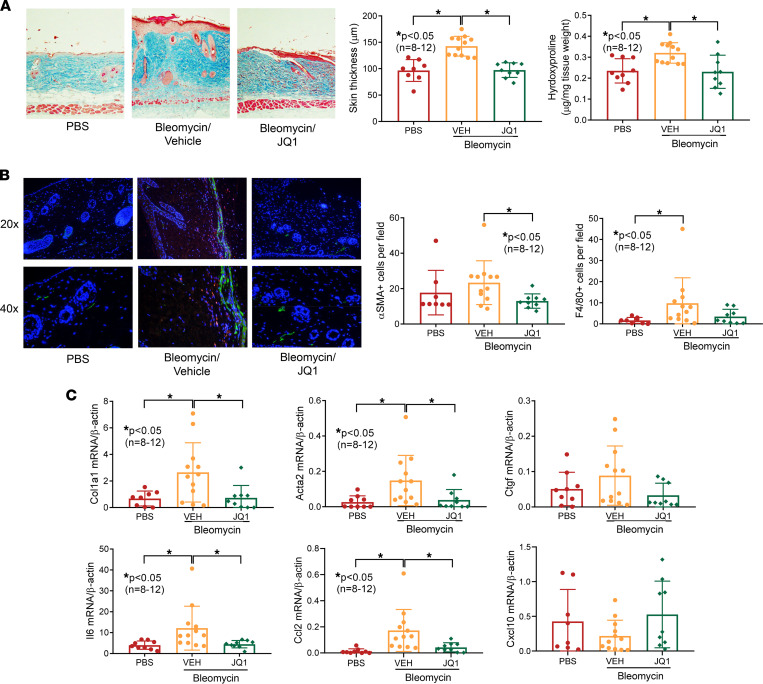
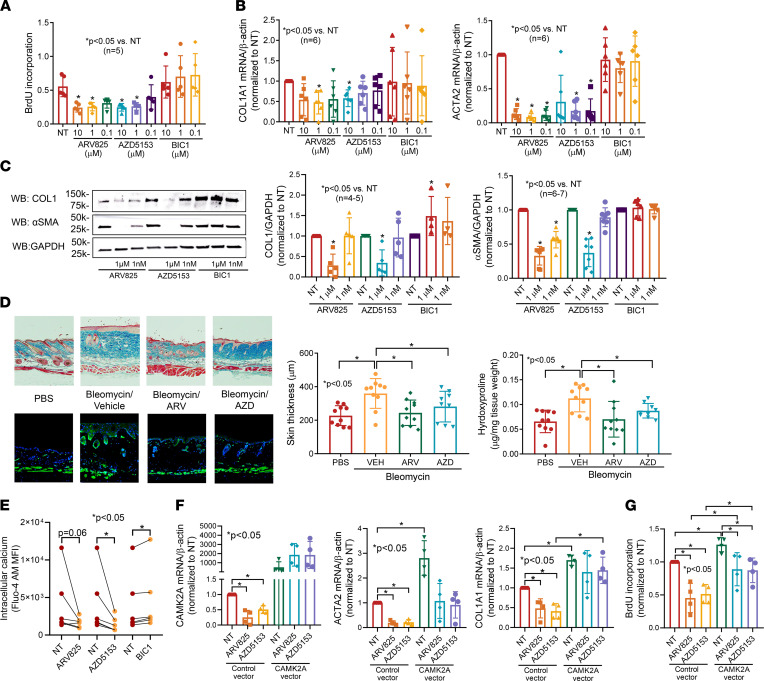
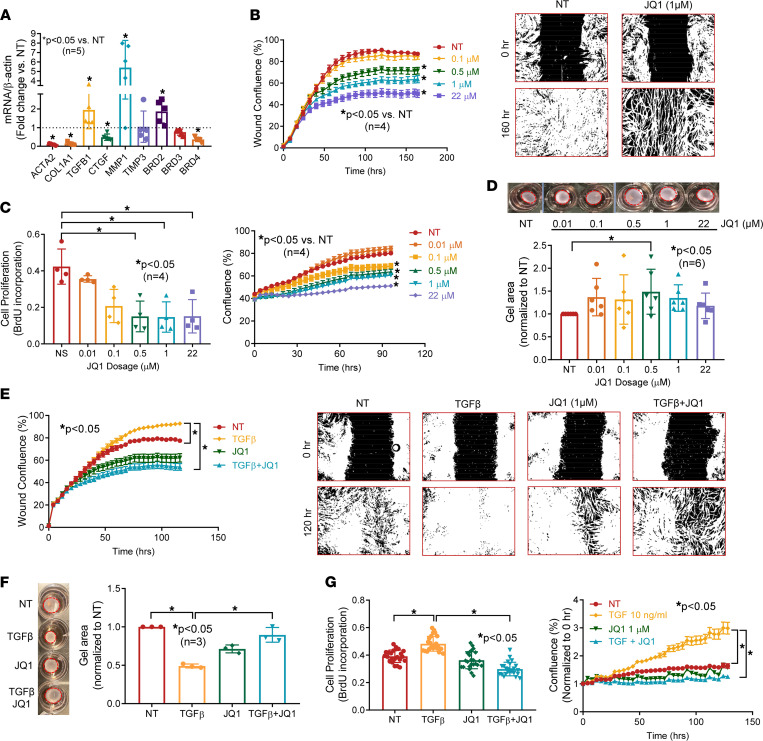
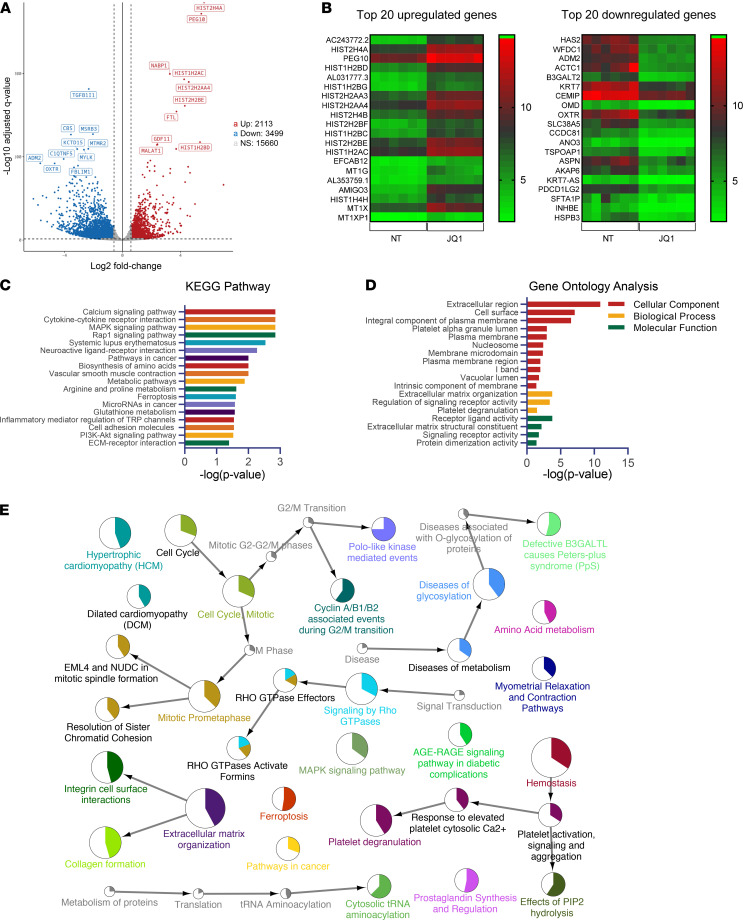
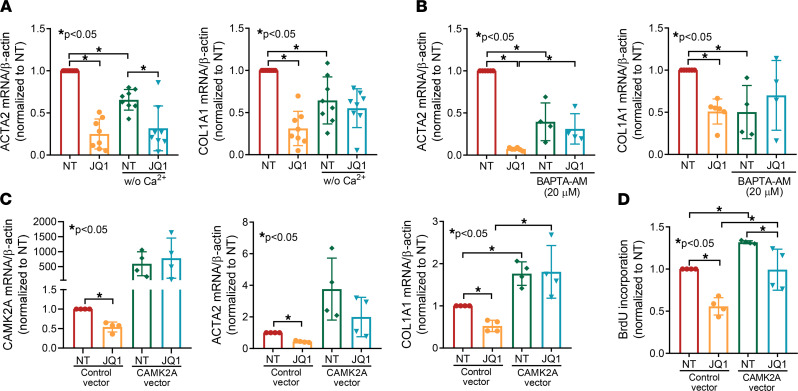
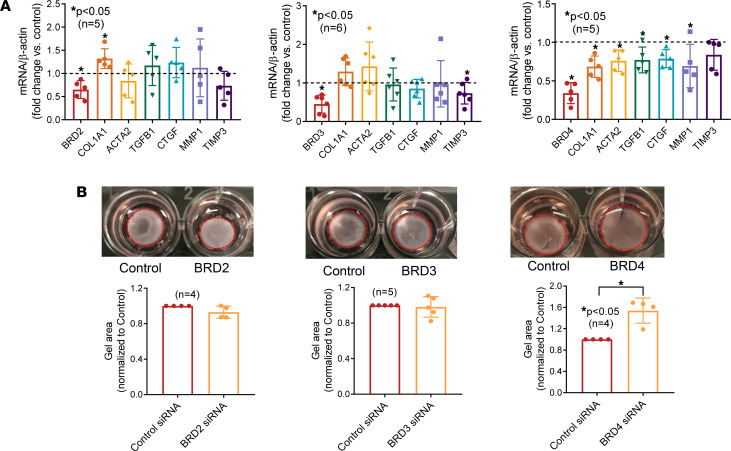
Binding of the bromodomain and extraterminal domain proteins (BETs) to acetylated histone residues is critical for gene transcription. We sought to determine the antifibrotic efficacy and potential mechanisms of BET inhibition in systemic sclerosis (SSc). Blockade of BETs was done using a pan-BET inhibitor, JQ1; BRD2 inhibitor, BIC1; or BRD4 inhibitors AZD5153 or ARV825. BET inhibition, specifically BRD4 blockade, showed antifibrotic effects in an animal model of SSc and in patient-derived diffuse cutaneous SSc (dcSSc) fibroblasts. Transcriptome analysis of JQ1-treated dcSSc fibroblasts revealed differentially expressed genes related to extracellular matrix, cell cycle, and calcium (Ca2+) signaling. The antifibrotic effect of BRD4 inhibition was mediated at least in part by downregulation of Ca2+/calmodulin-dependent protein kinase II α and reduction of intracellular Ca2+ concentrations. On the basis of these results, we propose targeting Ca2+ pathways or BRD4 as potentially novel therapeutic approaches for progressive tissue fibrosis.
溴结构域和末端结构域蛋白(BET)与乙酰化组蛋白残基的结合对于基因转录至关重要。我们试图确定 BET 抑制在系统性硬化症(SSc)中的抗纤维化疗效和潜在机制。使用泛 BET 抑制剂 JQ1、BRD2 抑制剂 BIC1、BRD4 抑制剂 AZD5153 或 ARV825 阻断 BET。BET 抑制,特别是 BRD4 阻断,在 SSc 的动物模型和患者来源的弥漫性皮肤 SSc(dcSSc)成纤维细胞中显示出抗纤维化作用。用 JQ1 处理的 dcSSc 成纤维细胞的转录组分析显示与细胞外基质、细胞周期和钙(Ca2+)信号相关的差异表达基因。BRD4 抑制的抗纤维化作用至少部分是通过下调钙/钙调蛋白依赖性蛋白激酶 IIα 和降低细胞内 Ca2+浓度来介导的。基于这些结果,我们提出靶向 Ca2+途径或 BRD4 作为进展性组织纤维化的潜在新的治疗方法。