Zhou Zhongbao, Yang Zhenpeng, Cui Yuanshan, Lu Shuai, Huang Yongjin, Che Xuanyan, Yang Liqing, Zhang Yong
Department of Urology, Beijing TianTan Hospital, Capital Medical University, Beijing, China.
Department of General Surgery, Beijing Shijitan Hospital, Capital Medical University, Beijing, China.
Front Genet. 2022 Mar 8;13:787884. doi: 10.3389/fgene.2022.787884. eCollection 2022.
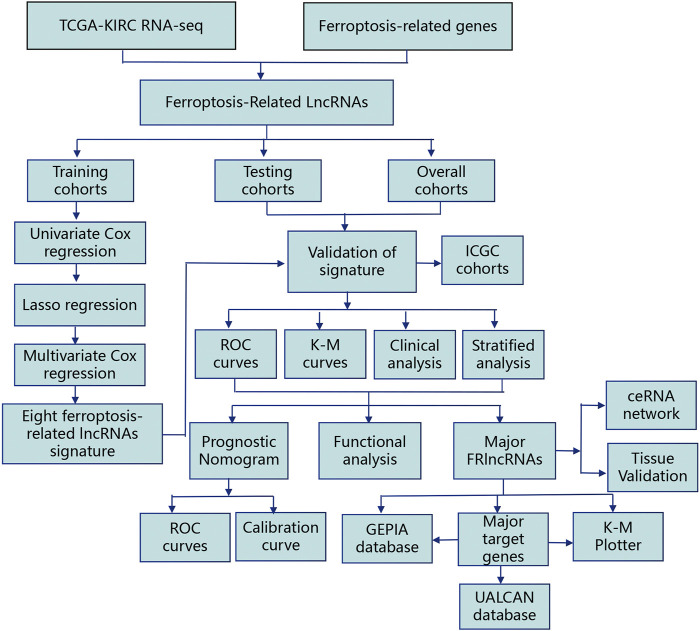
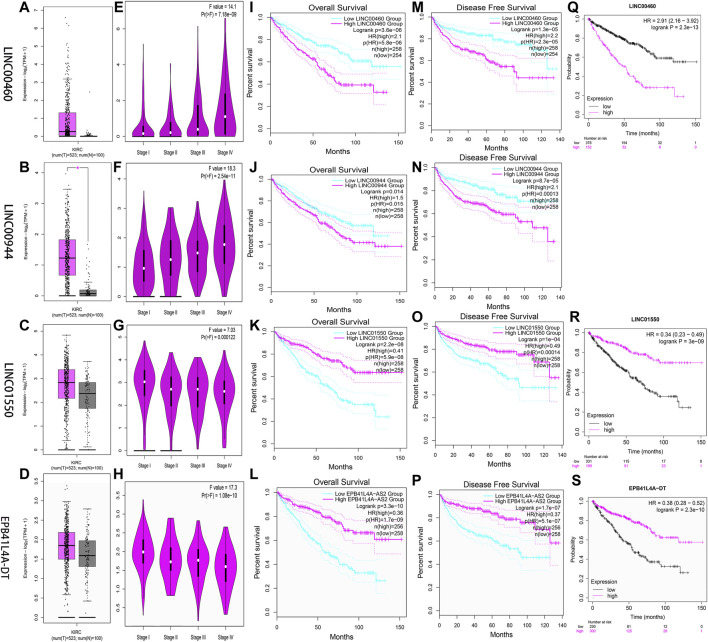
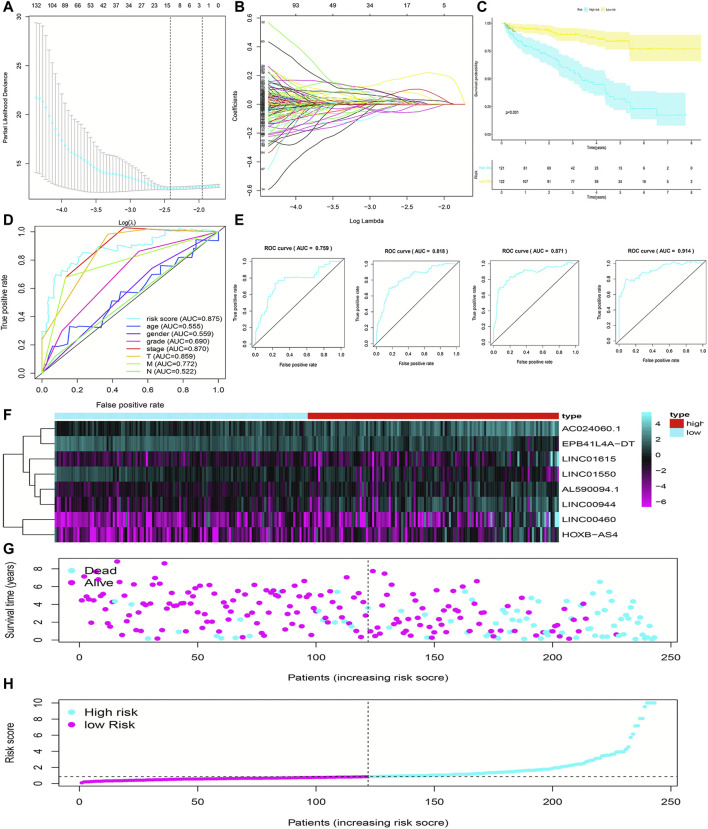
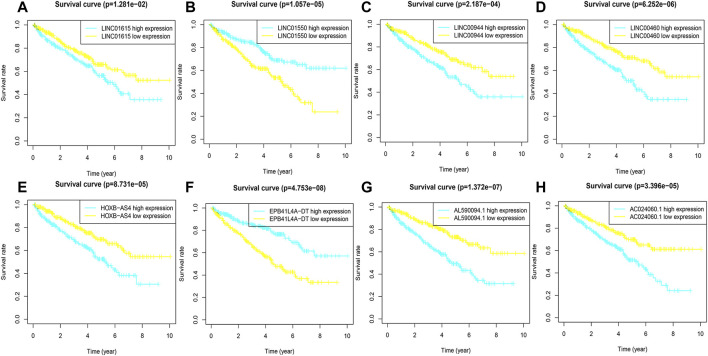
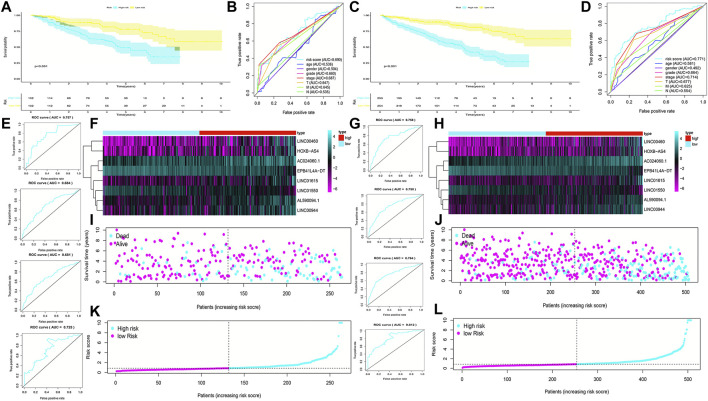
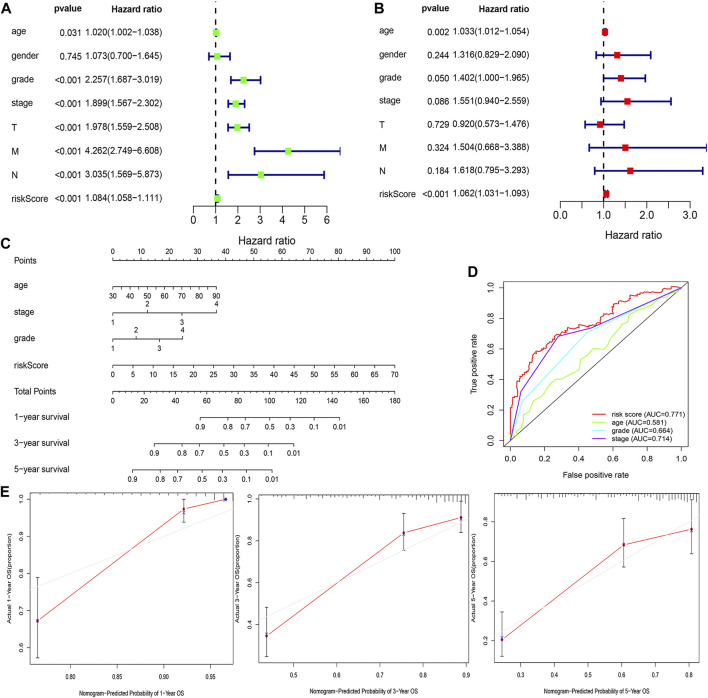
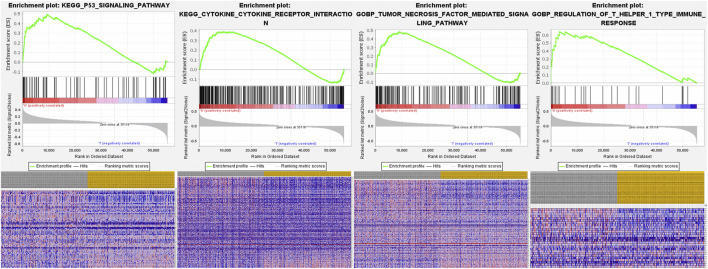
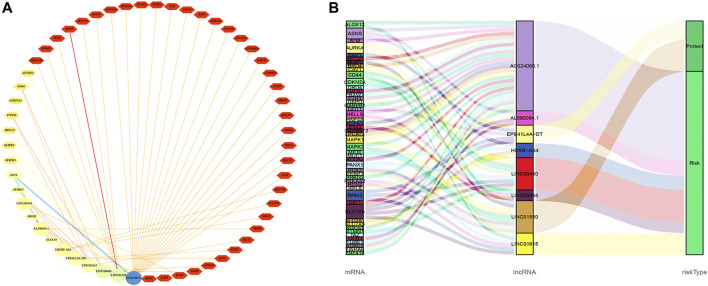
The incidence of clear cell renal cell carcinoma (ccRCC) is increasing worldwide, contributing to 70-85% of kidney cancer cases. Ferroptosis is a novel type of programmed cell death and could predict prognoses in cancers. Here, we developed a ferroptosis-related long non-coding RNA (FRlncRNA) signature to improve the prognostic prediction of ccRCC. The transcriptome profiles of FRlncRNAs and clinical data of ccRCC were obtained from The Cancer Genome Atlas and ICGC databases. Patients were randomly assigned to training cohorts, testing cohorts, and overall cohorts. The FRlncRNA signature was constructed by Lasso regression and Cox regression analysis, and Kaplan-Meier (K-M) analysis was used to access the prognosis of each group. The accuracy of this signature was evaluated by the receiver operating characteristic (ROC) curve. The visualization of functional enrichment was carried out by the gene set enrichment analysis (GSEA). Internal and external datasets were performed to verify the FRlncRNA signature. A FRlncRNA signature comprising eight lncRNAs (AL590094.1, LINC00460, LINC00944, AC024060.1, HOXB-AS4, LINC01615, EPB41L4A-DT, and LINC01550) was identified. Patients were divided into low- and high-risk groups according to the median risk score, in which the high-risk group owned a dramatical shorter survival time than that of the low-risk group. Through ROC analysis, it was found that this signature had a greater predictive capability than traditional evaluation methods. The risk score was an independent risk factor for overall survival suggested by multivariate Cox analysis (HR = 1.065, 95%CI = 1.036-1.095, and < 0.001). We constructed a clinically predictive nomogram based on this signature and its clinical features, which is of accurate prediction about the survival rate of patients. The GSEA showed that primary pathways were the P53 signaling pathway and tumor necrosis factor-mediated signaling pathway. The major FRlncRNAs (LINC00460, LINC00944, LINC01550, and EPB41L4A-DT) were verified with the prognosis of ccRCC in the GEPIA and K-M Plotter databases. Their major target genes (BNIP3, RRM2, and GOT1) were closely related to the stage, grade, and survival outcomes of ccRCC by the validation of multiple databases. Additionally, we found two groups had a significant distinct pattern of immune function, immune checkpoint, and immune infiltration, which may lead to different survival benefits. The FRlncRNA signature was accurate and act as reliable tools for predicting clinical outcomes and the immune microenvironment of patients with ccRCC, which may be molecular biomarkers and therapeutic targets.
透明细胞肾细胞癌(ccRCC)的发病率在全球范围内呈上升趋势,占肾癌病例的70 - 85%。铁死亡是一种新型的程序性细胞死亡,可预测癌症预后。在此,我们开发了一种与铁死亡相关的长链非编码RNA(FRlncRNA)特征,以改善ccRCC的预后预测。从癌症基因组图谱(The Cancer Genome Atlas)和国际癌症基因组联盟(ICGC)数据库中获取FRlncRNAs的转录组图谱和ccRCC的临床数据。患者被随机分配到训练队列、测试队列和总队列。通过套索回归和Cox回归分析构建FRlncRNA特征,并使用Kaplan - Meier(K - M)分析评估每组的预后。通过受试者工作特征(ROC)曲线评估该特征的准确性。通过基因集富集分析(GSEA)进行功能富集的可视化。进行内部和外部数据集验证FRlncRNA特征。鉴定出一个由8个lncRNAs(AL590094.1、LINC00460、LINC00944、AC024060.1、HOXB - AS4、LINC01615、EPB41L4A - DT和LINC01550)组成的FRlncRNA特征。根据中位风险评分将患者分为低风险组和高风险组,其中高风险组的生存时间明显短于低风险组。通过ROC分析发现,该特征比传统评估方法具有更强的预测能力。多因素Cox分析表明风险评分是总生存的独立危险因素(HR = 1.065,95%CI = 1.036 - 1.095,P < 0.001)。我们基于该特征及其临床特征构建了临床预测列线图,对患者生存率具有准确的预测能力。GSEA显示主要通路为P53信号通路和肿瘤坏死因子介导的信号通路。在GEPIA和K - M Plotter数据库中验证了主要的FRlncRNAs(LINC00460、LINC00944、LINC01550和EPB41L4A - DT)与ccRCC预后的关系。通过多个数据库的验证,它们的主要靶基因(BNIP3、RRM2和GOT1)与ccRCC的分期、分级和生存结果密切相关。此外,我们发现两组在免疫功能、免疫检查点和免疫浸润方面具有明显不同的模式,这可能导致不同的生存获益。FRlncRNA特征准确,可作为预测ccRCC患者临床结局和免疫微环境的可靠工具,可能是分子生物标志物和治疗靶点。