Ding Wenshuang, Wu Liqiong, Li Xiubo, Chang Lijun, Liu Guorong, Du Hong
Department of Pathology, Guangzhou First People's Hospital, School of Medicine, South China University of Technology, Guangzhou, Guangdong 510030, P.R. China.
Oncol Lett. 2022 May;23(5):150. doi: 10.3892/ol.2022.13270. Epub 2022 Mar 15.
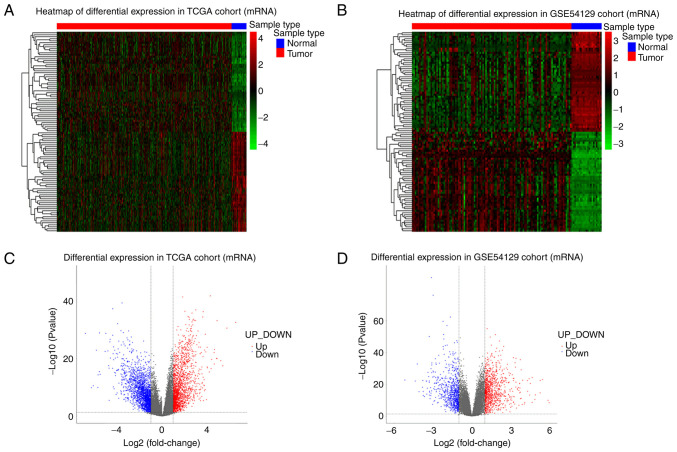
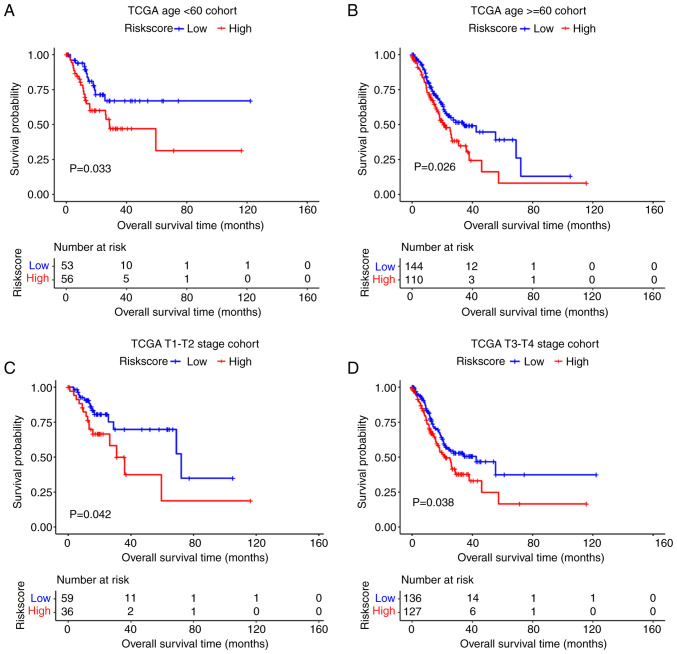
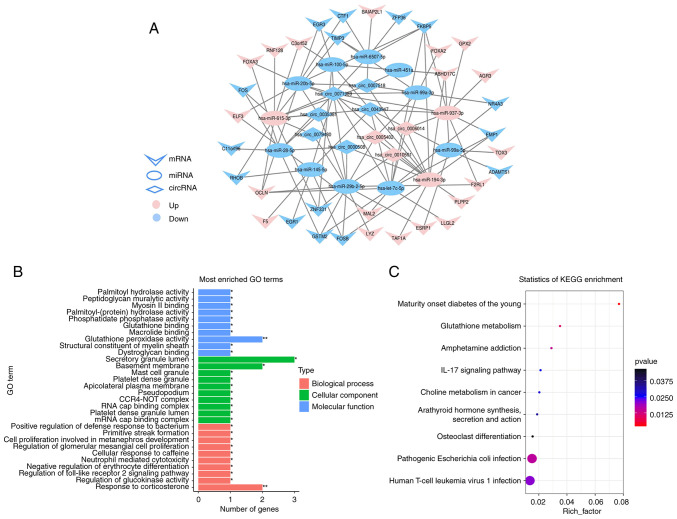
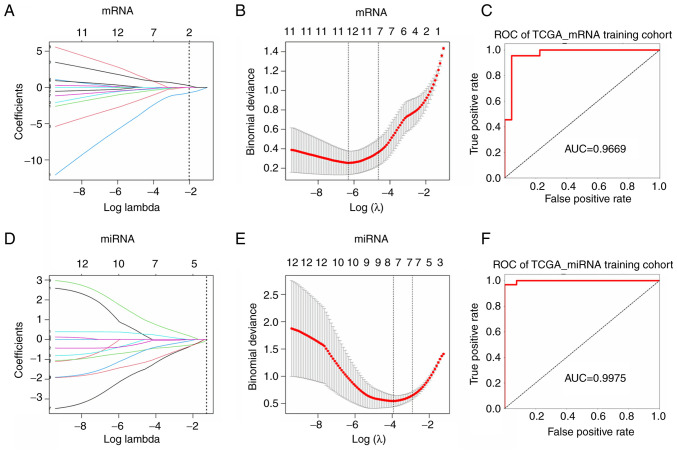
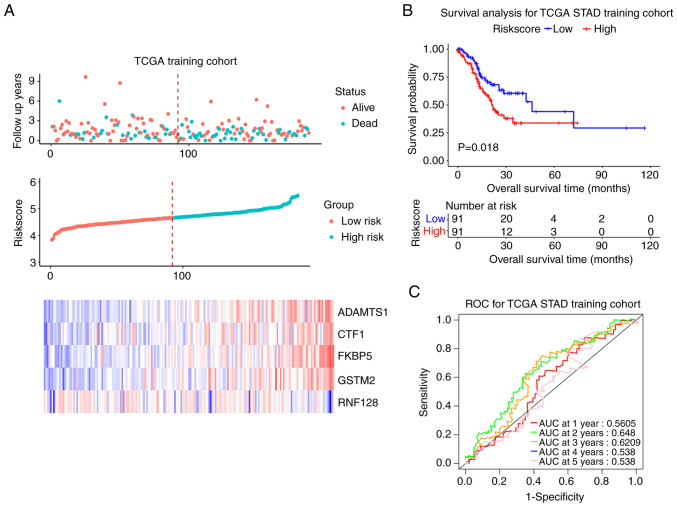
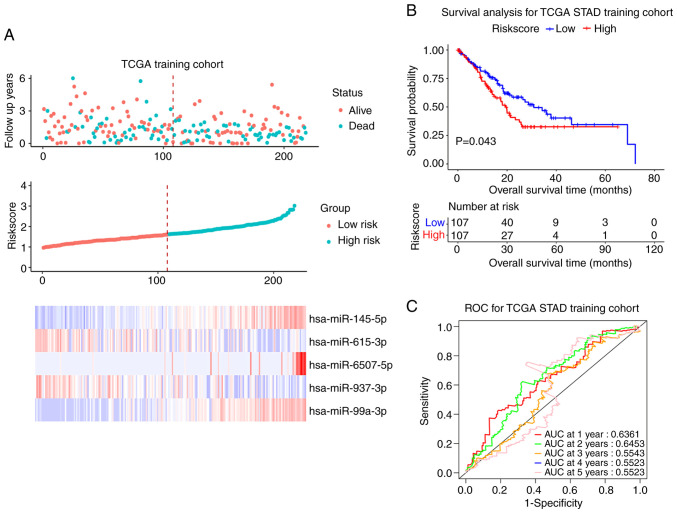
Gastric cancer (GC), one of the most lethal malignant tumors, is highly aggressive with a poor prognosis, while the molecular mechanisms underlying it remain largely unknown. Although advanced imaging techniques and comprehensive treatment facilitate the diagnosis and survival of some GC patients, the precise diagnosis and prognosis are still a challenge. The present study used publicly available gene expression profiles from The Cancer Genome Atlas and Gene Expression Omnibus datasets including mRNA, micro (mi)RNA and circular (circ)RNA of GC to establish a competing endogenous RNA network (ceRNA). Further, the present study performed least absolute shrinkage and selector operator regression analysis on the hub RNAs to establish a prediction model with mRNA and miRNA. The ceRNA network contained 109 edges and 56 nodes and the visible network contains 13 miRNAs, 9 circRNAs and 34 mRNAs. The five mRNA-based signature were CTF1, FKBP5, RNF128, GSTM2 and ADAMTS1. The area under curve (AUC) value of the diagnosis training cohort was 0.9975. The prognosis of the high-risk group (RiskScore >4.664) was worse compared with that of the low-risk group (RiskScore ≤4.664; P<0.05) in the training cohort. The five miRNA-based signature were miR-145-5p, miR-615-3p, miR-6507-5p, miR-937-3p and miR-99a-3p. The AUC value of the diagnosis training cohort was 0.9975. The prognosis of the high-risk group (RiskScore >1.621) was worse compared with that of the low-risk group (RiskScore ≤1.621; P<0.05) in the training cohort. The validation cohorts indicated that both five mRNA and five miRNA-based signatures had strong predictive power in diagnosis and prognosis for GC. In conclusion, a ceRNA network was established for GC and a five mRNA-based signature and a five miRNA-based signature was identified that enabled diagnosis and prognosis of GC by assigning patient to a high-risk group or low-risk group.
胃癌(GC)是最致命的恶性肿瘤之一,侵袭性强,预后差,但其潜在的分子机制仍 largely 未知。尽管先进的成像技术和综合治疗有助于一些 GC 患者的诊断和生存,但精确诊断和预后仍然是一个挑战。本研究使用来自癌症基因组图谱和基因表达综合数据集的公开可用基因表达谱,包括 GC 的信使核糖核酸(mRNA)、微小(mi)RNA 和环状(circ)RNA,以建立一个竞争性内源 RNA 网络(ceRNA)。此外,本研究对枢纽 RNA 进行最小绝对收缩和选择算子回归分析,以建立一个基于 mRNA 和 miRNA 的预测模型。ceRNA 网络包含 109 条边和 56 个节点,可见网络包含 13 个 miRNA、9 个 circRNA 和 34 个 mRNA。基于 mRNA 的五个特征是 CTF1、FKBP5、RNF128、GSTM2 和 ADAMTS1。诊断训练队列的曲线下面积(AUC)值为 0.9975。在训练队列中,高危组(风险评分>4.664)的预后比低危组(风险评分≤4.664;P<0.05)差。基于 miRNA 的五个特征是 miR-145-5p、miR-615-3p、miR-6507-5p、miR-937-3p 和 miR-99a-3p。诊断训练队列的 AUC 值为 0.9975。在训练队列中,高危组(风险评分>1.621)的预后比低危组(风险评分≤1.621;P<0.05)差。验证队列表明,基于五个 mRNA 和五个 miRNA 的特征在 GC 的诊断和预后方面都具有很强的预测能力。总之,为 GC 建立了一个 ceRNA 网络,并鉴定出一个基于五个 mRNA 的特征和一个基于五个 miRNA 的特征,通过将患者分为高危组或低危组来实现 GC 的诊断和预后评估。