You Jia, Li Huawei, Fan Peng, Yang Xi, Wei Yuanfeng, Zheng Lingnan, Li Zhaojun, Yi Cheng
Department of Oncology, Hospital of Chengdu University of Traditional Chinese Medicine, Chengdu University of Traditional Chinese Medicine, Chengdu, China.
Department of Respiratory and Critical Care Medicine, Chongqing Traditional Chinese Medicine Hospital, Chongqing, China.
Front Pharmacol. 2022 Mar 8;13:853496. doi: 10.3389/fphar.2022.853496. eCollection 2022.
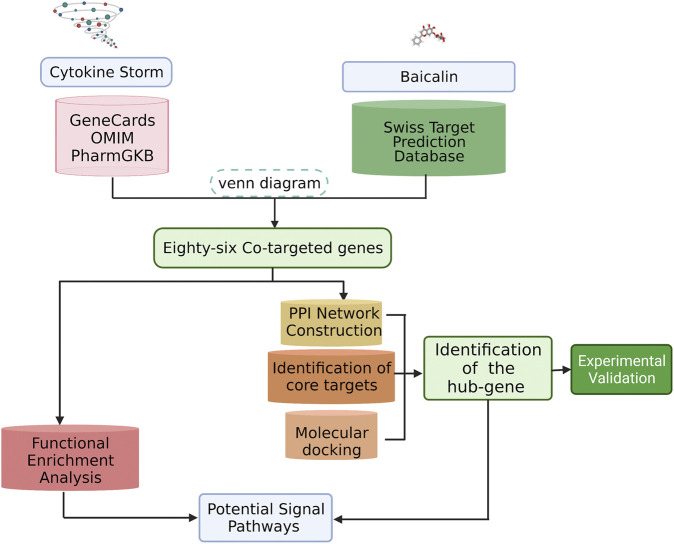
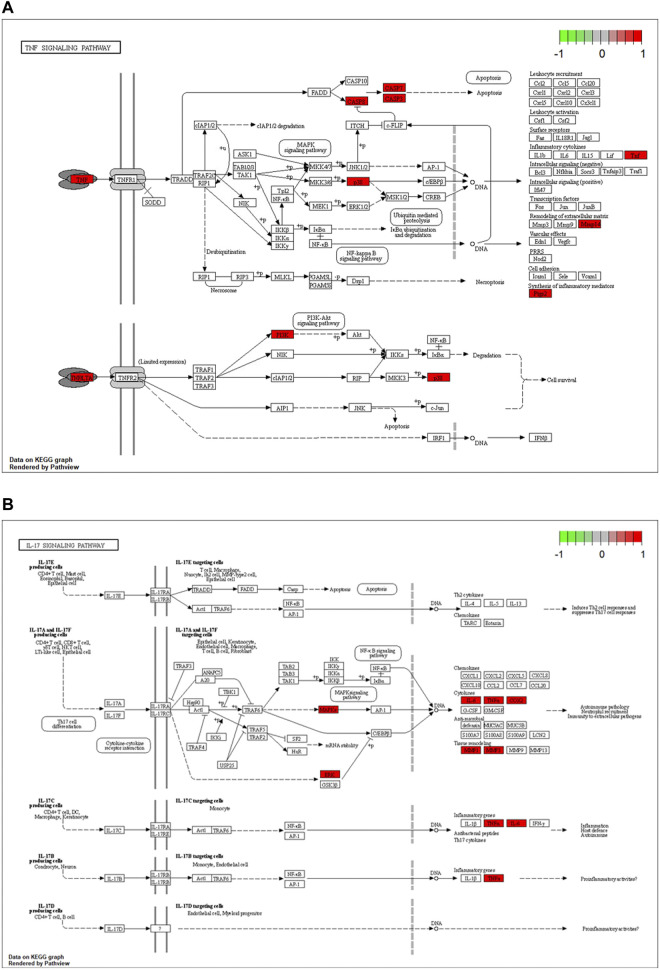
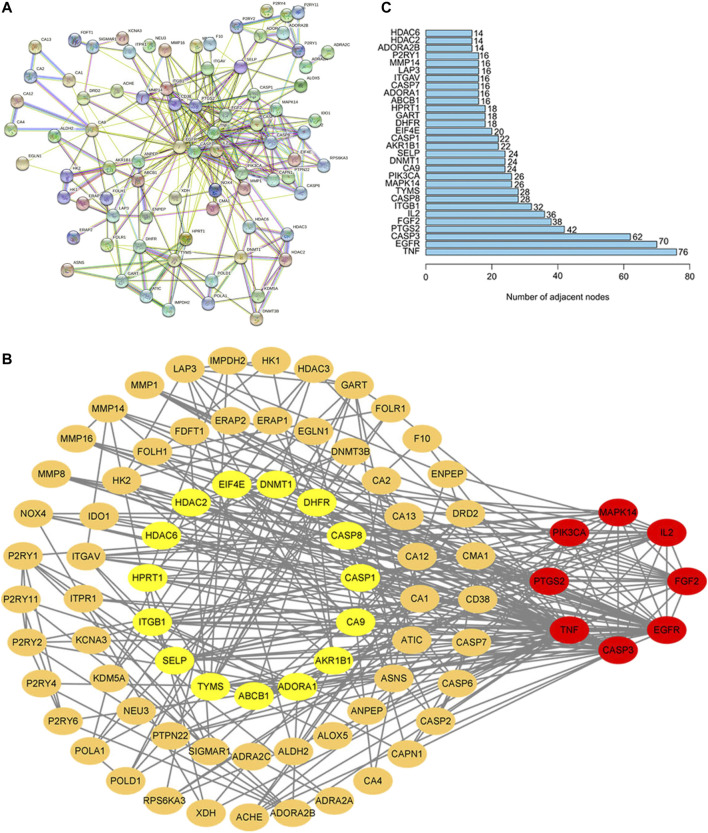
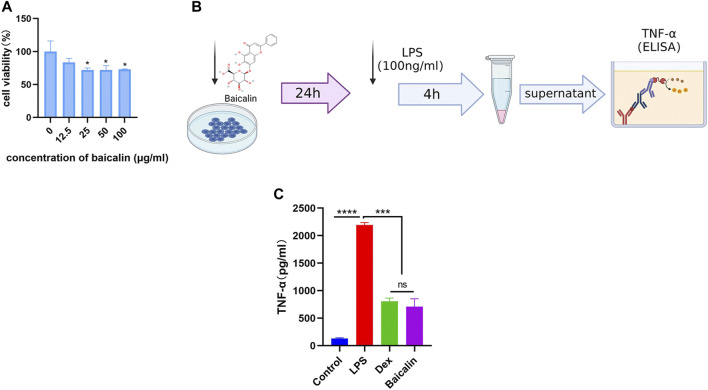
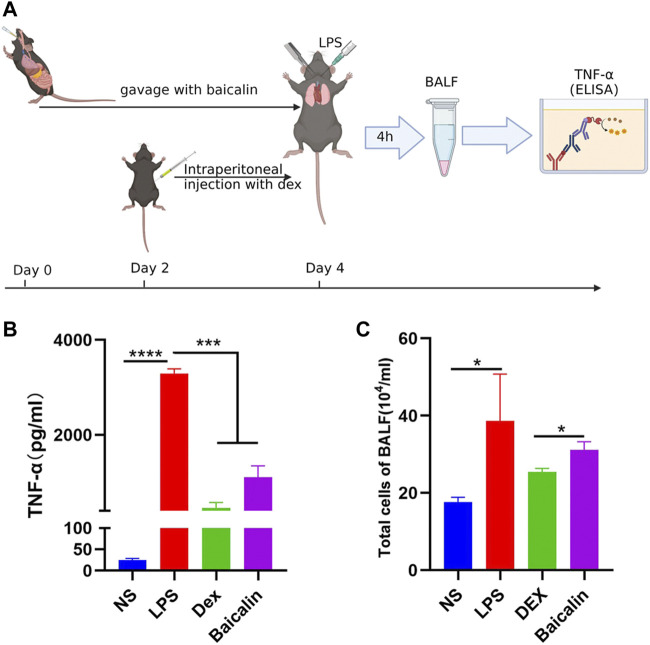
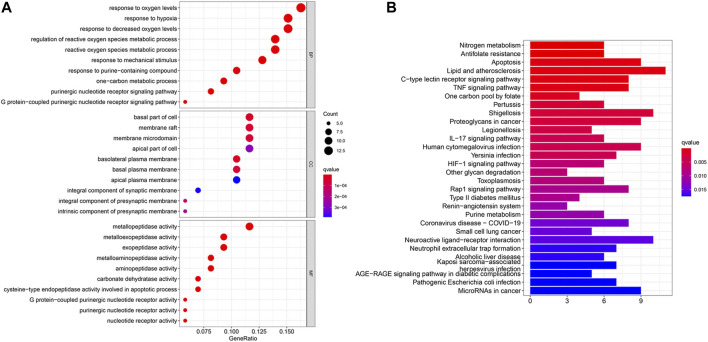
Cytokine storm (CS) is a systemic inflammatory syndrome and a major cause of multi-organ failure and even death in COVID-19 patients. With the increasing number of COVID-19 patients, there is an urgent need to develop effective therapeutic strategies for CS. Baicalin is an anti-inflammatory and antiviral traditional Chinese medicine. In the present study, we aimed to evaluate the therapeutic mechanism of baicalin against CS through network analysis and experimental validation, and to detect key targets of CS that may bind closely to baicalin through molecular docking. Access to potential targets of baicalin and CS in public databases. We constructed the protein-protein interaction (PPI) network of baicalin and CS by Cytoscape 9.0 software and performed network topology analysis of the potential targets. Then, the hub target was identified by molecular docking technique and validated in the CS model. Finally, GO and KEGG pathway functional enrichment analysis of common targets were confirmed using R language, and the location of overlapping targets in key pathways was queried via KEGG Mapper. A total of 86 overlapping targets of baicalin and CS were identified, among which MAPK14, IL2, FGF2, CASP3, PTGS2, PIK3CA, EGFR, and TNF were the core targets. Moreover, it was found that baicalin bound most closely to TNF through molecular docking, and demonstrated that baicalin can effectively inhibit the elevation of TNF-α and . Furthermore, bioenrichment analysis revealed that the TNF signaling pathway and IL-17 signaling pathway may be potential key pathways for baicalin to treat CS. Based on this study, baicalin was identified as a potential drug for the alleviation of CS, and the possible key targets and pathways of baicalin for the treatment of CS were elucidated to reveal the main pharmacological mechanisms.
细胞因子风暴(CS)是一种全身性炎症综合征,是COVID-19患者多器官功能衰竭甚至死亡的主要原因。随着COVID-19患者数量的增加,迫切需要开发针对CS的有效治疗策略。黄芩苷是一种具有抗炎和抗病毒作用的中药。在本研究中,我们旨在通过网络分析和实验验证来评估黄芩苷抗CS的治疗机制,并通过分子对接检测可能与黄芩苷紧密结合的CS关键靶点。在公共数据库中获取黄芩苷和CS的潜在靶点。我们使用Cytoscape 9.0软件构建了黄芩苷和CS的蛋白质-蛋白质相互作用(PPI)网络,并对潜在靶点进行了网络拓扑分析。然后,通过分子对接技术鉴定枢纽靶点并在CS模型中进行验证。最后,使用R语言对共同靶点进行GO和KEGG通路功能富集分析,并通过KEGG Mapper查询关键通路中重叠靶点的位置。共鉴定出86个黄芩苷和CS的重叠靶点,其中MAPK14、IL2、FGF2、CASP3、PTGS2、PIK3CA、EGFR和TNF是核心靶点。此外,通过分子对接发现黄芩苷与TNF结合最紧密,并证明黄芩苷可有效抑制TNF-α的升高。此外,生物富集分析表明,TNF信号通路和IL-17信号通路可能是黄芩苷治疗CS的潜在关键通路。基于本研究,黄芩苷被确定为缓解CS的潜在药物,并阐明了黄芩苷治疗CS可能的关键靶点和通路,以揭示其主要药理机制。