Peking University People's Hospital, Peking University Institute of Hematology, National Clinical Research Center for Hematologic Disease, Beijing Key Laboratory of Hematopoietic Stem Cell Transplantation, Collaborative Innovation Center of Hematology, Peking University, Beijing, China.
Peking-Tsinghua Center for Life Sciences, Academy for Advanced Interdisciplinary Studies, Peking University, Beijing, China.
J Transl Med. 2022 Mar 29;20(1):144. doi: 10.1186/s12967-022-03354-2.
Myelodysplastic syndromes (MDS) are a group of heterogeneous myeloid clonal disorders characterized by ineffective haematopoiesis and immune deregulation. Emerging evidence has shown the effect of bone marrow (BM) endothelial progenitor cells (EPCs) in regulating haematopoiesis and immune balance. However, the number and functions of BM EPCs in patients with different stages of MDS remain largely unknown.
Patients with MDS (N = 30), de novo acute myeloid leukaemia (AML) (N = 15), and healthy donors (HDs) (N = 15) were enrolled. MDS patients were divided into lower-risk MDS (N = 15) and higher-risk MDS (N = 15) groups according to the dichotomization of the Revised International Prognostic Scoring System. Flow cytometry was performed to analyse the number of BM EPCs. Tube formation and migration assays were performed to evaluate the functions of BM EPCs. In order to assess the gene expression profiles of BM EPCs, RNA sequencing (RNA-seq) were performed. BM EPC supporting abilities of haematopoietic stem cells (HSCs), leukaemia cells and T cells were assessed by in vitro coculture experiments.
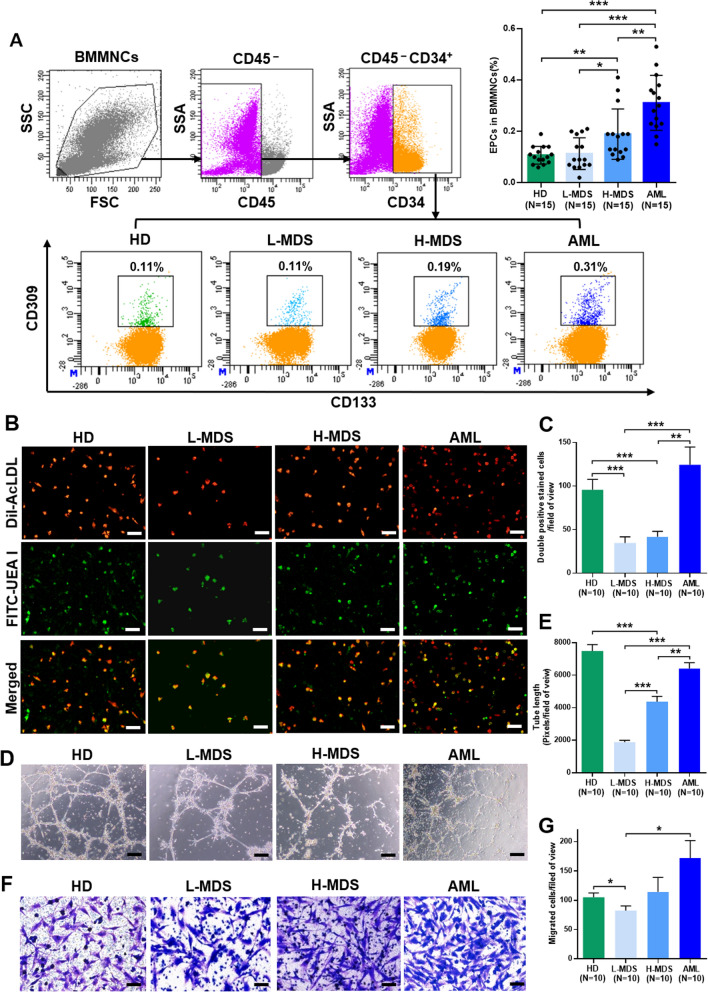
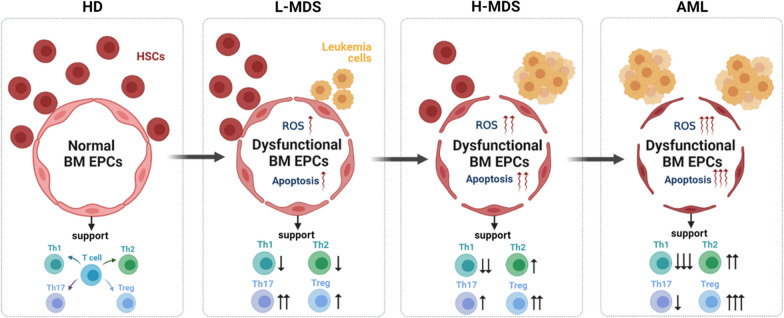
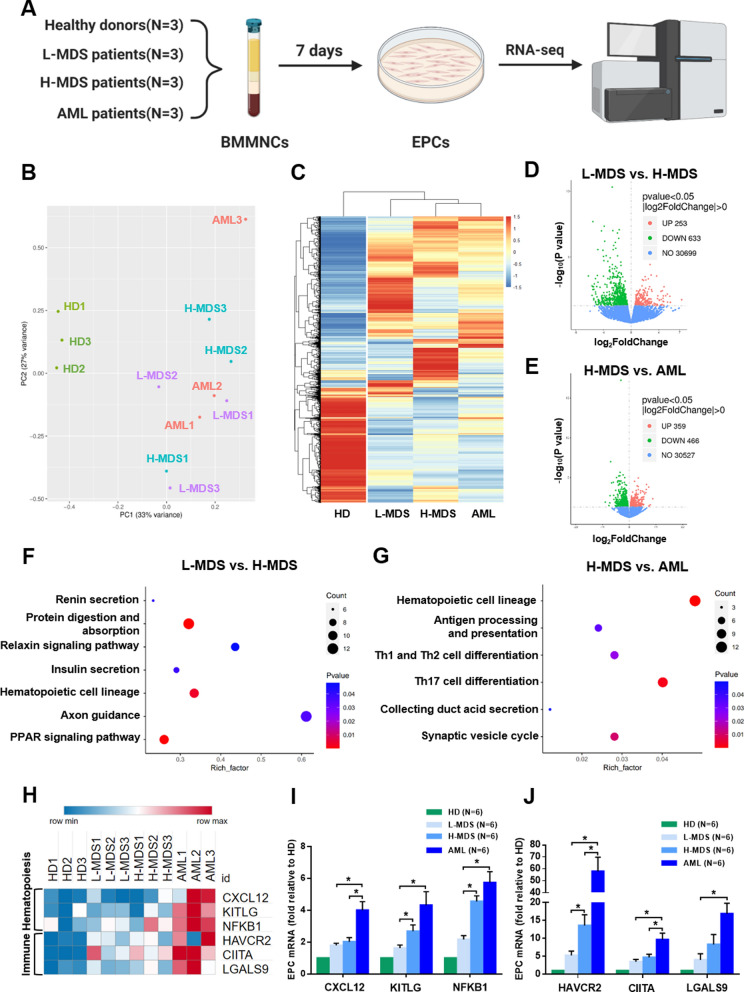
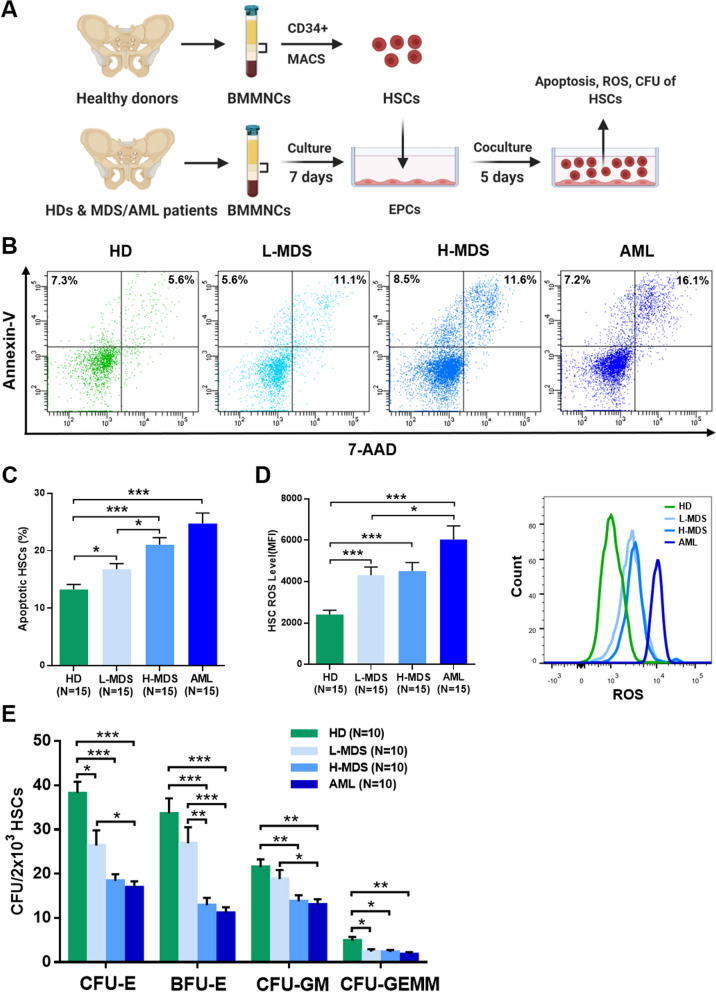
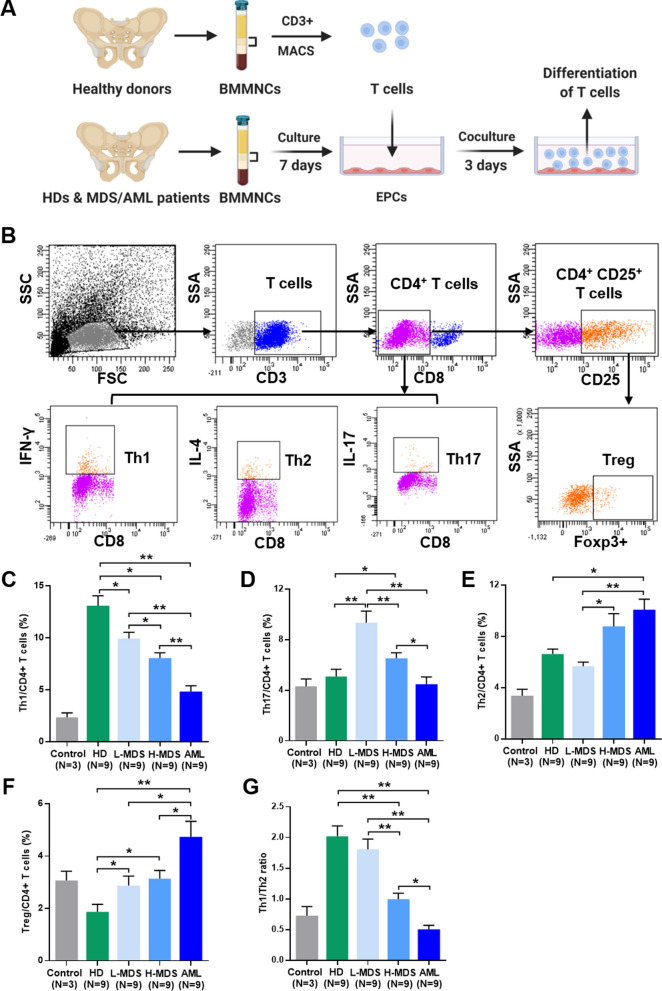
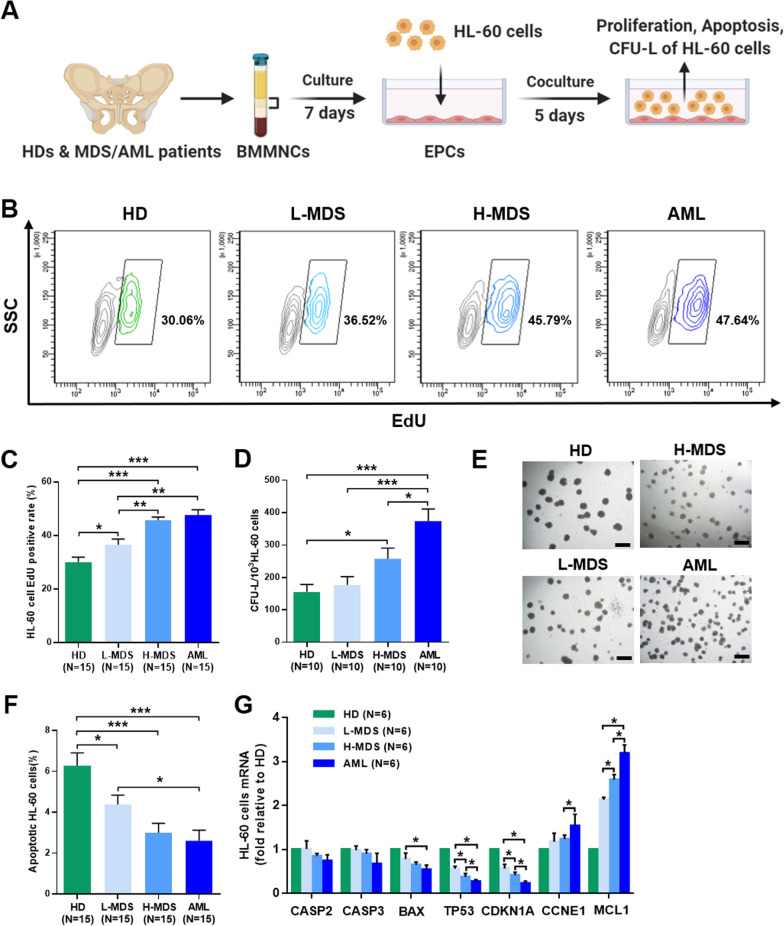
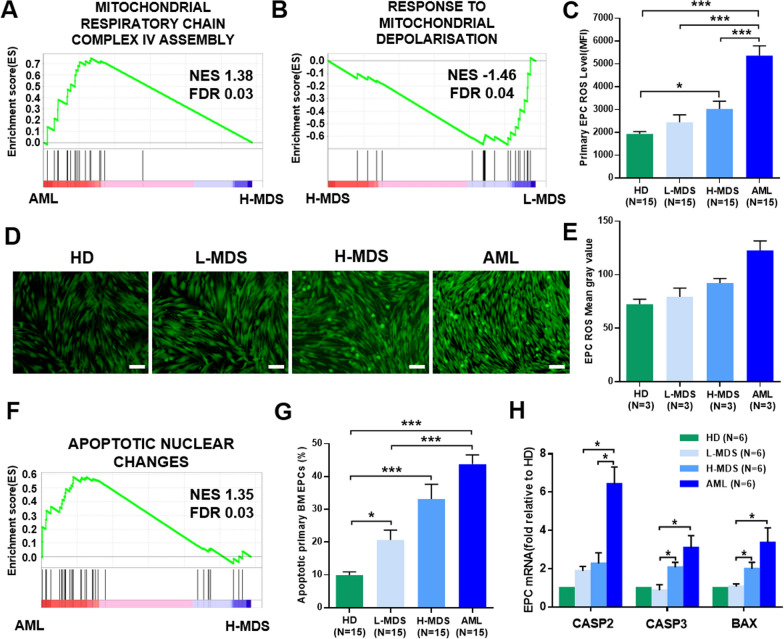
Increased but dysfunctional BM EPCs were found in MDS patients compared with HDs, especially in patients with higher-risk MDS. RNA-seq indicated the progressive change and differences of haematopoiesis- and immune-related pathways and genes in MDS BM EPCs. In vitro coculture experiments verified that BM EPCs from HDs, lower-risk MDS, and higher-risk MDS to AML exhibited a progressively decreased ability to support HSCs, manifested as elevated apoptosis rates and intracellular reactive oxygen species (ROS) levels and decreased colony-forming unit plating efficiencies of HSCs. Moreover, BM EPCs from higher-risk MDS patients demonstrated an increased ability to support leukaemia cells, characterized by increased proliferation, leukaemia colony-forming unit plating efficiencies, decreased apoptosis rates and apoptosis-related genes. Furthermore, BM EPCs induced T cell differentiation towards more immune-tolerant cells in higher-risk MDS patients in vitro. In addition, the levels of intracellular ROS and the apoptosis ratios were increased in BM EPCs from MDS patients, especially in higher-risk MDS patients, which may be therapeutic candidates for MDS patients.
Our results suggest that dysfunctional BM EPCs are involved in MDS patients, which indicates that improving haematopoiesis supporting ability and immuneregulation ability of BM EPCs may represent a promising therapeutic approach for MDS patients.
骨髓增生异常综合征(MDS)是一组异质性髓系克隆性疾病,其特征为无效造血和免疫失调。新出现的证据表明骨髓(BM)内皮祖细胞(EPCs)在调节造血和免疫平衡方面的作用。然而,不同阶段 MDS 患者 BM EPC 的数量和功能在很大程度上仍不清楚。
招募了 MDS 患者(N=30)、初发急性髓系白血病(AML)患者(N=15)和健康供者(HDs)(N=15)。根据修订后的国际预后评分系统的二分法,将 MDS 患者分为低危 MDS 患者(N=15)和高危 MDS 患者(N=15)。采用流式细胞术分析 BM EPC 数量。采用管形成和迁移实验评估 BM EPC 功能。为了评估 BM EPC 的基因表达谱,进行了 RNA 测序(RNA-seq)。通过体外共培养实验评估 BM EPC 对造血干细胞(HSCs)、白血病细胞和 T 细胞的支持能力。
与 HDs 相比,MDS 患者的 BM EPC 数量增加但功能异常,尤其是高危 MDS 患者。RNA-seq 表明 MDS BM EPC 中造血和免疫相关途径和基因的进行性变化和差异。体外共培养实验验证了 HDs、低危 MDS 和高危 MDS 来源的 BM EPC 对 AML 患者 HSCs 的支持能力逐渐降低,表现为 HSCs 凋亡率和细胞内活性氧(ROS)水平升高,集落形成单位培养效率降低。此外,高危 MDS 患者的 BM EPC 支持白血病细胞的能力增强,表现为增殖增加、白血病集落形成单位培养效率提高、凋亡率降低和凋亡相关基因减少。此外,高危 MDS 患者的 BM EPC 可诱导 T 细胞向更具免疫耐受的细胞分化。此外,MDS 患者的 BM EPC 细胞内 ROS 水平和凋亡率升高,尤其是高危 MDS 患者,这可能是 MDS 患者的治疗候选物。
我们的结果表明,功能失调的 BM EPCs 参与了 MDS 患者的发病机制,这表明提高 BM EPC 的造血支持能力和免疫调节能力可能是 MDS 患者有希望的治疗方法。