
如何改进贫困地区的新冠肺炎健康教育策略:一项试点研究。
How to improve the COVID-19 health education strategy in impoverished regions: a pilot study.
作者信息
Wang Huimin, Liao Rujun, Chen Xin, Yu Jie, Zhu Tianyu, Liao Qiang, Zhang Tao
机构信息
Department of Epidemiology and Health Statistics, West China School of Public Health and West China Fourth Hospital, Sichuan University, Chengdu, Sichuan, China.
Sichuan Center for Disease Control and Prevention, Chengdu, Sichuan, China.
出版信息
Infect Dis Poverty. 2022 Mar 29;11(1):38. doi: 10.1186/s40249-022-00963-3.
BACKGROUND
It is of great challenge to raise the public coronavirus disease 2019 (COVID-19) related health literacy (CRHL) in impoverished regions due to the limits of poor infrastructure, large proportion of vulnerable groups, etc. However, those limits cannot be solved in the short term. Therefore, this study chose Liangshan Yi Autonomous Prefecture, one of the poorest areas in China, as a pilot, to reveal the quantitative relationships among different dimensions under the COVID-19 health education framework, clarify the key points for health promotion, and provide specific suggestions for COVID-19 health education strategy in impoverished regions.
METHODS
A cross-sectional questionnaire survey was conducted in five regions of Liangshan Yi Autonomous Prefecture in 2020. There were 2,100 individuals sampled by multi-stage method. This survey mainly measured the four dimensions: CRHL, COVID-19 related tense psychological reactions (CRTPR), COVID-19 related information report acquisition (CRIRA), and general health literacy (GHL). The multivariate logistic regression was used to explore the influence of demographic characteristics on each dimension. Furthermore, to quantify the relationships among different dimensions, this study employed the structural equation model (SEM), and analyzed the mediating effects of CRHL and CRIRA as well as the moderating effects of regional characteristic variables.
RESULTS
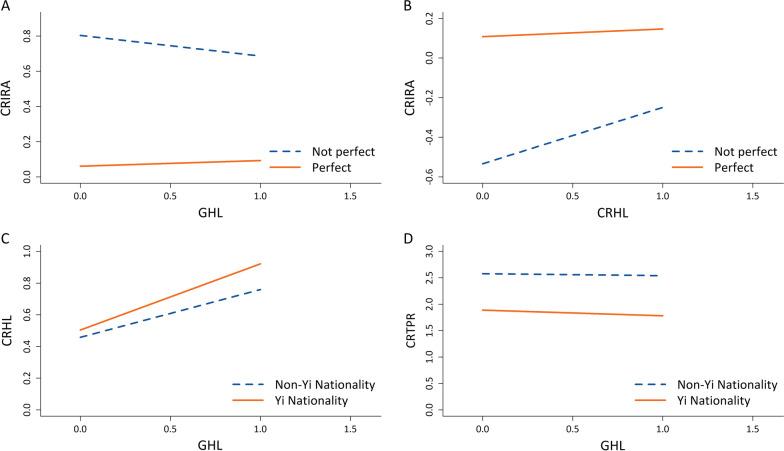
The CRHL played an important role in promoting COVID-19 health education, reaching 52.5% in Liangshan Yi Autonomous Prefecture. The GHL (β = 0.336) and age (β = 0.136) had statistically positive impacts on CRHL. The CRHL affected CRTPR negatively (β = - 0.198) and CRIRA positively (β = 0.052). The CRHL played significant mediating roles among the four dimensions (P < 0.05). Effectiveness of government prevention and control as well as the ethnicity moderated not only the relationships between CRHL and other dimensions, but also the mediating effect of CRHL (P < 0.05). People with lower income and education levels had lower GHL (β = 0.286, 1.292). The youth were more likely to show CRTPR (β = - 0.080).
CONCLUSIONS
By proposing and verifying the theoretical framework, this study put forward specific suggestions on how to improve COVID-19 health education strategies in impoverished regions via implementation methods, key groups and effect evaluation, which also provided references about future public health emergencies for other impoverished regions of the world.
背景
由于基础设施薄弱、弱势群体比例大等限制因素,提高贫困地区公众的2019冠状病毒病(COVID-19)相关健康素养(CRHL)面临巨大挑战。然而,这些限制因素无法在短期内得到解决。因此,本研究选择中国最贫困地区之一的凉山彝族自治州作为试点,以揭示COVID-19健康教育框架下不同维度之间的定量关系,明确健康促进的关键点,并为贫困地区的COVID-19健康教育策略提供具体建议。
方法
2020年在凉山彝族自治州的五个地区进行了横断面问卷调查。采用多阶段方法抽取了2100名个体。本次调查主要测量了四个维度:CRHL、COVID-19相关紧张心理反应(CRTPR)、COVID-19相关信息报告获取(CRIRA)和一般健康素养(GHL)。使用多元逻辑回归来探讨人口统计学特征对每个维度的影响。此外,为了量化不同维度之间的关系,本研究采用结构方程模型(SEM),并分析了CRHL和CRIRA的中介效应以及区域特征变量的调节效应。
结果
CRHL在促进COVID-19健康教育方面发挥了重要作用,在凉山彝族自治州达到了52.5%。GHL(β = 0.336)和年龄(β = 0.136)对CRHL有统计学上的正向影响。CRHL对CRTPR有负向影响(β = -0.198),对CRIRA有正向影响(β = 0.052)。CRHL在四个维度之间发挥了显著的中介作用(P < 0.05)。政府防控的有效性以及民族不仅调节了CRHL与其他维度之间的关系,还调节了CRHL的中介效应(P < 0.05)。收入和教育水平较低的人群GHL较低(β = 0.286,1.292)。年轻人更有可能表现出CRTPR(β = -0.080)。
结论
通过提出和验证理论框架,本研究就如何通过实施方法、关键群体和效果评估来改进贫困地区的COVID-19健康教育策略提出了具体建议,也为世界其他贫困地区未来应对突发公共卫生事件提供了参考。


 Zotero 插件