School of Foreign Studies, Nantong University, Nantong, China.
School of Languages and Cultures, The University of Sydney, Sydney, Australia.
J Med Internet Res. 2023 Apr 5;25:e43342. doi: 10.2196/43342.
Previous studies have revealed that functional health literacy plays a less important role than communicative and critical health literacy (CRHL) and that communicative literacy and CRHL contribute more to better patient self-management. Although improving health literacy has been identified as an approach to fostering community involvement and empowerment, CRHL may be regarded as the neglected domain of health literacy, rarely achieving any focus or interventions that claim to be working toward this outcome. Considering this research background, close scholarly attention needs to be paid to CRHL and its associated factors.
This study aimed to assess CRHL and identify essential factors closely associated with the status of CRHL among Chinese patients and to provide some implications for clinical practice, health education, medical research, and public health policy making.
We conducted this cross-sectional study, which lasted from April 8, 2022, to September 23, 2022, following the steps below. We first designed a 4-section survey questionnaire and then recruited Mandarin Chinese-speaking patients from Qilu Hospital of Shandong University, China, using randomized sampling. Subsequently, we administered the questionnaire via wenjuanxing, the most popular web-based survey platform in China, between July 20, 2022, and August 19, 2022. Finally, we used latent class modeling to analyze the valid data collected to classify the patient participants and identify the factors potentially associated with different CRHL levels.
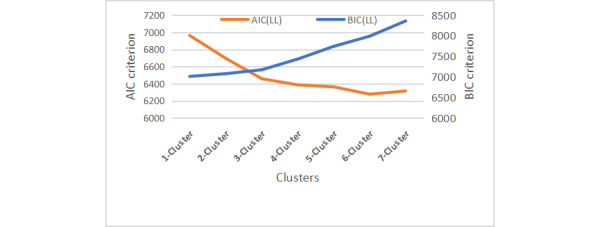
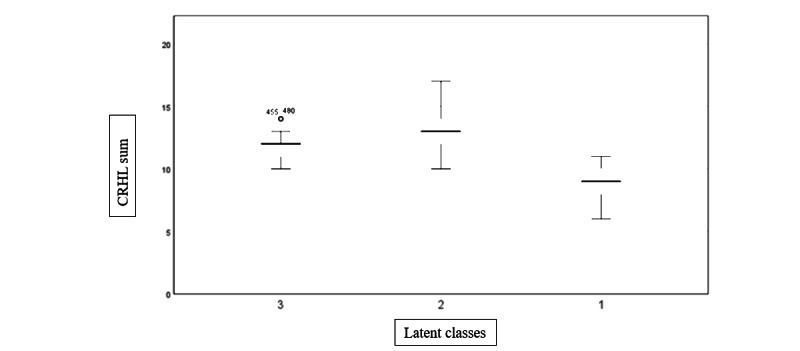
All data in the 588 returned questionnaires were valid. On the basis of the collected data, we classified the patient participants into 3 latent classes of limited, moderate, and adequate CRHL and identified 4 factors associated with limited CRHL, including middle and old age, male sex, lower educational attainment, and low internal drive to maintain one's health.
Using latent class modeling, we identified 3 classes of CRHL and 4 factors associated with limited CRHL among the Chinese study participants. These literacy classes and the predicting factors ascertained in this study can provide some implications for clinical practice, health education, medical research, and health policy making.
先前的研究表明,功能健康素养的作用不如沟通健康素养和批判健康素养重要,而沟通素养和批判健康素养对改善患者自我管理的贡献更大。尽管提高健康素养已被确定为促进社区参与和赋权的一种方法,但批判健康素养可能被视为健康素养被忽视的领域,很少有任何关注或干预措施声称致力于实现这一结果。考虑到这一研究背景,需要密切关注批判健康素养及其相关因素。
本研究旨在评估批判健康素养,并确定与中国患者批判健康素养状况密切相关的基本因素,为临床实践、健康教育、医学研究和公共卫生政策制定提供一些启示。
我们进行了这项横断面研究,从 2022 年 4 月 8 日持续到 9 月 23 日,按照以下步骤进行。我们首先设计了一个 4 部分的调查问卷,然后通过随机抽样从中国山东大学齐鲁医院招募了讲普通话的患者。随后,我们在中国最受欢迎的网络调查平台问卷星上于 2022 年 7 月 20 日至 8 月 19 日之间进行问卷调查。最后,我们使用潜在类别建模来分析收集到的有效数据,对患者参与者进行分类,并确定与不同批判健康素养水平相关的潜在因素。
所有 588 份回复问卷中的数据均有效。基于收集到的数据,我们将患者参与者分为批判健康素养有限、中等和充分的 3 个潜在类别,并确定了与批判健康素养有限相关的 4 个因素,包括中老年人、男性、较低的教育程度和较低的维持健康的内在动力。
通过潜在类别建模,我们在中国研究参与者中确定了 3 种批判健康素养类别和与批判健康素养有限相关的 4 个因素。这些确定的素养类别和预测因素可为临床实践、健康教育、医学研究和卫生政策制定提供一些启示。