Department of Physics and Astronomy, and Institute of Applied Physics, Seoul National University, Seoul, 08826, Republic of Korea.
Department of Physics, University of Oxford, Oxford, OX1 3PU, UK.
Nat Commun. 2022 Mar 29;13(1):1663. doi: 10.1038/s41467-022-29321-5.
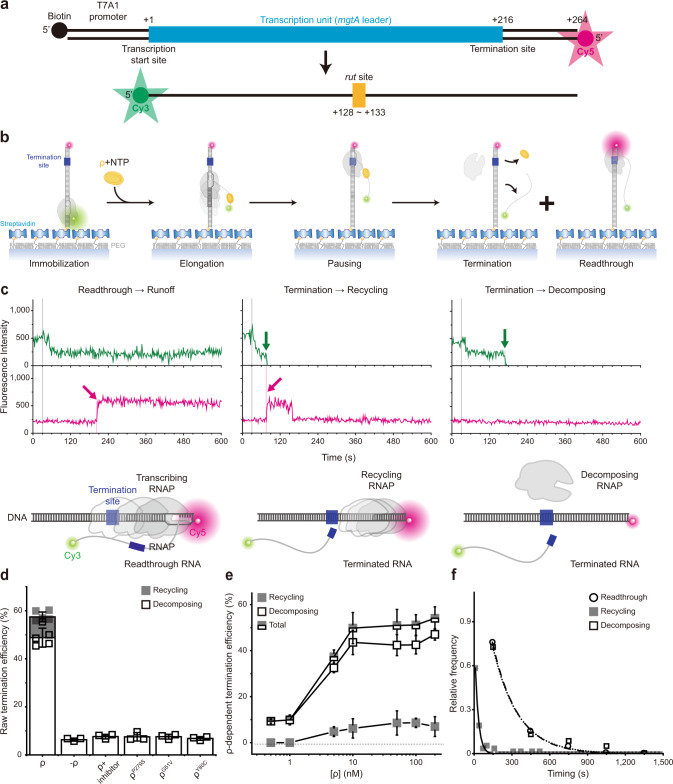
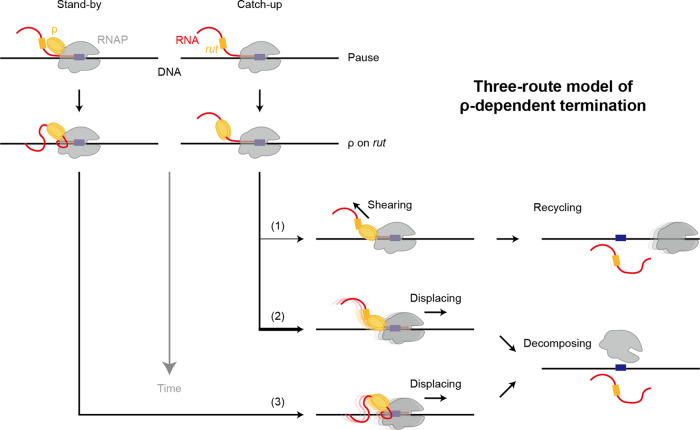
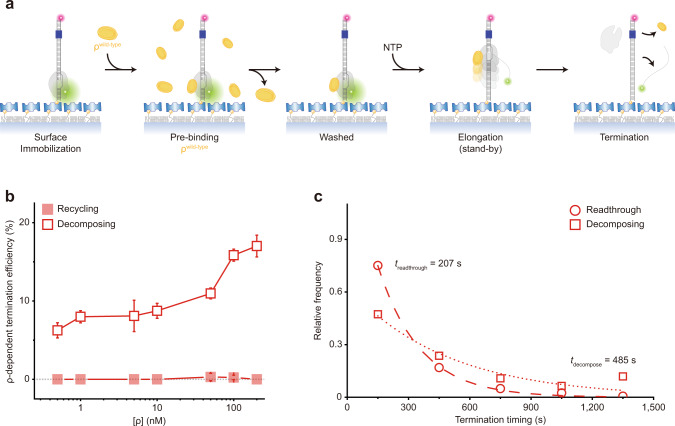
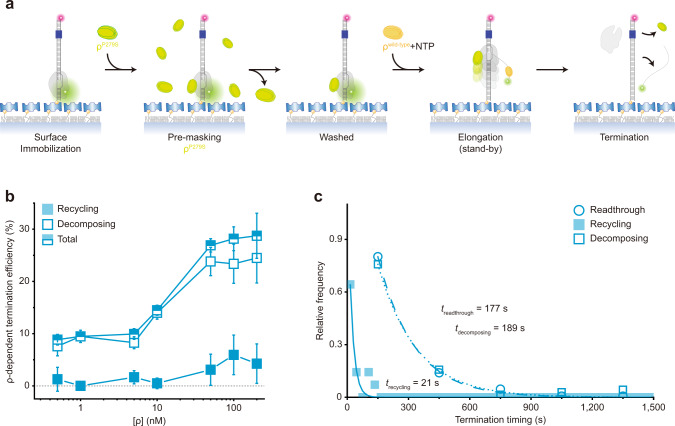
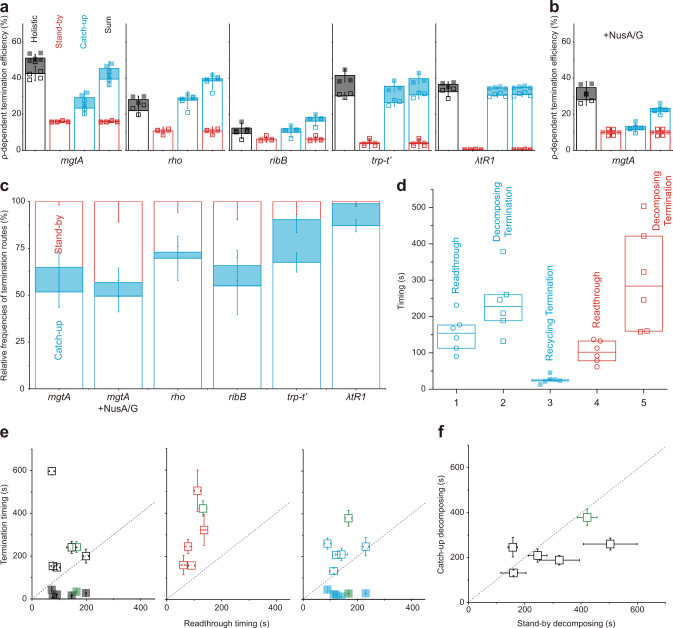
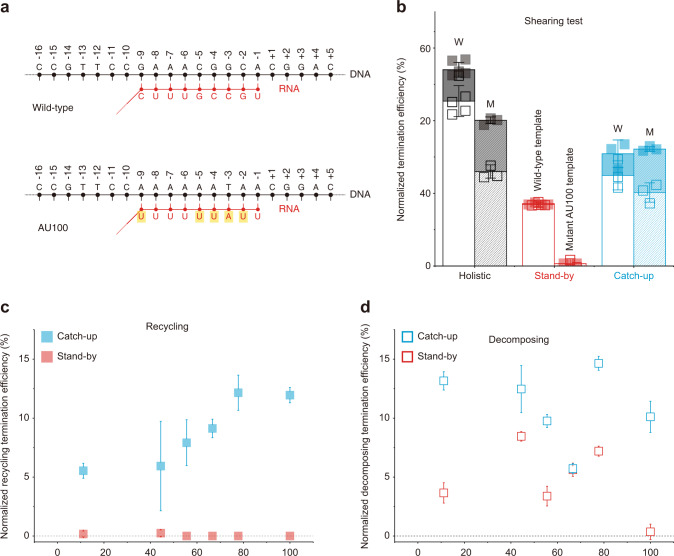
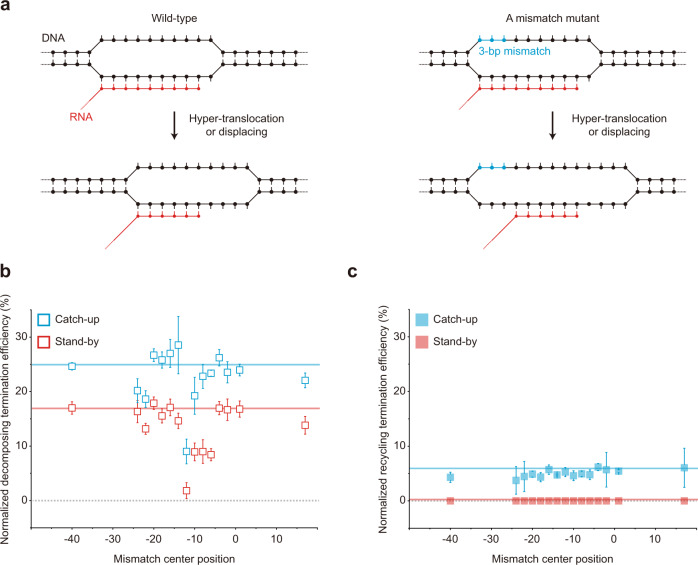
Rho is a general transcription termination factor in bacteria, but many aspects of its mechanism of action are unclear. Diverse models have been proposed for the initial interaction between the RNA polymerase (RNAP) and Rho (catch-up and stand-by pre-terminational models); for the terminational release of the RNA transcript (RNA shearing, RNAP hyper-translocation or displacing, and allosteric models); and for the post-terminational outcome (whether the RNAP dissociates or remains bound to the DNA). Here, we use single-molecule fluorescence assays to study those three steps in transcription termination mediated by E. coli Rho. We find that different mechanisms previously proposed for each step co-exist, but apparently occur on various timescales and tend to lead to specific outcomes. Our results indicate that three kinetically distinct routes take place: (1) the catch-up mode leads first to RNA shearing for RNAP recycling on DNA, and (2) later to RNAP displacement for decomposition of the transcriptional complex; (3) the last termination usually follows the stand-by mode with displacing for decomposing. This three-route model would help reconcile current controversies on the mechanisms.
Rho 是细菌中的一种普遍转录终止因子,但它的作用机制的许多方面还不清楚。已经提出了多种模型来解释 RNA 聚合酶(RNAP)与 Rho 之间的初始相互作用(追赶和备用终止前模型);解释 RNA 转录本的终止释放(RNA 剪切、RNAP 超迁移或置换、变构模型);以及解释终止后的结果(RNAP 是解离还是仍然与 DNA 结合)。在这里,我们使用单分子荧光测定法来研究大肠杆菌 Rho 介导的转录终止的这三个步骤。我们发现,以前为每个步骤提出的不同机制确实存在,但显然发生在不同的时间尺度上,并倾向于产生特定的结果。我们的结果表明,有三种动力学上不同的途径:(1)追赶模式首先导致 RNA 剪切,以便在 DNA 上回收 RNAP;(2)后来导致 RNAP 置换,以分解转录复合物;(3)最后通常遵循备用模式,以置换来分解。这种三路径模型将有助于调和当前关于机制的争议。