Department of Bacteriology, Capital Institute of Pediatricsgrid.418633.b, Beijing, China.
State Key Laboratory of Infectious Disease Prevention and Control, National Institute for Communicable Disease Control and Prevention, Collaborative Innovation Center for Disease Control and Prevention, Beijing, China Center for Diagnosis and Treatment of Infectious Diseases, Chinese Center for Disease Control and Prevention, Beijing, China.
Microbiol Spectr. 2022 Apr 27;10(2):e0264621. doi: 10.1128/spectrum.02646-21. Epub 2022 Mar 30.
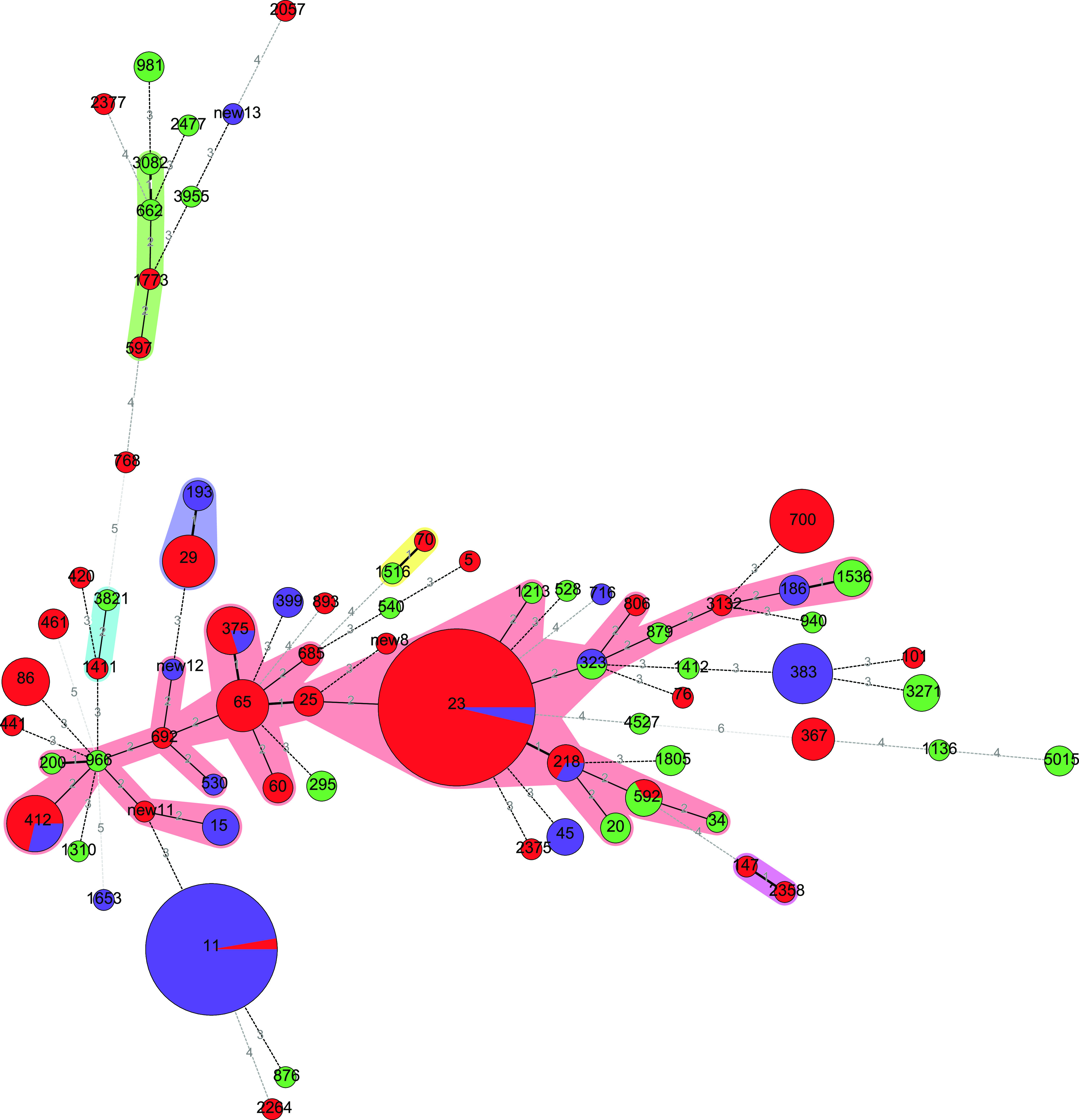
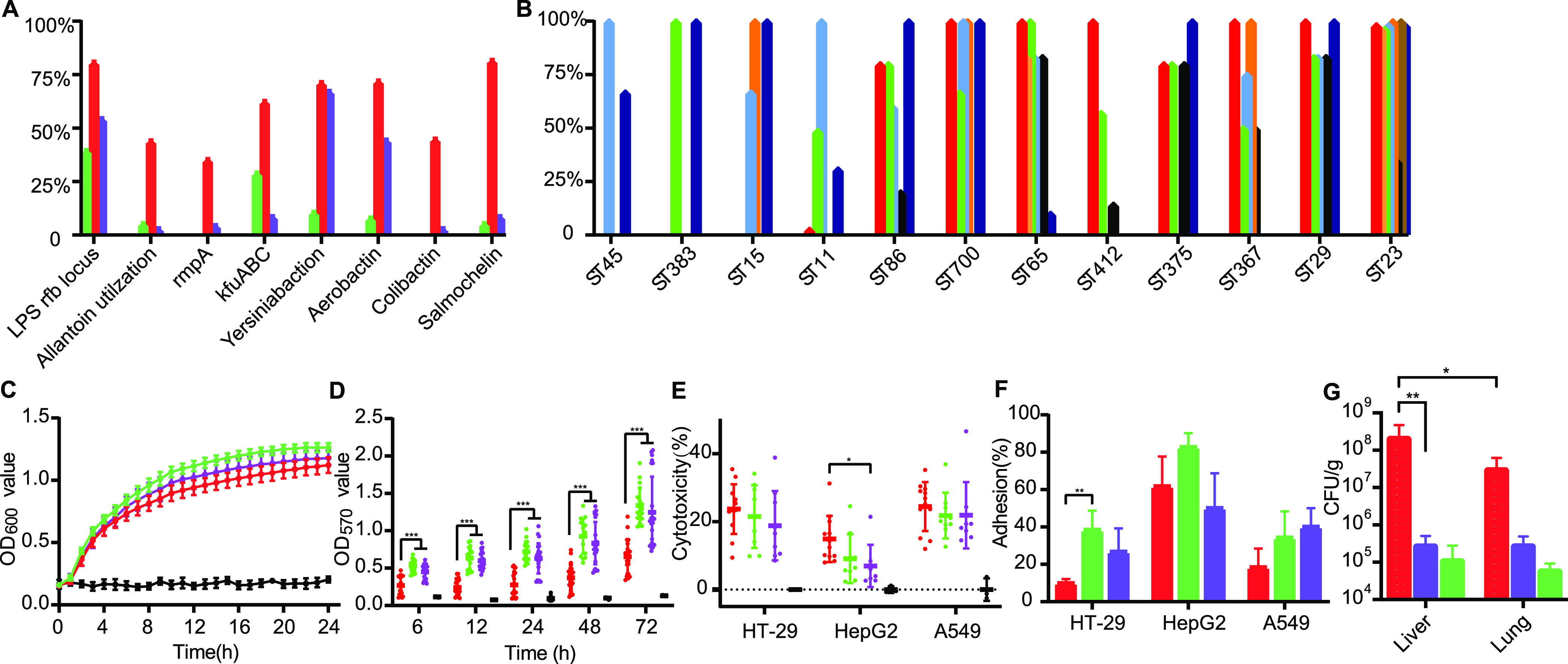
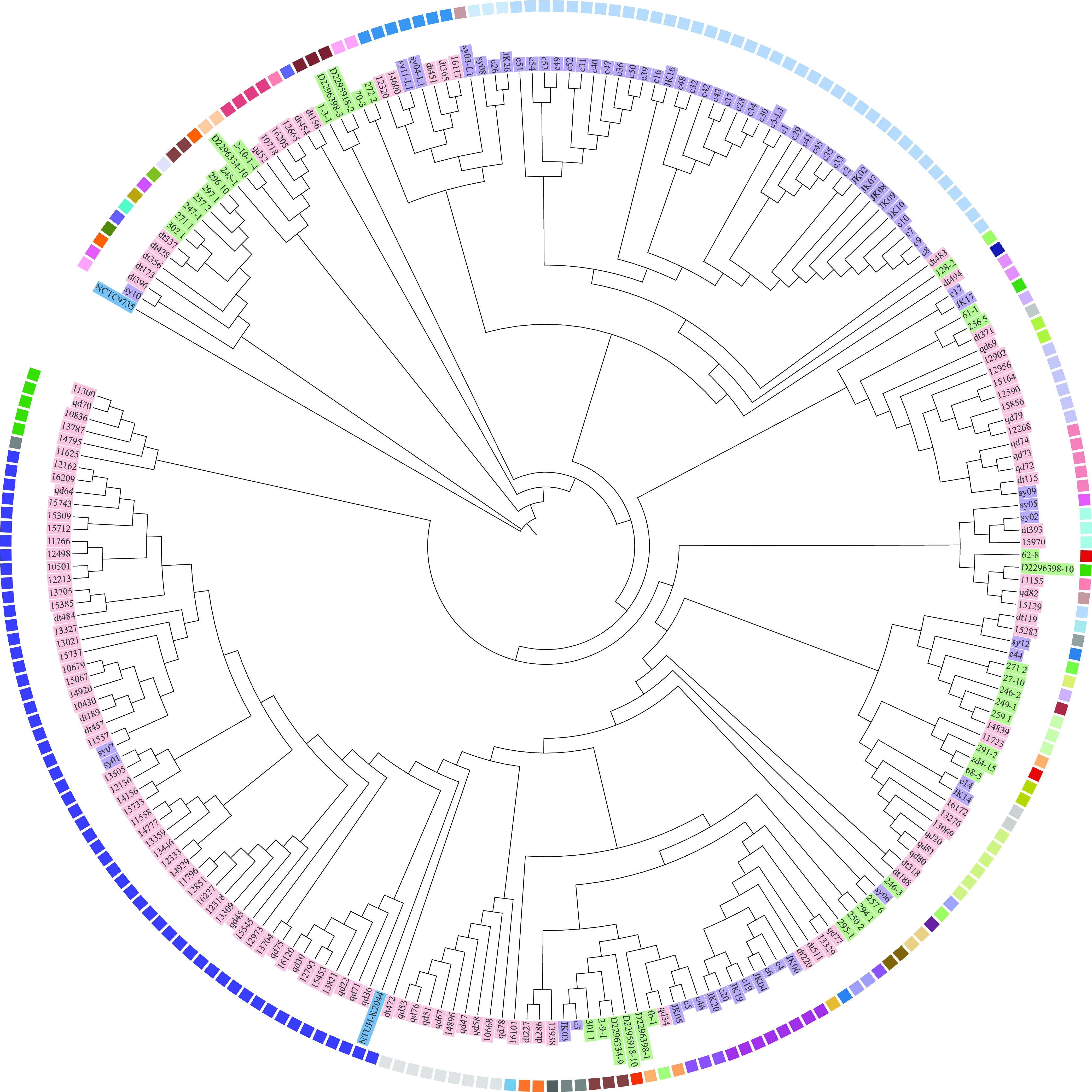
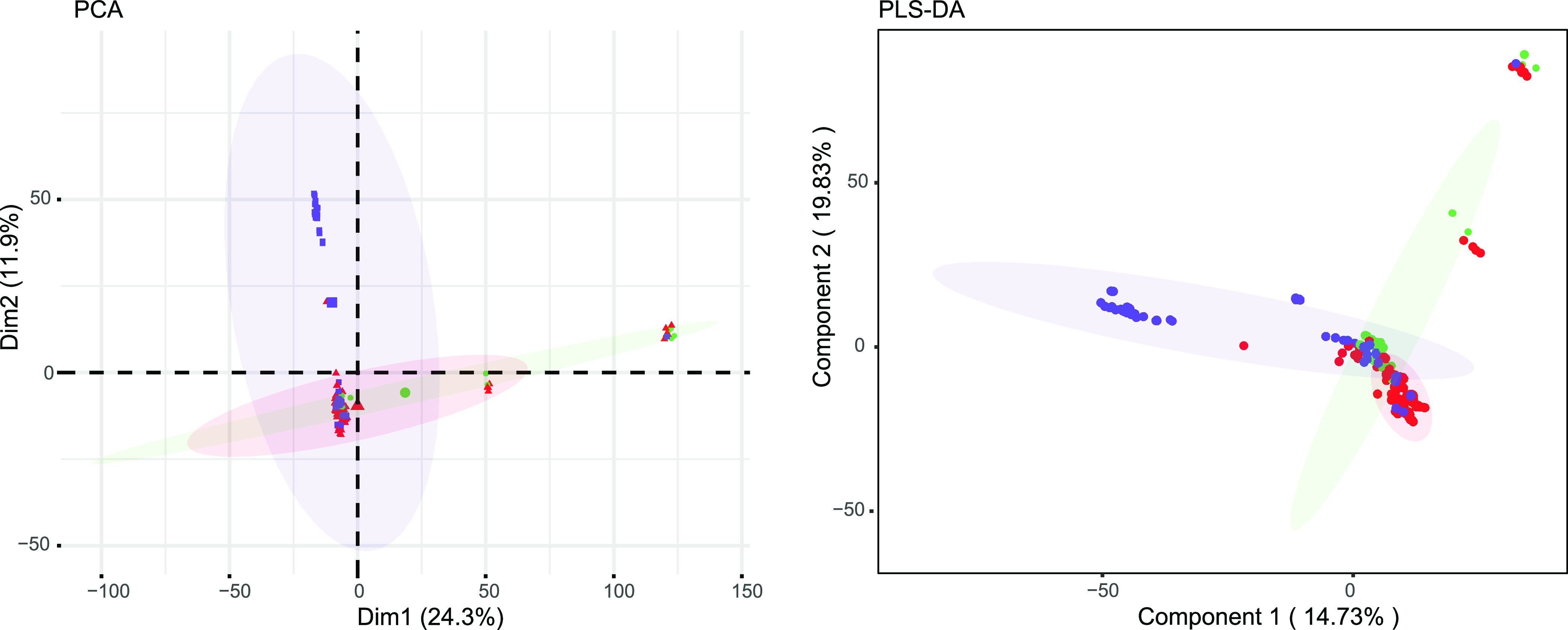
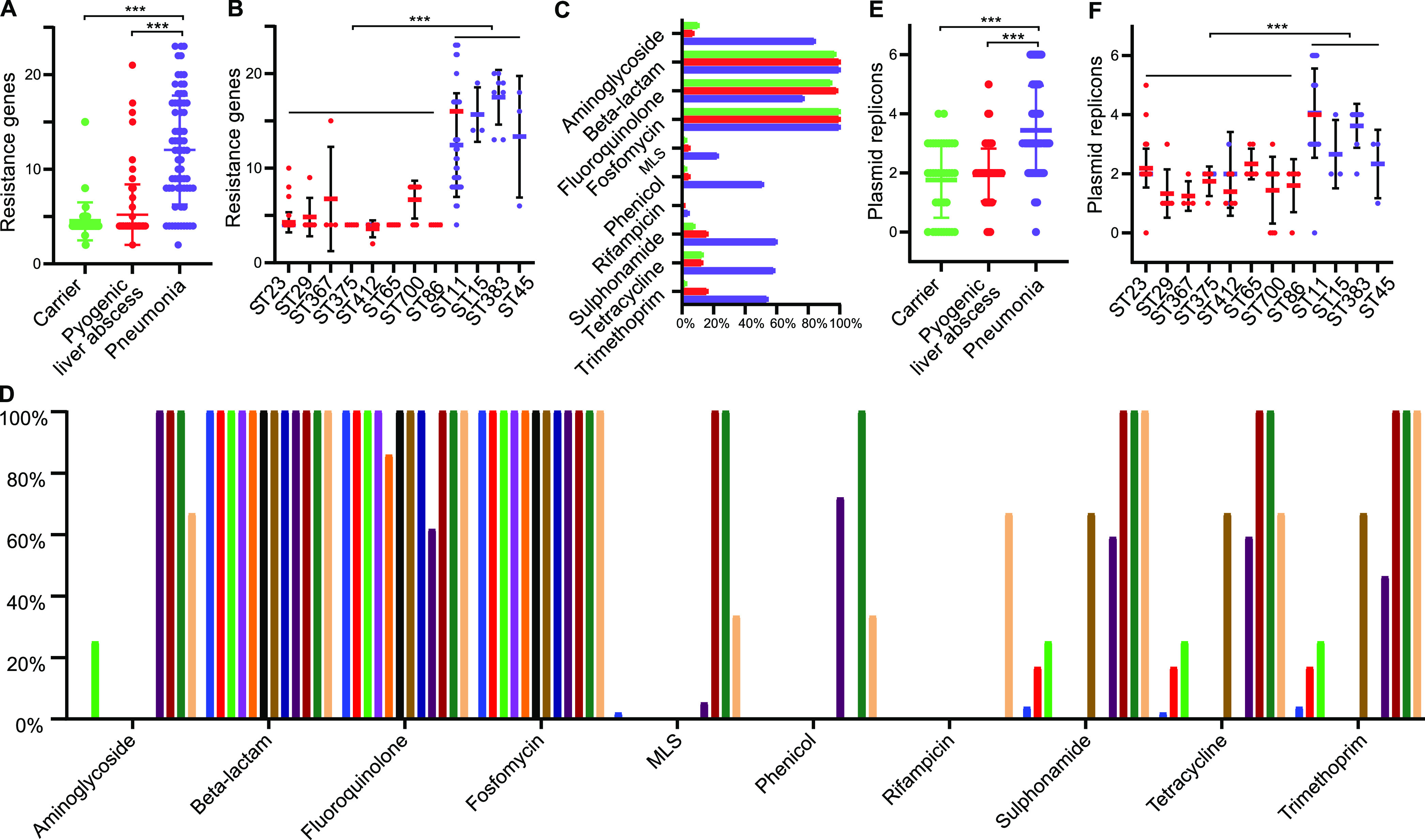
While Klebsiella pneumoniae is a common cause of nosocomial and community-acquired infections, including pneumonia and pyogenic liver abscess, little is known about the population structure of this bacterium. In this study, we investigated the prevalence and molecular characteristics of K. pneumoniae isolates from carriers, pyogenic liver abscess patients, and pneumonia patients, and genomic and phenotypic assays were used to determine the differences among the isolates. A total of 232 K. pneumoniae isolates were subtyped into 74 sequence types (STs). The isolates from different sources had their own STs, and the predominant subtypes in liver abscess and pneumonia patients were ST23 and ST11, respectively. Pangenome analysis also distinguished three phylogroups that were consistent with the isolate sources. The isolates collected from liver abscess patients carried significantly more virulence factors, and those from pneumonia patients harbored significantly more resistance genes and replicons. Almost all isolate STs (93/97 [95.88%]) from liver abscesses strongly correlated with the virulence factor salmochelin, while most pneumonia isolate STs (52/53 [98.11%]) from pneumonia did not correlate with salmochelin. The isolates collected from liver abscesses showed higher virulence in the cytotoxicity and mouse models. These data provide genomic support for the proposal that isolates collected from carriers, liver abscess patients, and pneumonia patients have distinct genomic features. Isolates from the different sources are largely nonoverlapping, suggesting that different patients may be infected via different sources. Further studies on the pathogenic mechanisms of salmochelin and other virulence factors will be required. While Klebsiella pneumoniae is a common cause of nosocomial and community-acquired infections, including pneumonia and pyogenic liver abscess, little is known about the population structure of this bacterium. We collected 232 isolates from carriers, pyogenic liver abscess patients, and pneumonia patients, and the isolates from different sources had their own sequence types. Pangenome analysis also distinguished three phylogroups that were consistent with the isolate sources. The isolates collected from liver abscess patients carried significantly more virulence factors, and those from pneumonia patients harbored significantly more resistance genes and replicons. Besides, there was a strong link between salmochelin and liver abscess. The isolates collected from liver abscesses also showed higher virulence in the cytotoxicity and mouse models. Isolates collected from different sources have distinct genomic features, suggesting that different patients may be infected via different sources.
虽然肺炎克雷伯菌是医院获得性和社区获得性感染的常见原因,包括肺炎和化脓性肝脓肿,但人们对这种细菌的种群结构知之甚少。在这项研究中,我们调查了来自携带者、化脓性肝脓肿患者和肺炎患者的肺炎克雷伯菌分离株的流行情况和分子特征,并使用基因组和表型检测来确定分离株之间的差异。总共对 232 株肺炎克雷伯菌进行了分型,分为 74 种序列型(ST)。不同来源的分离株有其自己的 ST,肝脓肿和肺炎患者的主要亚型分别为 ST23 和 ST11。泛基因组分析也区分了与分离株来源一致的三个系统发育群。从肝脓肿患者中分离出的分离株携带更多的毒力因子,而从肺炎患者中分离出的分离株携带更多的耐药基因和复制子。几乎所有来自肝脓肿的分离株 ST(93/97[95.88%])与毒力因子沙门氏菌密切相关,而来自肺炎的大多数肺炎分离株 ST(52/53[98.11%])与沙门氏菌无关。从肝脓肿中分离出的分离株在细胞毒性和小鼠模型中表现出更高的毒力。这些数据为来自携带者、肝脓肿患者和肺炎患者的分离株具有独特的基因组特征的观点提供了基因组支持。不同来源的分离株基本上是不重叠的,这表明不同的患者可能通过不同的来源感染。还需要进一步研究沙门氏菌和其他毒力因子的致病机制。虽然肺炎克雷伯菌是医院获得性和社区获得性感染的常见原因,包括肺炎和化脓性肝脓肿,但人们对这种细菌的种群结构知之甚少。我们从携带者、化脓性肝脓肿患者和肺炎患者中收集了 232 株分离株,不同来源的分离株有其自己的序列类型。泛基因组分析还区分了与分离株来源一致的三个系统发育群。从肝脓肿患者中分离出的分离株携带更多的毒力因子,而从肺炎患者中分离出的分离株携带更多的耐药基因和复制子。此外,沙门氏菌与肝脓肿之间存在很强的联系。从肝脓肿中分离出的分离株在细胞毒性和小鼠模型中也表现出更高的毒力。来自不同来源的分离株具有不同的基因组特征,这表明不同的患者可能通过不同的来源感染。