Gan Lin, Mao Pan, Jiang Huaying, Zhang Lu, Liu Dongxin, Cao Xiaolong, Wang Yan, Wang Yiqian, Sun Hui, Huang Ying, Ye Changyun
State Key Laboratory for Infectious Disease Prevention and Control, Collaborative Innovation Center for Diagnosis and Treatment of Infectious Diseases, National Institute for Communicable Disease Control and Prevention, Chinese Center for Disease Control and Prevention, Beijing, China.
Hunan Provincial Key Laboratory for Special Pathogens, Institute of Pathogenic Biology, Medical College, University of South China, Hengyang, China.
Front Vet Sci. 2020 Feb 26;7:88. doi: 10.3389/fvets.2020.00088. eCollection 2020.
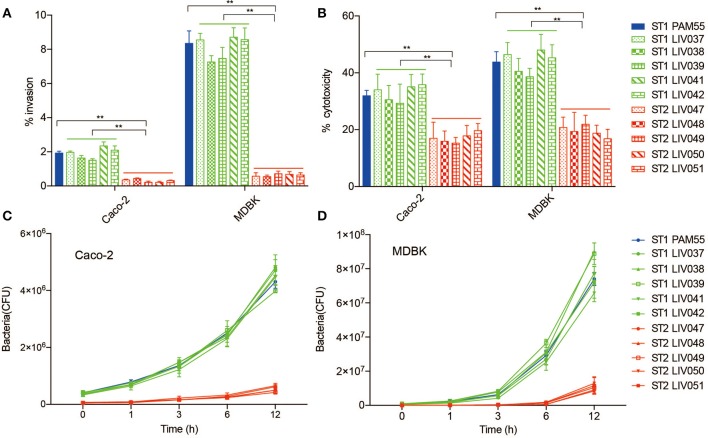
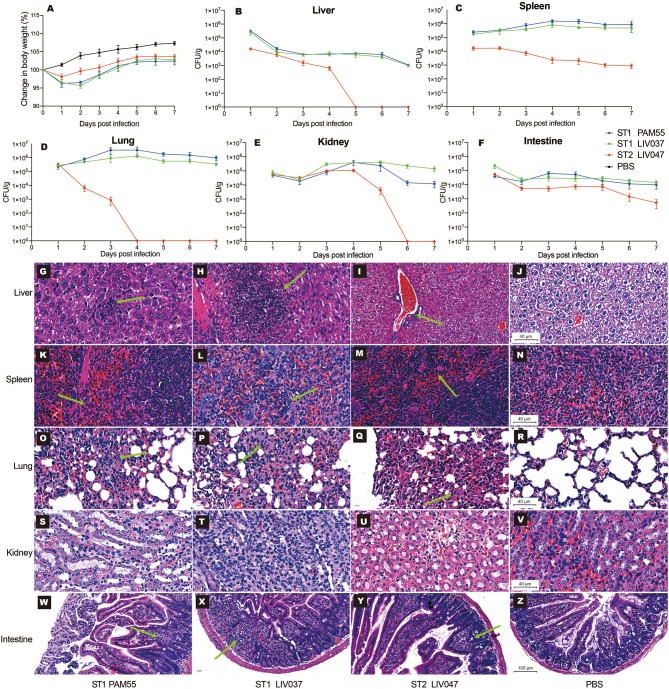
subsp. is an intracellular bacterium distributed widely in nature, causing the listeriosis in ruminants and humans. Previous researches had isolated 116 strains of subsp. from wild rodents and pikas of different regions in China, and the predominant sequence types were ST1 and ST2. In this study, we first investigated the biological characteristics and virulence of these two clonal strains including motility, metabolism and virulence in cells and mouse model. The results demonstrated the ST1 strains exhibited motility, wide metabolic activity and hypervirulence, whereas the ST2 strains showed non-motility, relative lower metabolic activity and virulence. Considering the transmissible ability from wild rodents and pikas to ecological environment, the subsp. with potential pathogenicity to humans and ruminants should be monitored.
亚种是一种广泛分布于自然界的胞内细菌,可导致反刍动物和人类患李斯特菌病。先前的研究已从中国不同地区的野生啮齿动物和鼠兔中分离出116株亚种菌株,其主要序列类型为ST1和ST2。在本研究中,我们首先调查了这两种克隆菌株的生物学特性和毒力,包括运动性、代谢以及在细胞和小鼠模型中的毒力。结果表明,ST1菌株具有运动性、广泛的代谢活性和高毒力,而ST2菌株则无运动性、相对较低的代谢活性和毒力。鉴于其从野生啮齿动物和鼠兔传播至生态环境的能力,应对对人类和反刍动物具有潜在致病性的亚种进行监测。