Systemic Autoimmunity Branch, National Institute of Arthritis and Musculoskeletal and Skin Diseases, National Institutes of Health, 10 Center Drive, 12N248C, Bethesda, MD, 20892, USA.
Semin Immunopathol. 2022 May;44(3):309-324. doi: 10.1007/s00281-022-00922-y. Epub 2022 Mar 30.
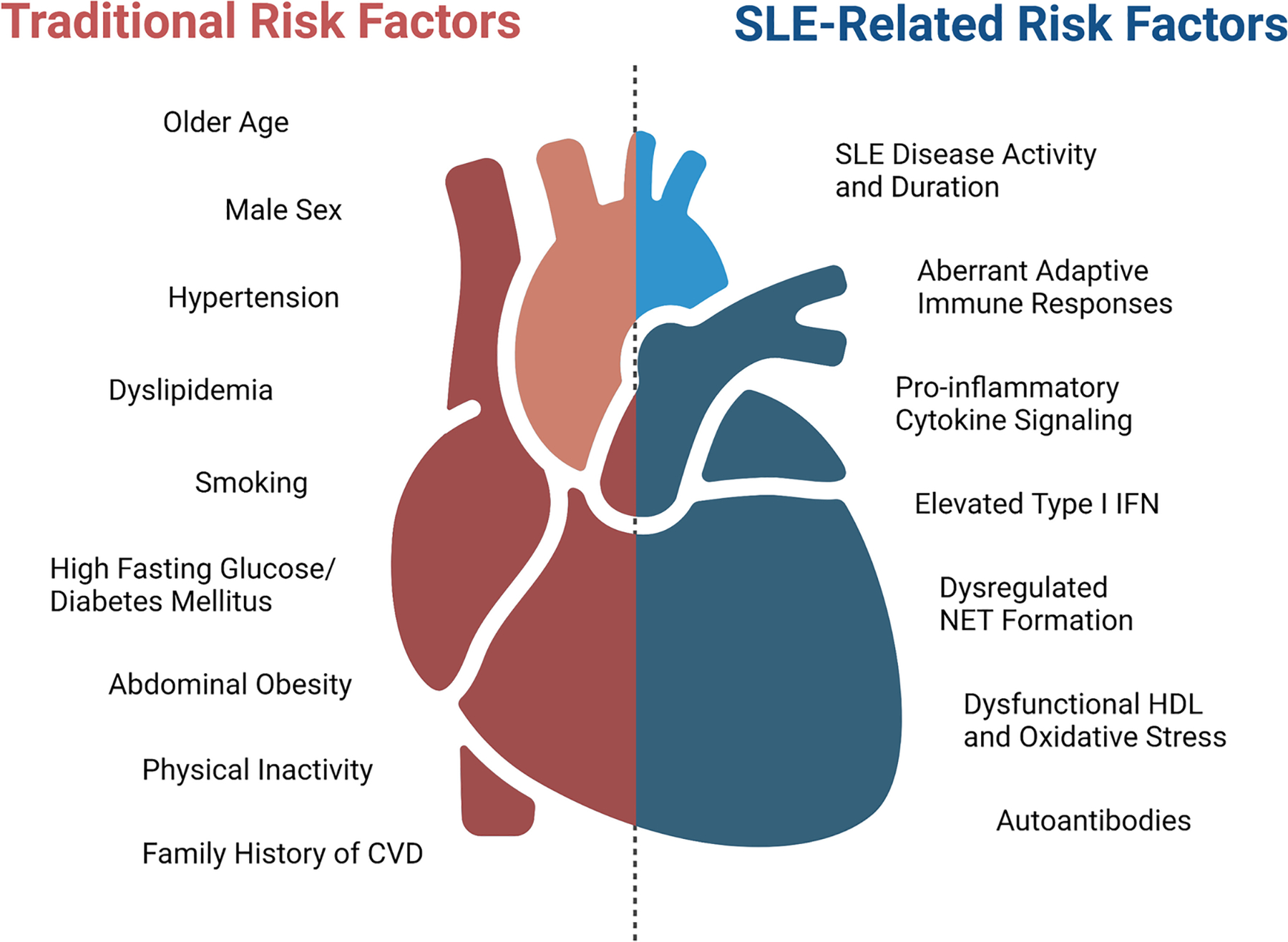
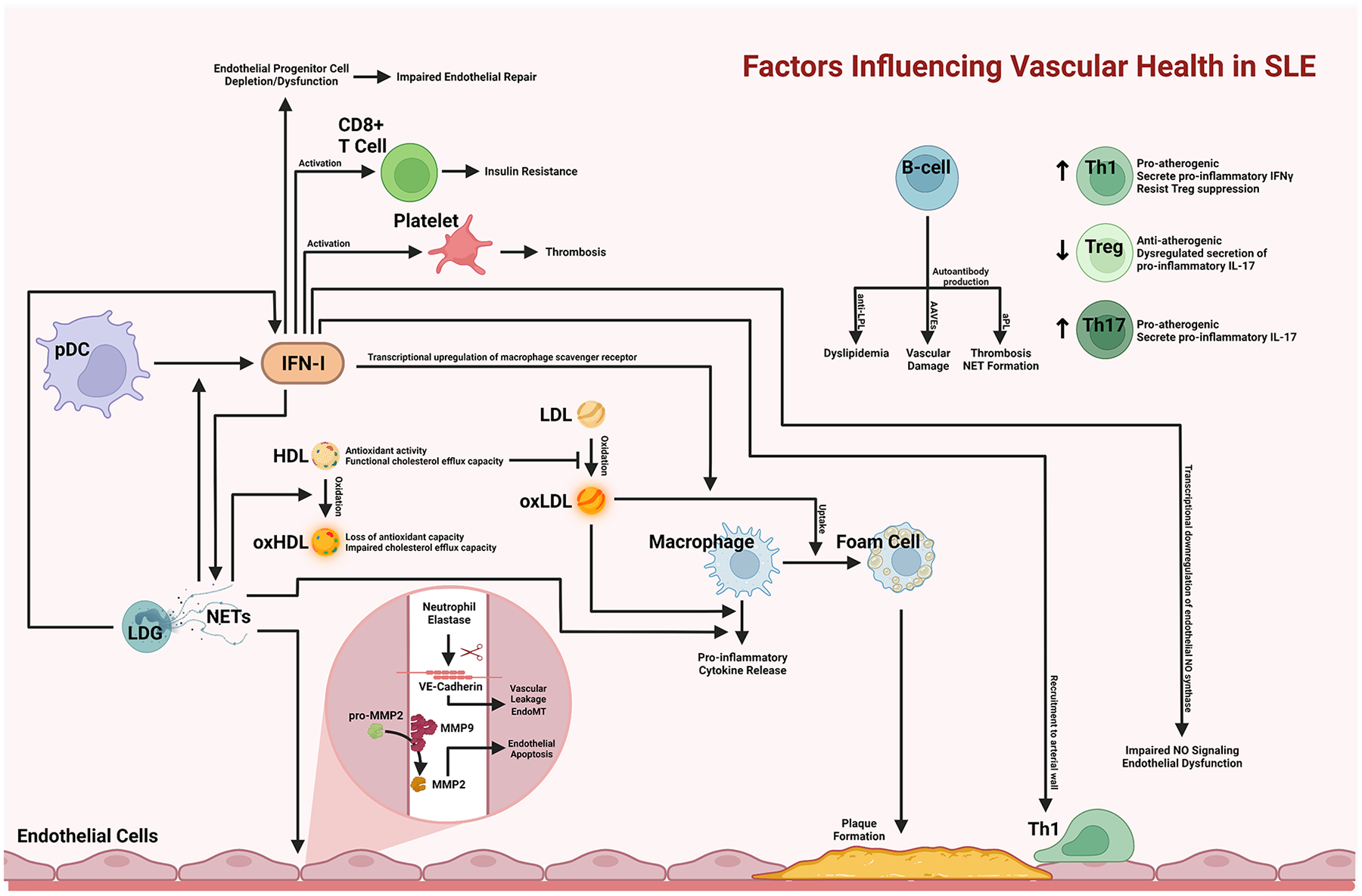
Systemic lupus erythematosus (SLE) often features extensive cardiovascular (CV) comorbidity and patients with SLE are at significantly increased risk of CV event occurrence and CV-related mortality. While the specific mechanisms leading to this increased cardiovascular disease (CVD) risk remain to be fully characterized, this heightened risk cannot be fully explained by traditional CV risk factors and is likely driven by immunologic and inflammatory features of SLE. Widespread innate and adaptive immune dysregulation characterize SLE, and factors including excessive type I interferon burden, inappropriate formation and ineffective clearance of neutrophil extracellular traps, and autoantibody formation have been linked to clinical and metabolic features impacting CV risk in SLE and may represent pathogenic drivers of SLE-related CVD. Indeed, functional and phenotypic aberrations in almost every immune cell type are present in SLE and may impact CVD progression. As understanding of the contribution of SLE-specific factors to CVD in SLE improves, improved screening and monitoring of CV risk alongside development of therapeutic treatments aimed at prevention of CVD in SLE patients are required and remain the focus of several ongoing studies and lines of inquiry.
系统性红斑狼疮(SLE)常伴有广泛的心血管(CV)合并症,SLE 患者发生 CV 事件和与 CV 相关的死亡率显著增加。虽然导致这种心血管疾病(CVD)风险增加的具体机制仍有待充分描述,但这一风险增加不能仅用传统的 CV 危险因素来解释,可能是由 SLE 的免疫和炎症特征驱动的。SLE 广泛存在固有和适应性免疫失调,包括过度的 I 型干扰素负担、中性粒细胞胞外诱捕网形成不当和清除无效,以及自身抗体形成等因素与影响 SLE 患者 CV 风险的临床和代谢特征相关,可能是 SLE 相关 CVD 的致病驱动因素。事实上,SLE 中几乎所有免疫细胞类型的功能和表型异常都存在,并可能影响 CVD 的进展。随着对 SLE 特异性因素对 CVD 贡献的认识不断提高,需要对 SLE 患者的 CV 风险进行更好的筛查和监测,并开发旨在预防 CVD 的治疗方法,这仍然是几项正在进行的研究和调查的重点。