Gu Zhengyu, Lu Qinyi, Zhang Ao, Shuai Zong Wen, Liao Rongfeng
Department of Ophthalmology, Anhui Medical University, Hefei, China.
Departments of Rheumatology and Immunology, Anhui Medical University, Hefei, China.
Front Med (Lausanne). 2022 Mar 7;9:833995. doi: 10.3389/fmed.2022.833995. eCollection 2022.
To investigate the differences in ocular surface characteristics, tear film quality, and the incidence of dry eye disease (DED) between Systemic Lupus Erythematosus (SLE) patients and healthy populations.
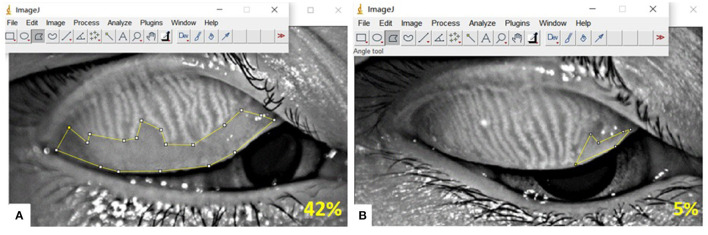
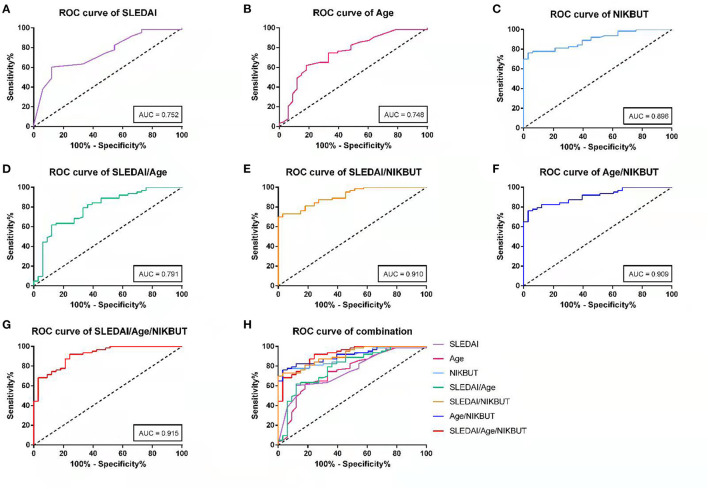
This age and gender-matched cross-sectional study included 96 SLE patients without secondary Sjögren's syndrome (SS) and 72 healthy subjects. The Ocular Surface Disease Index (OSDI), tear meniscus height (TMH), non-invasive tear film breakup time (NIKBUT), meibography, and tear film lipid layer grade were assessed. A receiver operative characteristic (ROC) curve was constructed to evaluate the predictive value of risk factors.
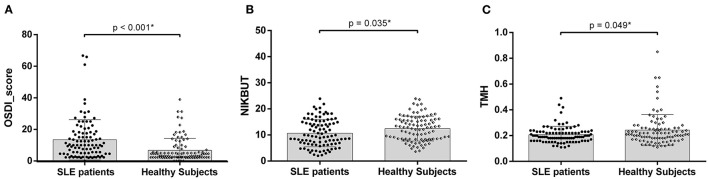
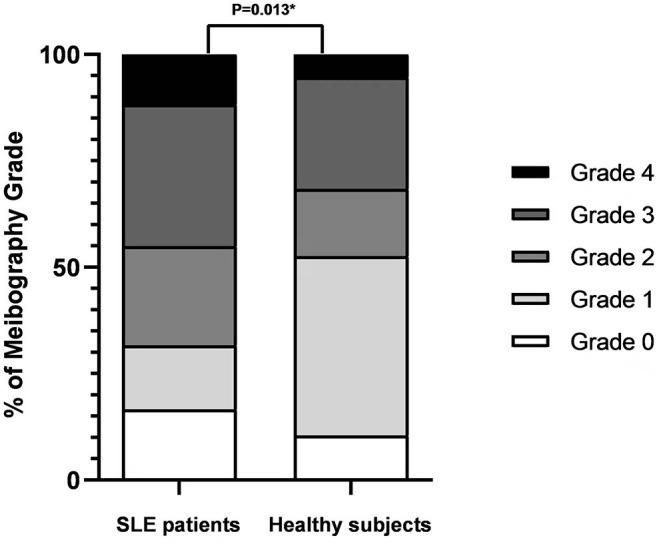
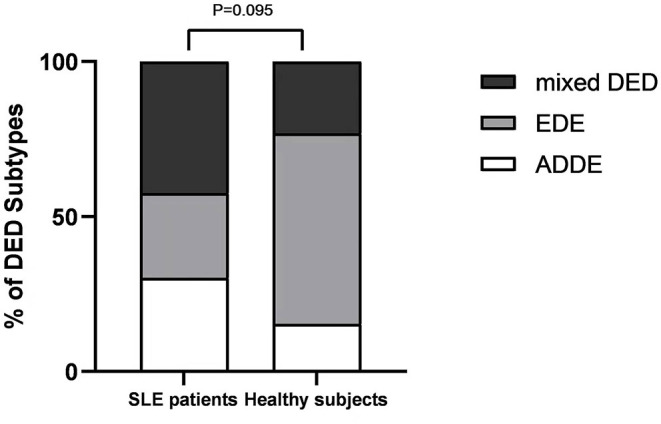
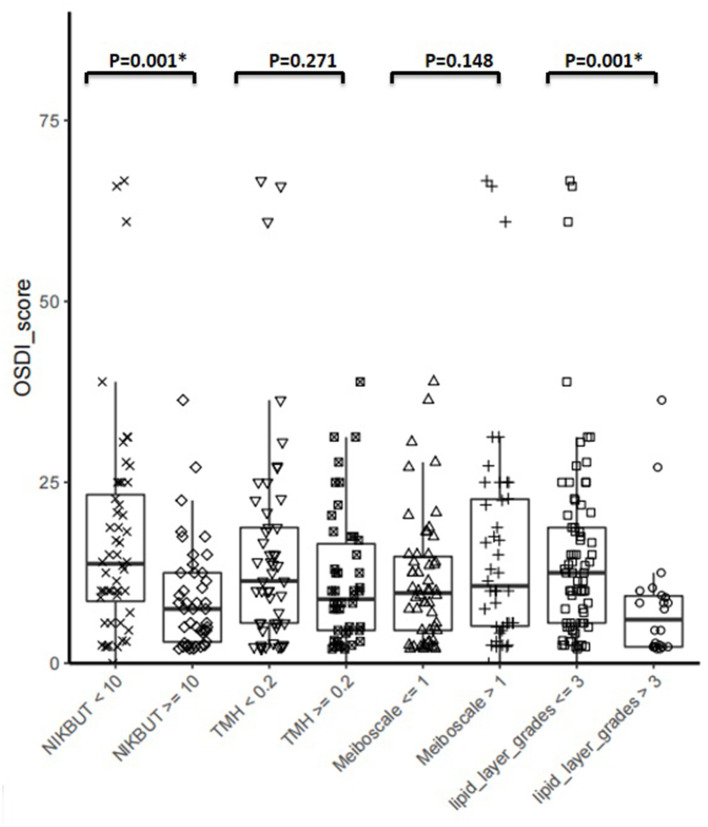
Compared with the control subjects, a significantly greater proportion of SLE patients met the TFOS DEWS II DED diagnostic criteria (34.3 vs. 18.1%, = 0.019). SLE patients without SS had higher OSDI scores [10.0 (4.5,18.0) vs. 5.0 (2.5,11.9), < 0.001], and shorter NIKBUT [9.6 (6.6,15.0) vs. 12.3 (8.4, 15.8), = 0.035]. Furthermore, TMH, Tear film lipid layer grade, and Meibomian gland (MG) dropout in SLE patients were worse than those in control subjects (all < 0.05). For ROC analysis, the area under curve (AUC), sensitivity and specificity of prediction were 0.915, 75.8 and 92.1% for the combination of SLE disease activity index (SLEDAI), age and NIKBUT.
SLE patients without SS exhibited a higher risk for DED than healthy subjects, and the poorer Meibomian gland function in SLE patients may potentially contribute to the development of DED. The combined parameters of SLEDAI, age and NIKBUT showed a high efficiency for the diagnosis of DED in SLE patients, with practical clinical applications.
探讨系统性红斑狼疮(SLE)患者与健康人群在眼表特征、泪膜质量及干眼病(DED)发病率方面的差异。
本年龄和性别匹配的横断面研究纳入了96例无继发性干燥综合征(SS)的SLE患者和72例健康受试者。评估眼表疾病指数(OSDI)、泪河高度(TMH)、非侵入性泪膜破裂时间(NIKBUT)、睑板腺照相及泪膜脂质层分级。构建受试者工作特征(ROC)曲线以评估危险因素的预测价值。
与对照组相比,SLE患者中符合TFOS DEWS II DED诊断标准的比例显著更高(34.3%对18.1%,P = 0.019)。无SS的SLE患者OSDI评分更高[10.0(4.5,18.0)对5.0(2.5,11.9),P < 0.001],NIKBUT更短[9.6(6.6,15.0)对12.3(8.4,15.8),P = 0.035]。此外,SLE患者的TMH、泪膜脂质层分级及睑板腺(MG)缺失情况均比对照组差(均P < 0.05)。对于ROC分析,SLE疾病活动指数(SLEDAI)、年龄和NIKBUT联合预测的曲线下面积(AUC)、敏感性和特异性分别为0.915、75.8%和92.1%。
无SS的SLE患者患DED的风险高于健康受试者,SLE患者睑板腺功能较差可能是DED发生的潜在原因。SLEDAI、年龄和NIKBUT的联合参数对SLE患者DED的诊断具有较高效率,具有实际临床应用价值。