Tang Deng, Li Guo-Sheng, Xu Ruo-Xiang, Zhu Si-Yi, Luo Jing, Zheng Jin-Hua, Liu Jun, Lu Hua-Song, Jin Mei-Hua, Bao Chong-Xi, Tian Jia, Deng Wu-Sheng, Zeng Neng-Yong, Zhou Hua-Fu, Kong Jin-Liang, Chen Gang
Department of Pathology, The First Affiliated Hospital of Guangxi Medical University, Nanning 530000, China.
Division of Pulmonary and Critical Care Medicine, Department of Respiratory Medicine, The First Affiliated Hospital of Guangxi Medical University, Nanning 530000, China.
J Oncol. 2022 Mar 21;2022:2010341. doi: 10.1155/2022/2010341. eCollection 2022.
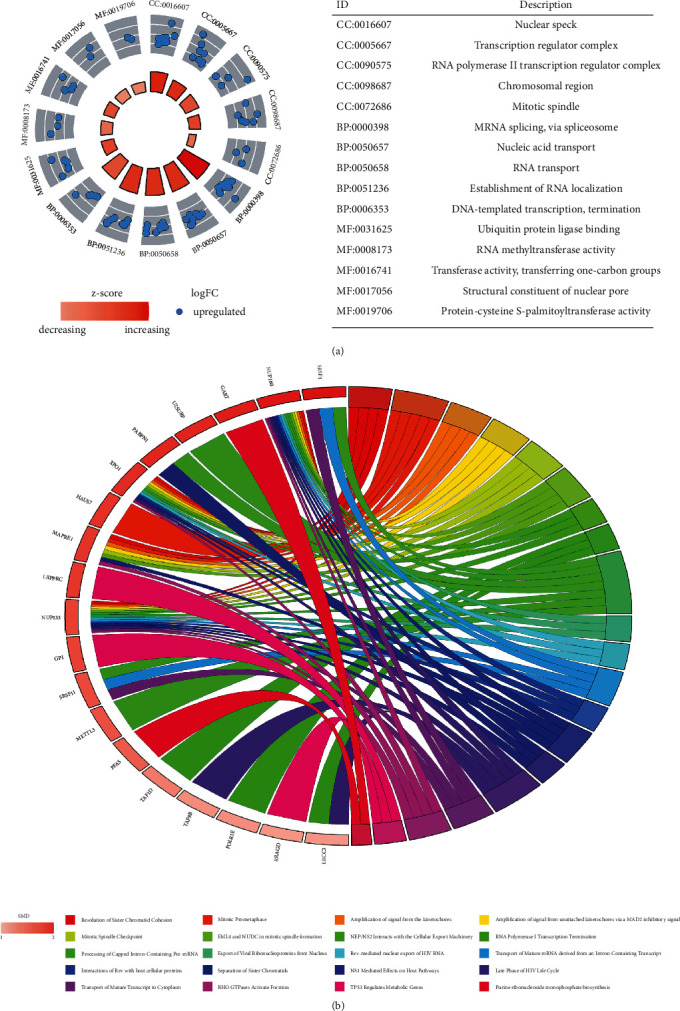
The clinical progression of small-cell lung cancer (SCLC) remains pessimistic. The aim of the present study was to promote the understanding of the clinical significance and mechanism of O-linked N-acetylglucosamine (GlcNAc) transferase (OGT) in SCLC. Wilcoxon tests, standardized mean difference (SMD), and Kruskal-Wallis tests were utilized to compare OGT level differences among the experimental and control groups. The univariate Cox regression analysis, Kaplan-Meier curves, and receiver operating characteristic curves were applied to determine OGT's clinical relevance in cancers. The Spearman correlation analysis and enrichment analysis were utilized to explore the underlying mechanisms of OGT in cancers. For the first time in the field, we provide an overview of OGT in 32 cancers using a large number of samples ( = 21,196), determining distinct OGT expression in 25 cancers and its prognosis effects in 12 cancers. Furthermore, using 950 samples from multiple sources, upregulated OGT was found in both mRNA and protein levels in SCLC (SMD = 0.93, 95% CI [0.24, 1.63]). Higher OGT levels represented a more unfavorable disease-free interval for SCLC patients ( < 0.001). The research also identified OGT expression as a potential marker for SCLC prediction (sensitivity = 0.79, specificity = 0.86, and AUC = 0.88). The high expression of OGT in SCLC may result from the positive regulation of two transcription factors-DEK and XRN2. We primarily investigated the underlying mechanisms of OGT in SCLC. Herein, based on the analyses from pan-cancer to SCLC, OGT demonstrated conspicuous clinical significance. OGT may be an underlying biomarker for the treatment and identification of some cancers, including SCLC.
小细胞肺癌(SCLC)的临床进展仍然不容乐观。本研究的目的是增进对O-连接的N-乙酰葡糖胺(GlcNAc)转移酶(OGT)在SCLC中的临床意义及机制的理解。采用Wilcoxon检验、标准化均值差(SMD)和Kruskal-Wallis检验来比较实验组和对照组之间的OGT水平差异。运用单变量Cox回归分析、Kaplan-Meier曲线和受试者工作特征曲线来确定OGT在癌症中的临床相关性。利用Spearman相关性分析和富集分析来探索OGT在癌症中的潜在机制。在该领域,我们首次使用大量样本(n = 21,196)对32种癌症中的OGT进行了概述,确定了25种癌症中OGT的不同表达及其在12种癌症中的预后影响。此外,使用来自多个来源的950个样本,发现SCLC中OGT在mRNA和蛋白质水平均上调(SMD = 0.93,95%CI [0.24, 1.63])。较高的OGT水平表明SCLC患者的无病生存期更差(P < 0.001)。该研究还确定OGT表达可作为SCLC预测的潜在标志物(敏感性 = 0.79,特异性 = 0.86,AUC = 0.88)。SCLC中OGT的高表达可能源于两种转录因子DEK和XRN2的正向调控。我们主要研究了OGT在SCLC中的潜在机制。在此,基于从泛癌到SCLC的分析,OGT显示出显著的临床意义。OGT可能是包括SCLC在内的某些癌症治疗和识别的潜在生物标志物。