Department of Urology, The Second Affiliated Hospital of Kunming Medical University, No. 347, Dianmian street, Wuhua District, Kunming, 650101, Yunnan, People's Republic of China.
Urological disease clinical medical center of yunnan province, The Second Affiliated Hospital of Kunming Medical University, No. 347, Dianmian street, Wuhua District, Kunming, 650101, Yunnan, People's Republic of China.
BMC Cancer. 2021 Nov 24;21(1):1267. doi: 10.1186/s12885-021-09006-w.
Bladder cancer (BC) is one of the most common malignancies and has a relatively poor outcome worldwide. In this study, we attempted to construct a novel metabolism-related gene (MRG) signature for predicting the survival probability of BC patients.
First, differentially expressed MRGs between BC and normal samples were identified and used to construct a protein-protein interaction (PPI) network and perform mutation analysis. Next, univariate Cox regression analysis was utilized to select prognostic genes, and multivariate Cox regression analysis was applied to establish an MRG signature for predicting the survival probability of BC patients. Moreover, Kaplan-Meier (KM) survival analysis and receiver operating characteristic (ROC) analysis were performed to evaluate the predictive capability of the MRG signature. Finally, a nomogram based on the MRG signature was established to better predict the survival of BC.
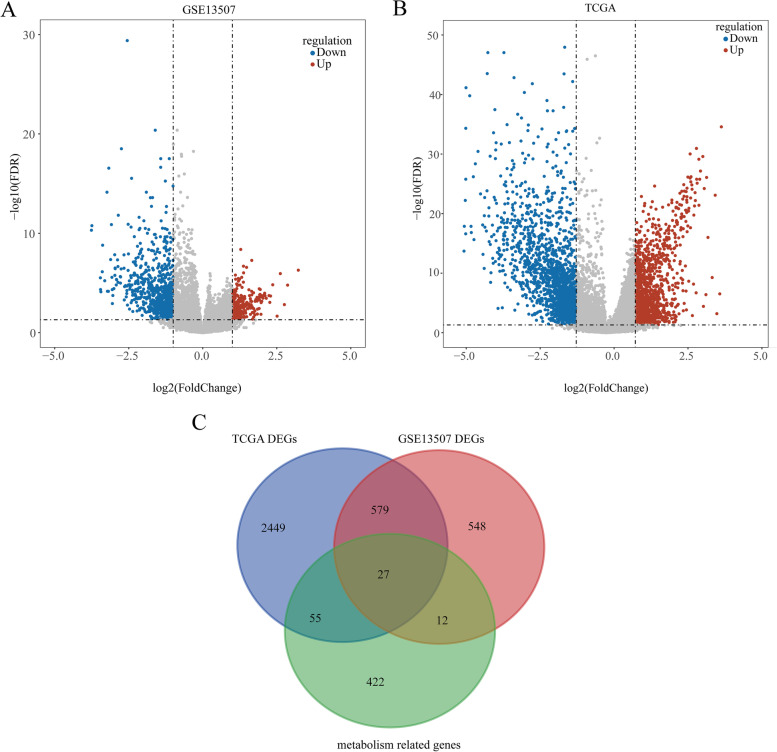
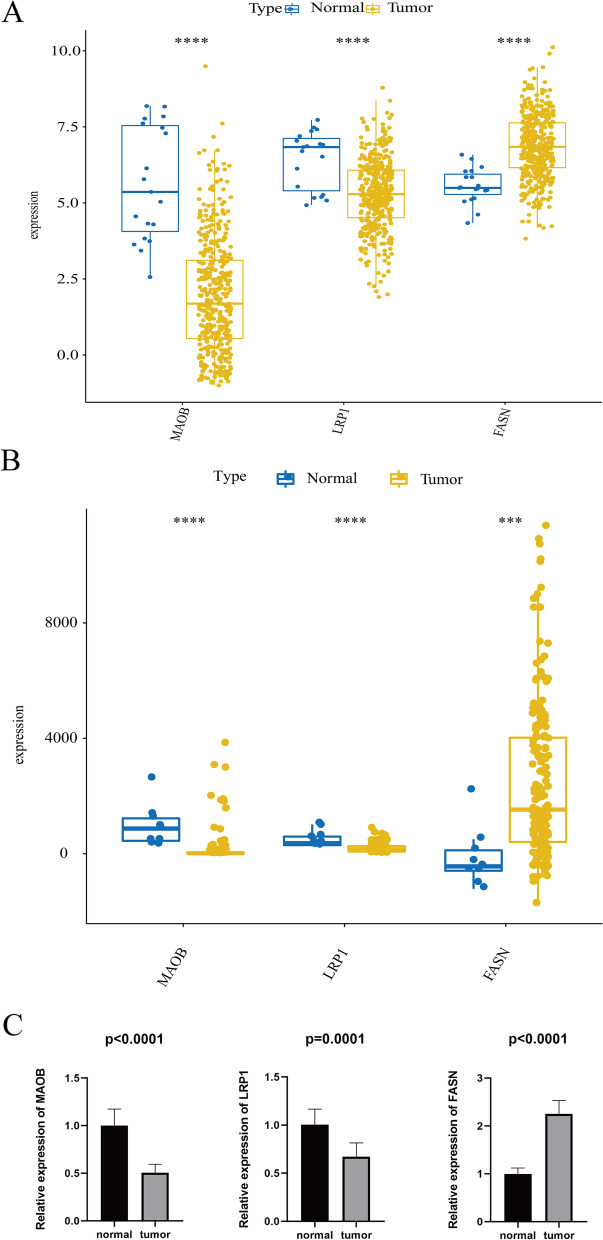
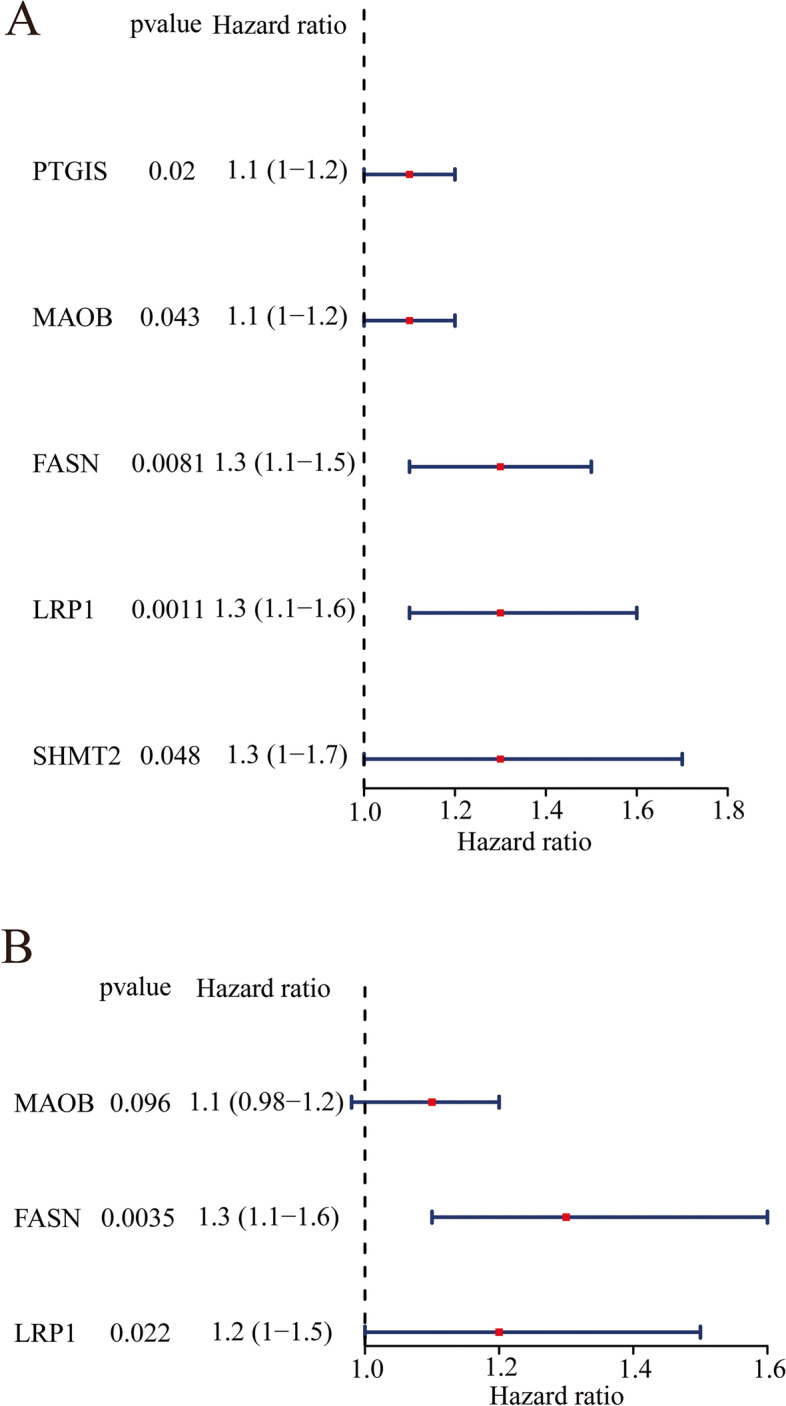
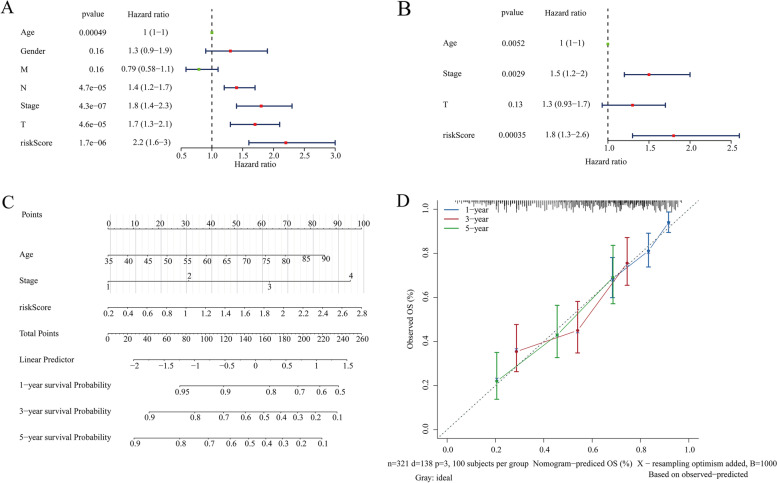
In the present study, 27 differentially expressed MRGs were identified, most of which presented mutations in BC patients, and LRP1 showed the highest mutation rate. Next, an MRG signature, including MAOB, FASN and LRP1, was established by using univariate and multivariate Cox regression analysis. Furthermore, survival analysis indicated that BC patients in the high-risk group had a dramatically lower survival probability than those in the low-risk group. Finally, Cox regression analysis showed that the risk score was an independent prognostic factor, and a nomogram integrating age, pathological tumor stage and risk score was established and presented good predictive ability.
We successfully constructed a novel MRG signature to predict the prognosis of BC patients, which might contribute to the clinical treatment of BC.
膀胱癌(BC)是最常见的恶性肿瘤之一,在全球范围内预后较差。在本研究中,我们试图构建一个新的与代谢相关的基因(MRG)标志,用于预测 BC 患者的生存概率。
首先,鉴定 BC 和正常样本之间差异表达的 MRG,用于构建蛋白质-蛋白质相互作用(PPI)网络并进行突变分析。接下来,采用单因素 Cox 回归分析筛选预后基因,多因素 Cox 回归分析建立用于预测 BC 患者生存概率的 MRG 标志。此外,进行 Kaplan-Meier(KM)生存分析和接受者操作特征(ROC)分析评估 MRG 标志的预测能力。最后,建立基于 MRG 标志的列线图以更好地预测 BC 的生存。
本研究中,鉴定出 27 个差异表达的 MRG,其中大多数在 BC 患者中发生突变,LRP1 的突变率最高。接下来,通过单因素和多因素 Cox 回归分析建立了一个包括 MAOB、FASN 和 LRP1 的 MRG 标志。此外,生存分析表明,高风险组的 BC 患者的生存概率明显低于低风险组。最后,Cox 回归分析表明,风险评分是一个独立的预后因素,并建立了一个整合年龄、病理肿瘤分期和风险评分的列线图,具有良好的预测能力。
我们成功构建了一个新的 MRG 标志,用于预测 BC 患者的预后,这可能有助于 BC 的临床治疗。