Karunaraj Prashath, Tidswell Olivia, Duncan Elizabeth J, Lovegrove Mackenzie R, Jefferies Grace, Johnson Travis K, Beck Caroline W, Dearden Peter K
Laboratory for Development and Regeneration, Department of Zoology, University of Otago, Dunedin 9016, New Zealand.
Genomics Aotearoa and Department of Biochemistry, University of Otago, Dunedin 9016, New Zealand.
Genetics. 2022 May 5;221(1). doi: 10.1093/genetics/iyac049.
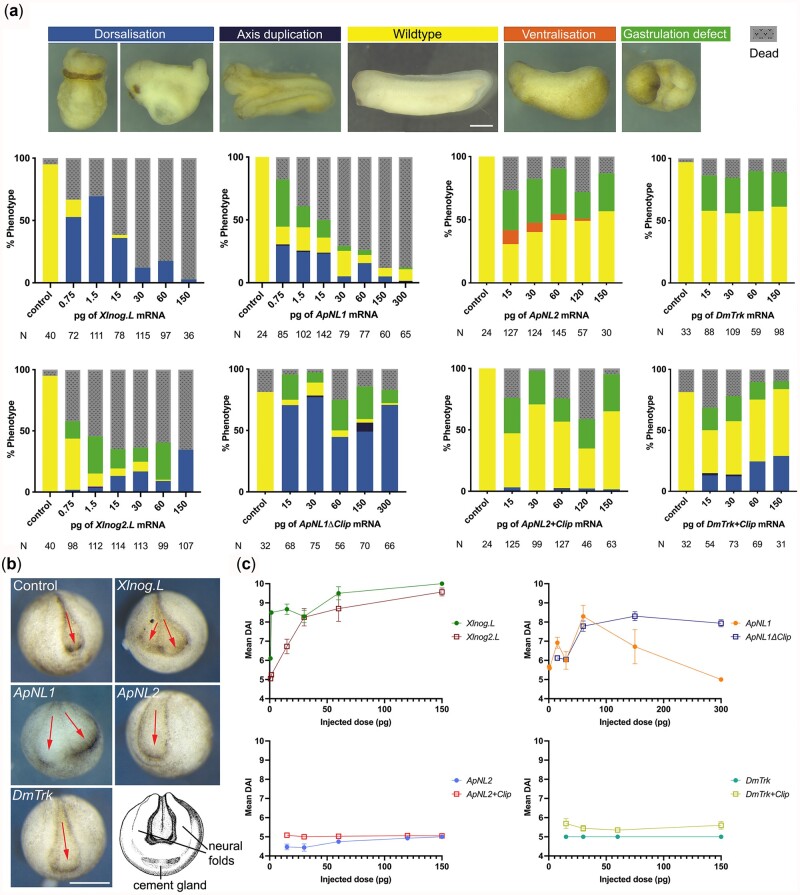
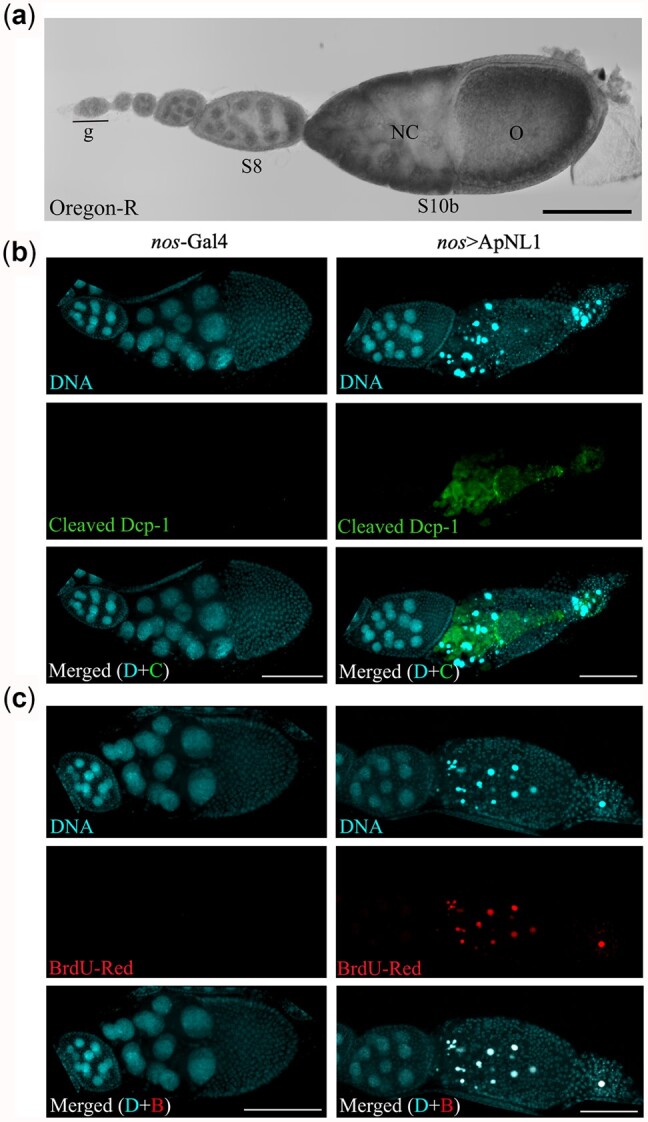
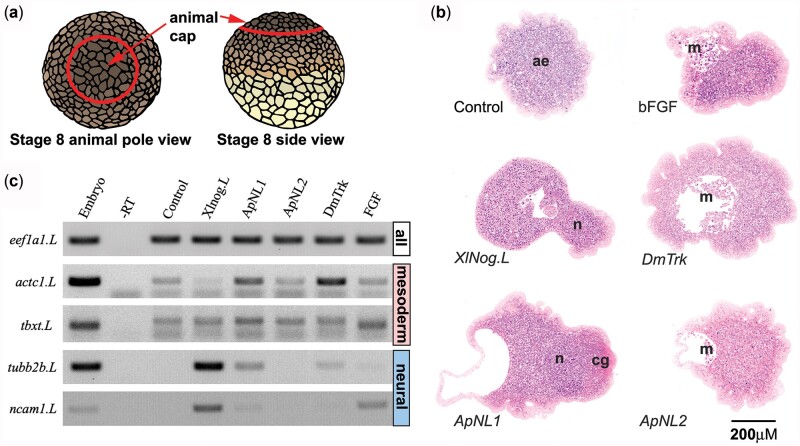
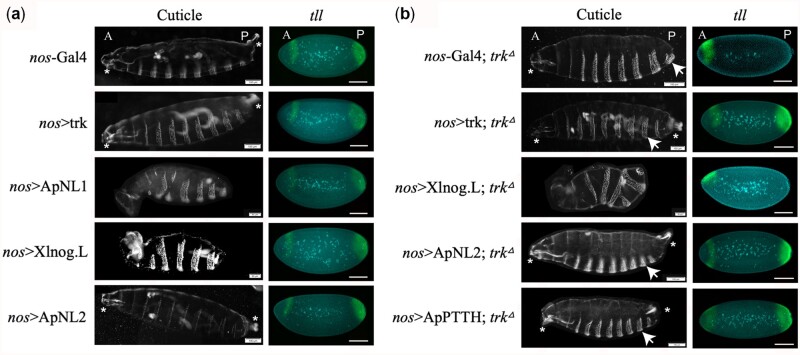
Noggin is an extracellular cysteine knot protein that plays a crucial role in vertebrate dorsoventral patterning. Noggin binds and inhibits the activity of bone morphogenetic proteins via a conserved N-terminal clip domain. Noncanonical orthologs of Noggin that lack a clip domain ("Noggin-like" proteins) are encoded in many arthropod genomes and are thought to have evolved into receptor tyrosine kinase ligands that promote Torso/receptor tyrosine kinase signaling rather than inhibiting bone morphogenic protein signaling. Here, we examined the molecular function of noggin/noggin-like genes (ApNL1 and ApNL2) from the arthropod pea aphid using the dorso-ventral patterning of Xenopus and the terminal patterning system of Drosophila to identify whether these proteins function as bone morphogenic protein or receptor tyrosine kinase signaling regulators. Our findings reveal that ApNL1 from the pea aphid can regulate both bone morphogenic protein and receptor tyrosine kinase signaling pathways, and unexpectedly, that the clip domain is not essential for its antagonism of bone morphogenic protein signaling. Our findings indicate that ancestral noggin/noggin-like genes were multifunctional regulators of signaling that have specialized to regulate multiple cell signaling pathways during the evolution of animals.
头蛋白是一种细胞外半胱氨酸结蛋白,在脊椎动物背腹模式形成中起关键作用。头蛋白通过保守的N端剪辑结构域结合并抑制骨形态发生蛋白的活性。许多节肢动物基因组中编码了缺乏剪辑结构域的头蛋白非经典直系同源物(“类头蛋白”),它们被认为已演变成促进躯干/受体酪氨酸激酶信号传导而非抑制骨形态发生蛋白信号传导的受体酪氨酸激酶配体。在这里,我们利用非洲爪蟾的背腹模式形成和果蝇的末端模式系统,研究了节肢动物豌豆蚜中的头蛋白/类头蛋白基因(ApNL1和ApNL2)的分子功能,以确定这些蛋白质是否作为骨形态发生蛋白或受体酪氨酸激酶信号调节剂发挥作用。我们的研究结果表明,豌豆蚜中的ApNL1可以调节骨形态发生蛋白和受体酪氨酸激酶信号通路,而且出乎意料的是,剪辑结构域对其拮抗骨形态发生蛋白信号并非必不可少。我们的研究结果表明,祖先的头蛋白/类头蛋白基因是信号传导的多功能调节剂,在动物进化过程中专门用于调节多种细胞信号通路。