Russell Ash Allanna Mark, Sutherland Brad A, Landowski Lila M, Macleod Malcolm, Howells David W
Tasmanian School of Medicine, College of Health and Medicine, University of Tasmania, Hobart, Tasmania, Australia.
School of Health Sciences, College of Health and Medicine, University of Tasmania, Hobart, Tasmania, Australia.
BMJ Open Sci. 2022 Mar 12;6(1):e100219. doi: 10.1136/bmjos-2021-100219. eCollection 2022.
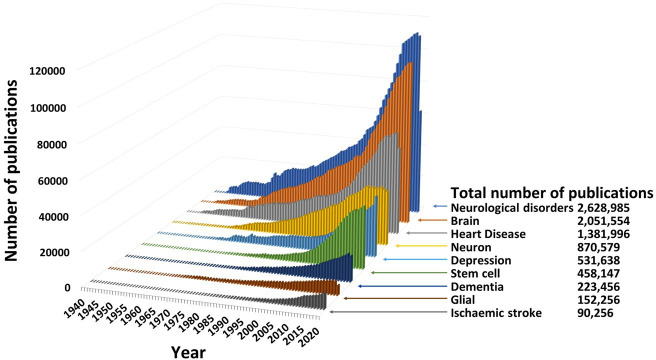
Systematic review and meta-analysis are a gift to the modern researcher, delivering a crystallised understanding of the existing research data in any given space. This can include whether candidate drugs are likely to work or not and which are better than others, whether our models of disease have predictive value and how this might be improved and also how these all interact with disease pathophysiology. Grappling with the literature needed for such analyses is becoming increasingly difficult as the number of publications grows. However, narrowing the focus of a review to reduce workload runs the risk of diminishing the generalisability of conclusions drawn from such increasingly specific analyses. Moreover, at the same time as we gain greater insight into our topic, we also discover more about the flaws that undermine much scientific research. Systematic review and meta-analysis have also shown that the quality of much preclinical research is inadequate. Systematic review has helped reveal the extent of selection bias, performance bias, detection bias, attrition bias and low statistical power, raising questions about the validity of many preclinical research studies. This is perhaps the greatest virtue of systematic review and meta-analysis, the knowledge generated ultimately helps shed light on the limitations of existing research practice, and in doing so, helps bring reform and rigour to research across the sciences. In this commentary, we explore the lessons that we have identified through the lens of preclinical systematic review and meta-analysis.
系统评价和荟萃分析是现代研究者的一项福音,能让我们对任何特定领域的现有研究数据有清晰的认识。这包括候选药物是否可能有效、哪些药物比其他药物更好,我们的疾病模型是否具有预测价值以及如何改进,以及这些因素如何与疾病病理生理学相互作用。随着出版物数量的增加,处理此类分析所需的文献变得越来越困难。然而,缩小综述的重点以减少工作量存在这样的风险,即从这种日益具体的分析中得出的结论的普遍性会降低。此外,在我们对主题有更深入了解的同时,我们也发现了更多破坏许多科学研究的缺陷。系统评价和荟萃分析还表明,许多临床前研究的质量不足。系统评价有助于揭示选择偏倚、执行偏倚、检测偏倚、失访偏倚和低统计效力的程度,这引发了对许多临床前研究有效性的质疑。这也许是系统评价和荟萃分析的最大优点,所产生的知识最终有助于揭示现有研究实践的局限性,并在此过程中推动各学科研究的改革和严谨性。在这篇评论中,我们将通过临床前系统评价和荟萃分析的视角来探讨我们所确定的经验教训。