Tian Baoming, Pan Yizhu, Wang Jian, Cai Ming, Ye Bangwei, Yang Kai, Sun Peilong
Food Natural Product and Nutritional Health Research Center, College of Food Science and Technology, Zhejiang University of Technology, Huzhou, China.
Zhejiang WisePlus Health Technology Co., Ltd, Lishui, China.
Front Nutr. 2022 Mar 10;9:851228. doi: 10.3389/fnut.2022.851228. eCollection 2022.
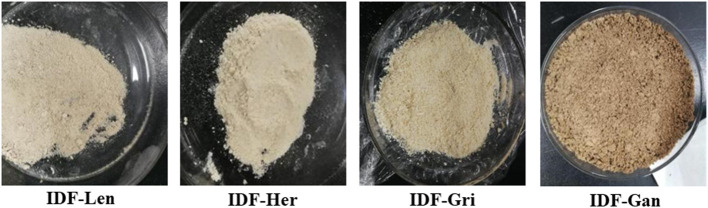
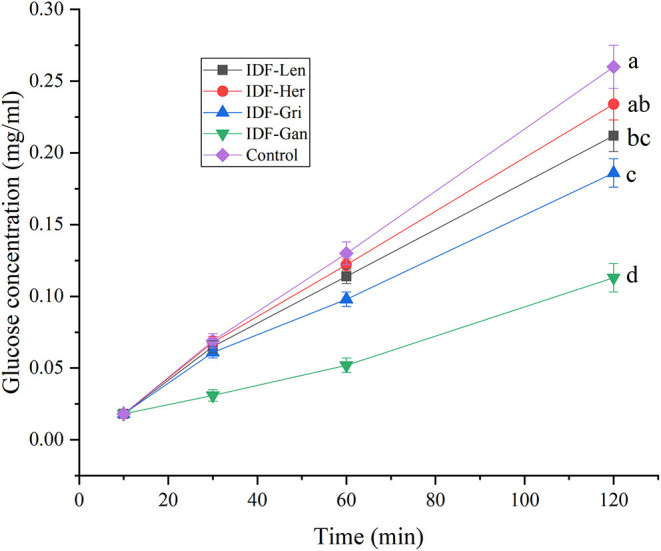
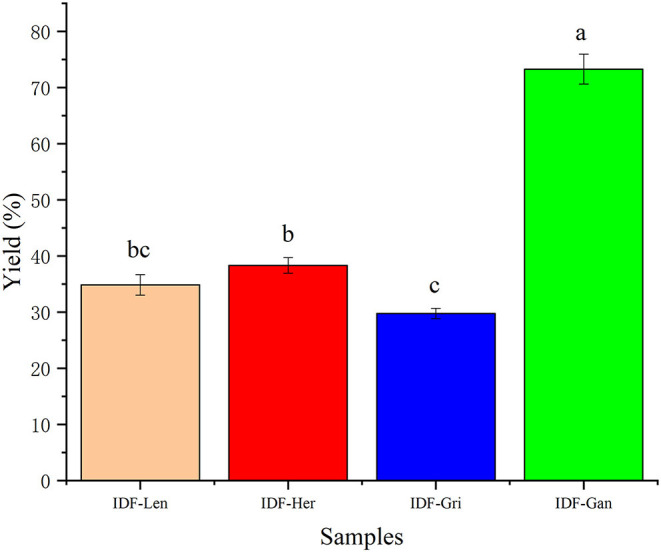
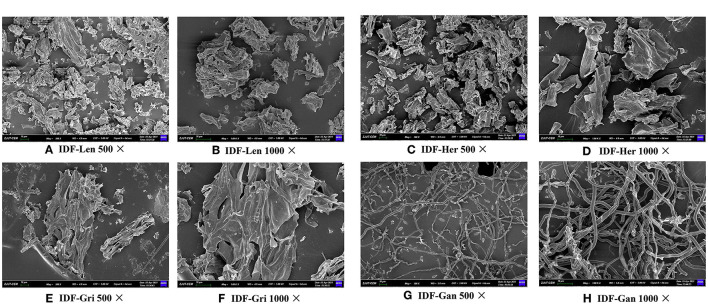
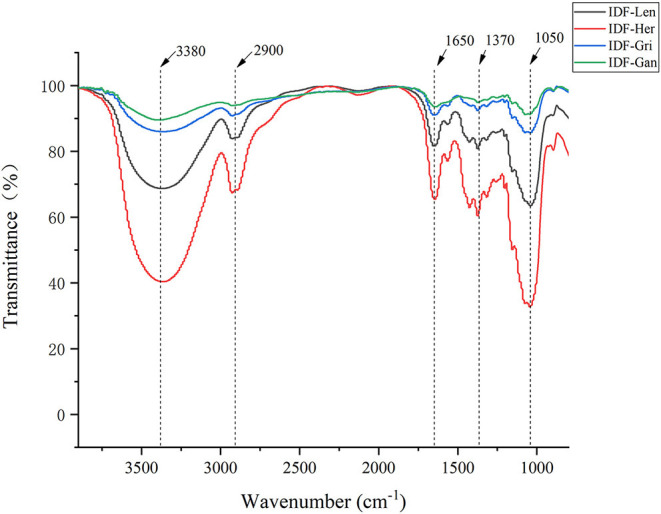
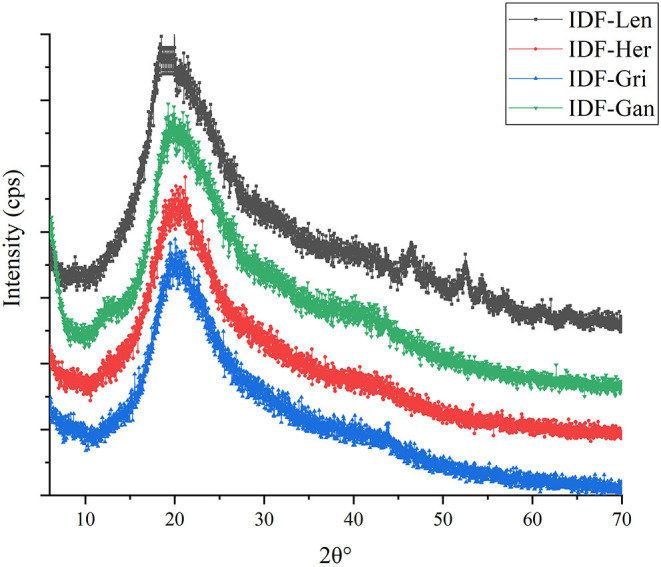
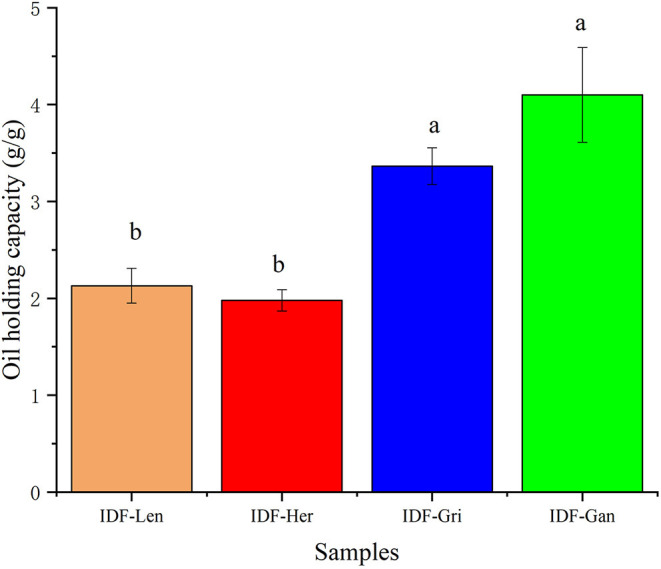
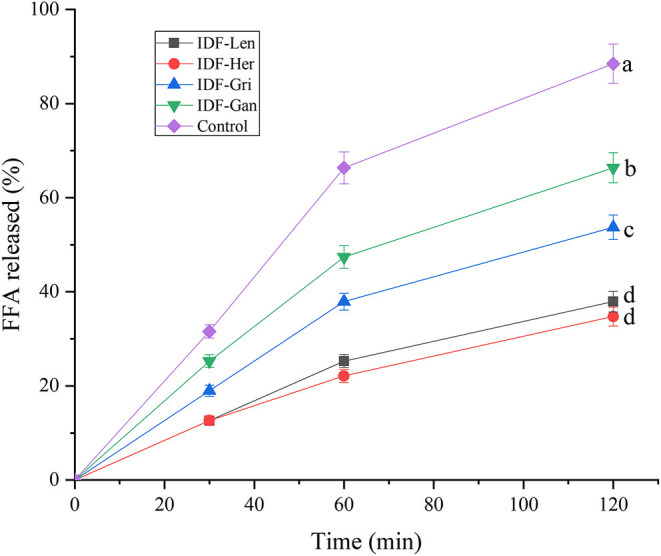
With the rapid development of the edible fungi industry in the world, especially in China, the resource utilization of edible fungi by-products has become an urgent problem for the industry's sustainable development. The waste residue of edible fungi after polysaccharide extraction by water accounts for a large proportion, which contains a large amount of water-insoluble dietary fiber (IDF). At present, the extracted residue is generally treated as fertilizer or solid waste, which not only pollutes the environment, but wastes resources too. In order to develop these by-products, expand their potential utilization in the food industry, the structure characterization, physicochemical properties, and the influence of IDF on dietary energy intake were studied. The IDF from the residues of polysaccharides extracted from four edible fungi was extracted using the Association of Official Analytical Chemists (AOAC) method. The results showed that IDF in the four kinds of edible fungi residues was similar in composition but different in texture. Cellulose and hemicellulose are the main IDF extracted from four kinds of edible fungi. Among them, is the softest without obvious granular texture, following , while and have a relatively hard texture. The yield of four kinds of IDF from high to low came from , and . Fourier transform IR (FTIR) and X-ray diffraction (XRD) spectra showed that the four IDFs had similar functional groups and all of them contained a large amount of cellulose. Physical and chemical analysis showed that all the four IDFs had certain water holding capacity, water binding capacity, and oil holding capacity. digestion experiments showed that the four IDFs could inhibit the digestion of starch and fat to a certain extent. By-products of edible fungi are an ideal material for the recovery of IDFs, which have the potential to be processed into functional food materials due to their physicochemical properties and physiological functions.
随着世界尤其是中国食用菌产业的快速发展,食用菌副产物的资源利用已成为该产业可持续发展的紧迫问题。水提取多糖后的食用菌废渣占比很大,其中含有大量水不溶性膳食纤维(IDF)。目前,提取后的残渣一般作为肥料或固体废物处理,这不仅污染环境,还造成资源浪费。为了开发这些副产物,扩大其在食品工业中的潜在利用价值,对其结构表征、理化性质以及IDF对膳食能量摄入的影响进行了研究。采用美国官方分析化学师协会(AOAC)方法从四种食用菌多糖提取残渣中提取IDF。结果表明,四种食用菌残渣中的IDF组成相似但质地不同。纤维素和半纤维素是从四种食用菌中提取的主要IDF。其中,[此处原文缺失具体名称]最柔软,无明显颗粒质地,其次是[此处原文缺失具体名称],而[此处原文缺失具体名称]和[此处原文缺失具体名称]质地相对较硬。四种IDF的得率从高到低依次为[此处原文缺失具体名称]、[此处原文缺失具体名称]、[此处原文缺失具体名称]、[此处原文缺失具体名称]。傅里叶变换红外光谱(FTIR)和X射线衍射(XRD)光谱表明,四种IDF具有相似的官能团,且均含有大量纤维素。理化分析表明,四种IDF均具有一定的持水力、结合水力和持油力。[此处原文缺失具体名称]消化实验表明,四种IDF均可在一定程度上抑制淀粉和脂肪的消化。食用菌副产物是回收IDF的理想原料,因其理化性质和生理功能,有潜力加工成功能性食品原料。