Zheng Ping, Sun Heng, Liu Juan, Lin Jishan, Zhang Xingtan, Qin Yuan, Zhang Wenping, Xu Xiuming, Deng Xianbao, Yang Dong, Wang Meng, Zhang Yanting, Song Heyun, Huang Yongji, Orozco-Obando Warner, Ming Ray, Yang Mei
Center for Genomics and Biotechnology, Fujian Provincial Key Laboratory of Haixia Applied Plant Systems Biology, Key Laboratory of Genetics, Breeding and Multiple Utilization of Corps, Ministry of Education, Fujian Agriculture and Forestry University, Fuzhou, 350002, Fujian, China.
Key Laboratory of Plant Germplasm Enhancement and Specialty Agriculture, Wuhan Botanical Garden, Chinese Academy of Sciences, Wuhan, 430074, China.
Plant J. 2022 Jun;110(5):1498-1515. doi: 10.1111/tpj.15753. Epub 2022 Apr 19.
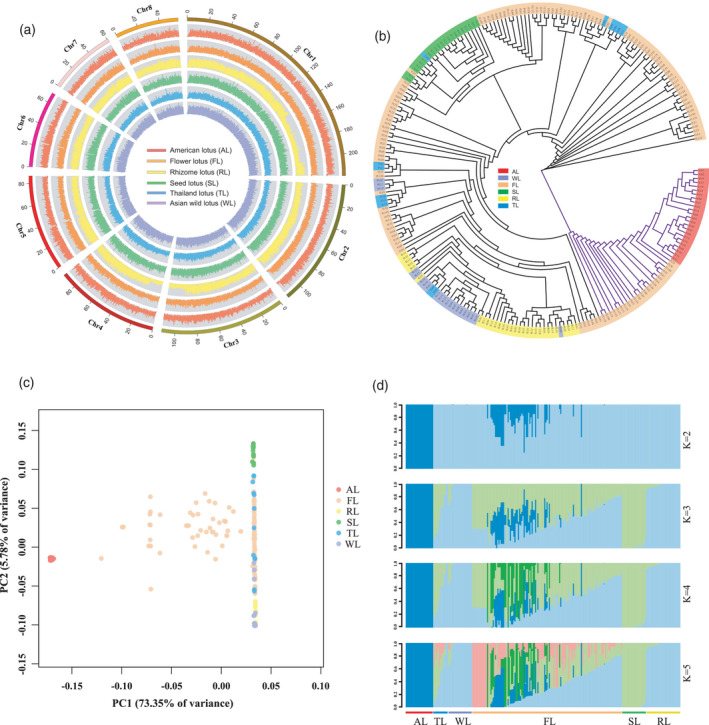
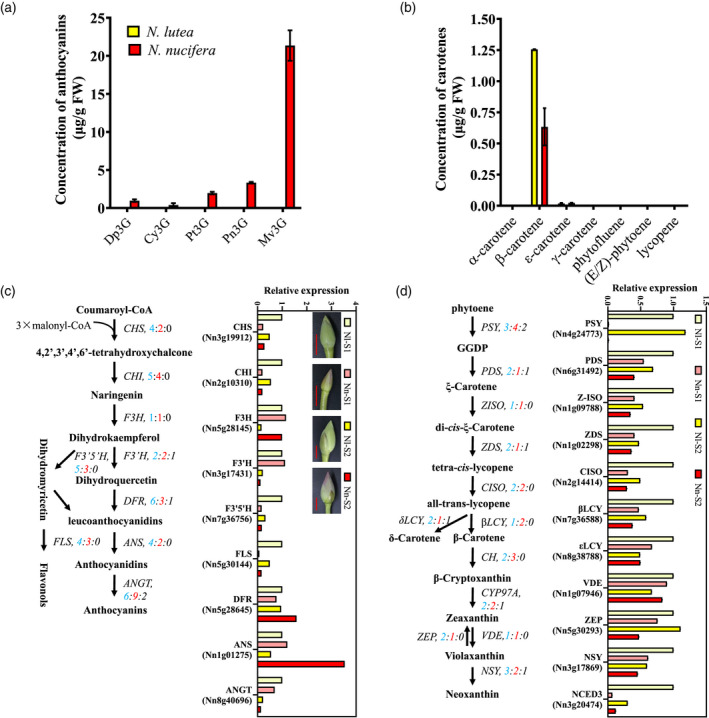
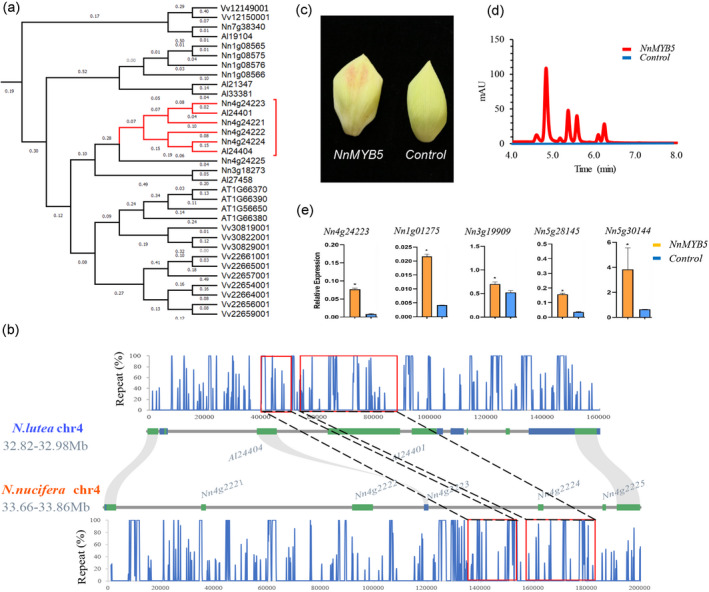
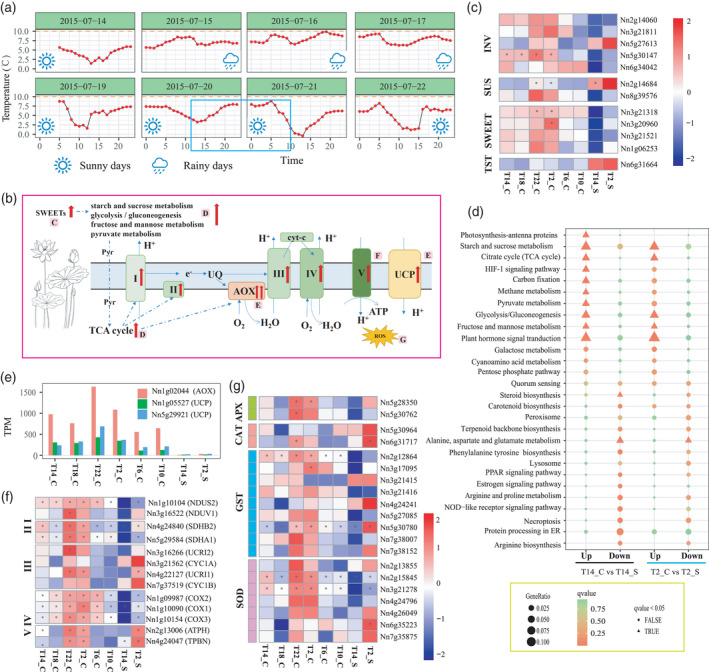
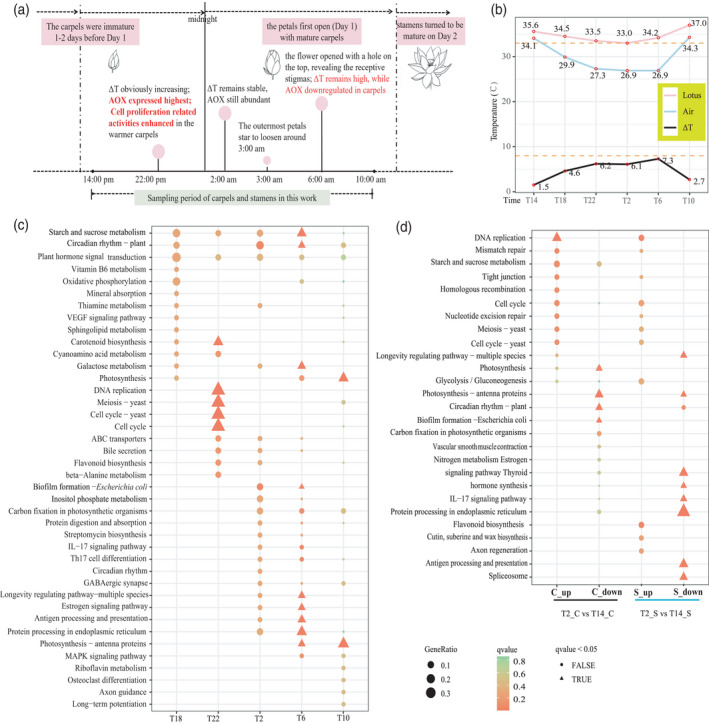
Nelumbo lutea (American lotus), which differs from Nelumbo nucifera (Asian lotus) morphologically, is one of the two remaining species in the basal eudicot family Nelumbonaceae. Here, we assembled the 843-Mb genome of American lotus into eight pseudochromosomes containing 31 382 protein-coding genes. Comparative analyses revealed conserved synteny without large chromosomal rearrangements between the genomes of American and Asian lotus and identified 29 533 structural variants (SVs). Carotenoid and anthocyanin pigments determine the yellow and red petal colors of American and Asian lotus, respectively. The structural genes encoding enzymes of the carotenoid and anthocyanin biosynthesis pathways were conserved between two species but differed in expression. We detected SVs caused by repetitive sequence expansion or contraction among the anthocyanin biosynthesis regulatory MYB genes. Further transient overexpression of candidate NnMYB5 induced anthocyanin accumulation in lotus petals. Alternative oxidase (AOX), uncoupling proteins (UCPs), and sugar metabolism and transportation contributed to carpel thermogenesis. Carpels produce heat with sugars transported from leaves as the main substrates, because there was weak tonoplast sugar transporter (TST) activity, and with SWEETs were highly expressed during thermogenesis. Cell proliferation-related activities were particularly enhanced in the warmer carpels compared with stamens during the cold night before blooming, which suggested that thermogenesis plays an important role in flower protogyny. Population genomic analyses revealed deep divergence between American and Asian lotus, and independent domestication affecting seed, rhizome, and flower traits. Our findings provide a high-quality reference genome of American lotus for exploring the genetic divergence and variation between two species and revealed possible genomic bases for petal color, carpel thermogenesis and domestication in lotus.
美洲黄莲(Nelumbo lutea)在形态上与亚洲莲(Nelumbo nucifera)不同,是基部真双子叶植物莲科仅存的两个物种之一。在此,我们将美洲黄莲843兆碱基的基因组组装成8条假染色体,包含31382个蛋白质编码基因。比较分析显示,美洲莲和亚洲莲基因组之间存在保守的共线性,没有大的染色体重排,并鉴定出29533个结构变异(SV)。类胡萝卜素和花青素色素分别决定了美洲莲和亚洲莲花瓣的黄色和红色。编码类胡萝卜素和花青素生物合成途径中酶的结构基因在两个物种间保守,但表达不同。我们检测到花青素生物合成调控MYB基因间由重复序列扩增或收缩导致的SV。进一步对候选NnMYB5进行瞬时过表达,诱导了莲花花瓣中花青素的积累。交替氧化酶(AOX)、解偶联蛋白(UCP)以及糖代谢和转运促成了心皮产热。心皮以从叶片运输来的糖作为主要底物产热,因为液泡膜糖转运蛋白(TST)活性较弱,且SWEETs在产热过程中高表达。在开花前寒冷的夜晚,与雄蕊相比,较温暖的心皮中细胞增殖相关活动尤其增强,这表明产热在花的雌蕊先熟中起重要作用。群体基因组分析揭示了美洲莲和亚洲莲之间的深度分化,以及影响种子、根茎和花性状的独立驯化过程。我们的研究结果提供了高质量的美洲莲参考基因组,用于探索两个物种间的遗传分化和变异,并揭示了莲花花瓣颜色、心皮产热和驯化的可能基因组基础。