Department of Neurology and Michigan Neuroscience Institute, University of Michigan, Ann Arbor, MI 48109, USA; Department of Neurology, Xiangya Hospital, Central South University, Changsha, Hunan, 410,008, China.
Department of Neurology and Michigan Neuroscience Institute, University of Michigan, Ann Arbor, MI 48109, USA.
Mol Cell Neurosci. 2022 May;120:103727. doi: 10.1016/j.mcn.2022.103727. Epub 2022 Mar 31.
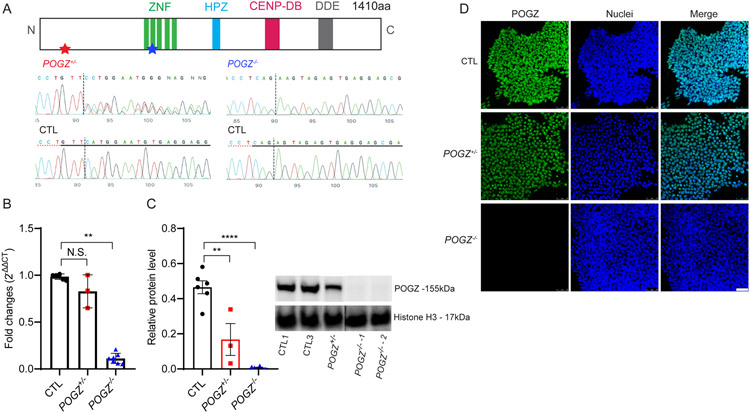
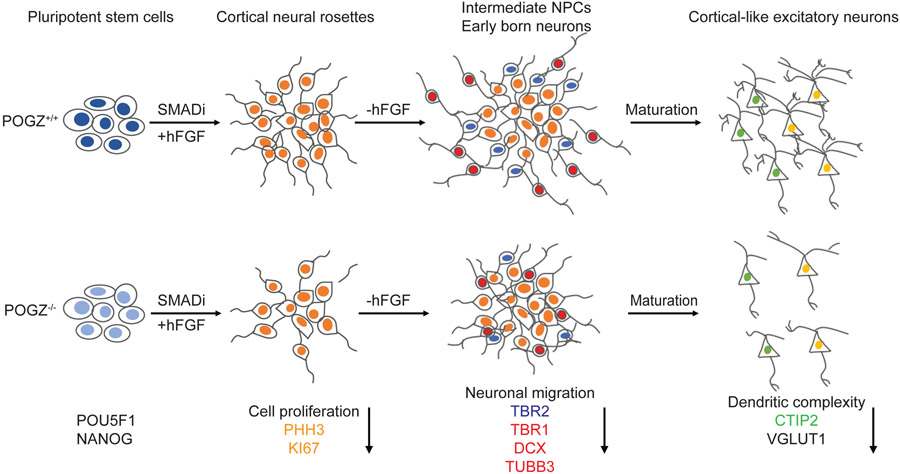
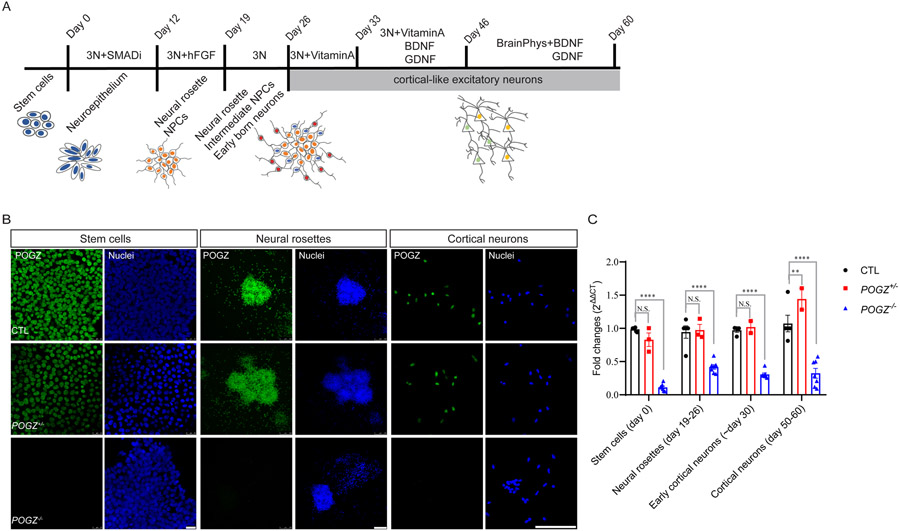
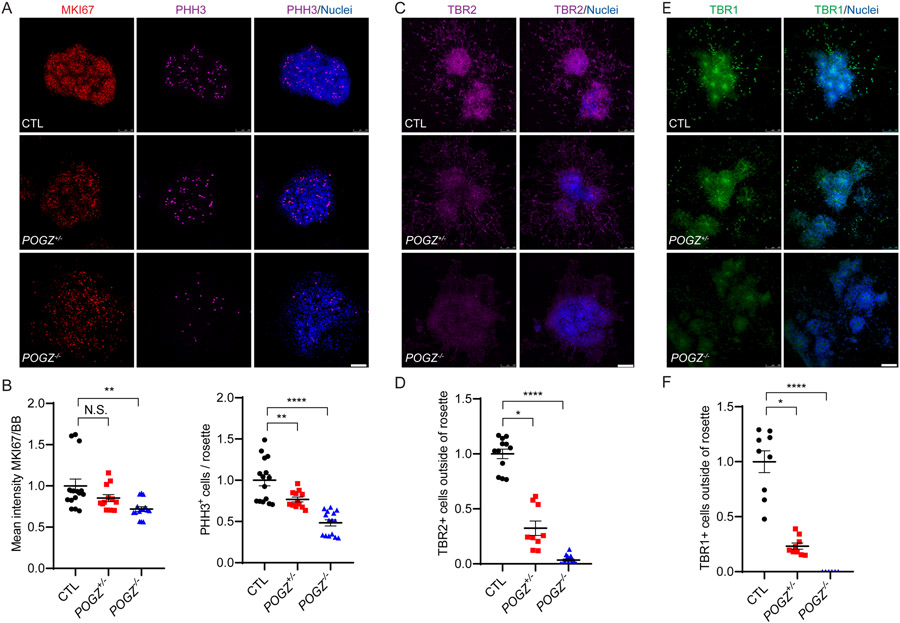
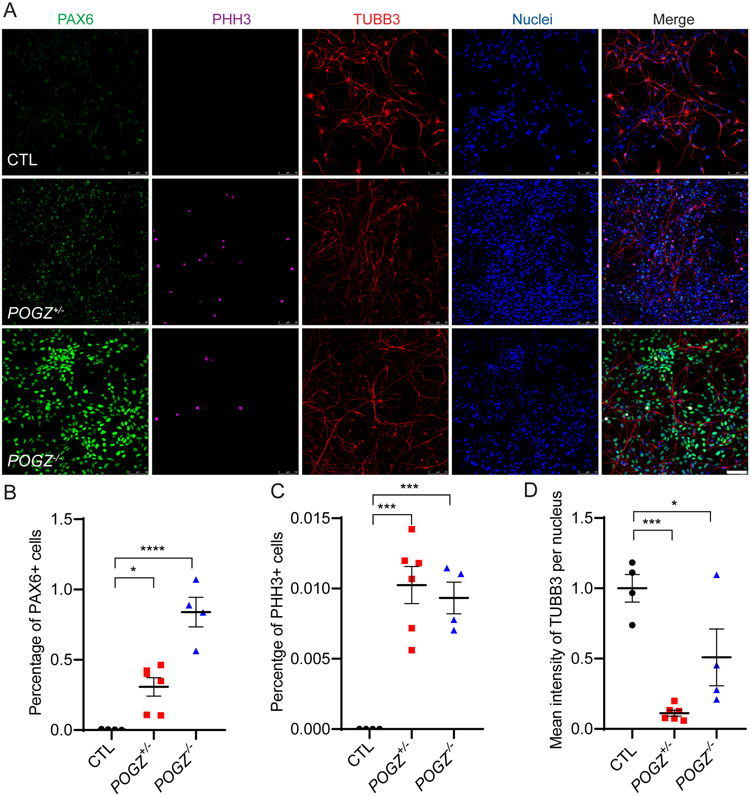
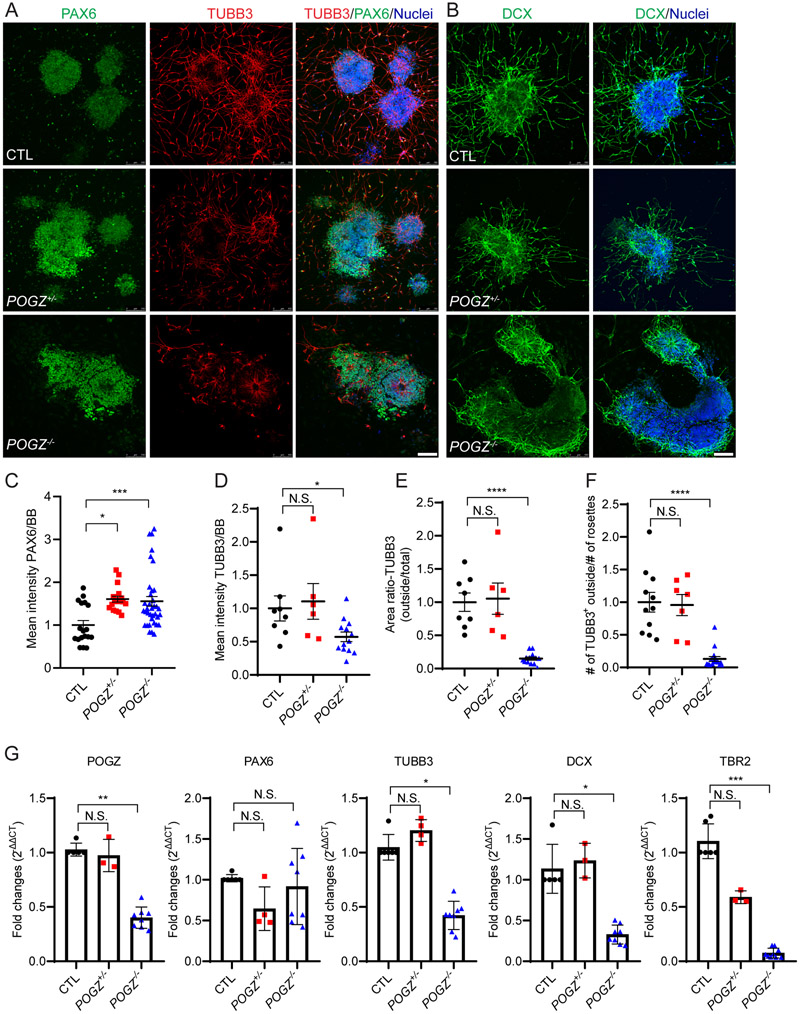
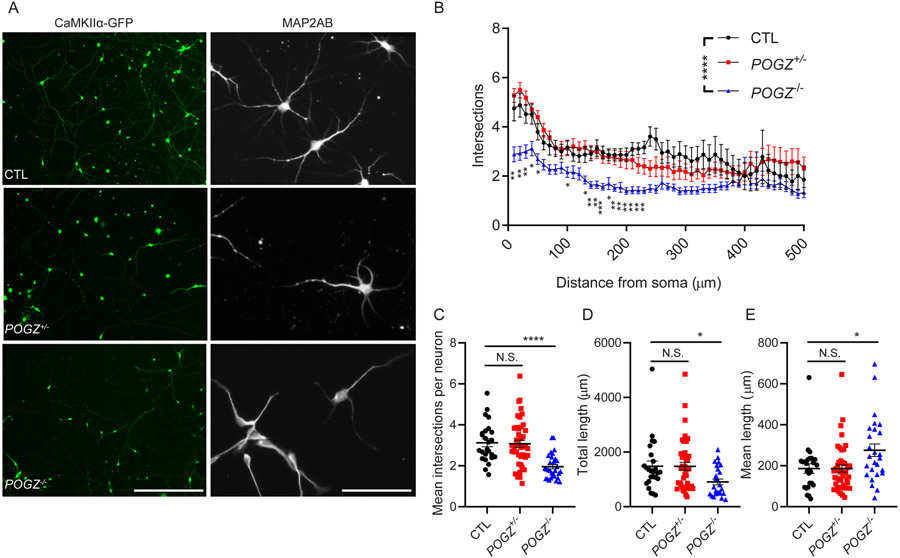
POGZ is a pogo transposable element derived protein with multiple zinc finger domains. Many de novo loss-of-function (LoF) variants of the POGZ gene are associated with autism and other neurodevelopmental disorders. However, the role of POGZ in human cortical development remains poorly understood. Here we generated multiple POGZ LoF lines in H9 human embryonic stem cells (hESCs) using CRISPR/CAS9 genome editing. These lines were then differentiated into neural structures, similar to those found in early to mid-fetal human brain, a critical developmental stage for studying disease mechanisms of neurodevelopmental disorders. We found that the loss of POGZ reduced neural stem cell proliferation in excitatory cortex-patterned neural rosettes, structures analogous to the cortical ventricular zone in human fetal brain. As a result, fewer intermediate progenitor cells and early born neurons were generated. In addition, neuronal migration from the apical center to the basal surface of neural rosettes was perturbed due to the loss of POGZ. Furthermore, cortical-like excitatory neurons derived from multiple POGZ homozygous knockout lines exhibited a more simplified dendritic architecture compared to wild type lines. Our findings demonstrate how POGZ regulates early neurodevelopment in the context of human cells, and provide further understanding of the cellular pathogenesis of neurodevelopmental disorders associated with POGZ variants.
POGZ 是一种具有多个锌指结构域的跳跃转座元件衍生蛋白。许多 POGZ 基因的新生缺失功能(LoF)变体与自闭症和其他神经发育障碍有关。然而,POGZ 在人类皮质发育中的作用仍知之甚少。在这里,我们使用 CRISPR/CAS9 基因组编辑在 H9 人胚胎干细胞(hESC)中生成了多个 POGZ LoF 系。然后,这些系被分化为类似于早期至中期胎儿人大脑的神经结构,这是研究神经发育障碍疾病机制的关键发育阶段。我们发现 POGZ 的缺失减少了兴奋性皮层模式化神经玫瑰花结中的神经干细胞增殖,这些结构类似于人类胎儿大脑的皮质脑室区。因此,产生的中间祖细胞和早期出生的神经元较少。此外,由于 POGZ 的缺失,神经玫瑰花结从中枢的顶端中心向基底表面的神经元迁移受到干扰。此外,与野生型系相比,源自多个 POGZ 纯合敲除系的皮质样兴奋性神经元表现出更简化的树突结构。我们的发现表明了 POGZ 如何在人类细胞背景下调节早期神经发育,并进一步了解与 POGZ 变体相关的神经发育障碍的细胞发病机制。