Mengesha Yizengaw, Tebeje Alemu, Tilahun Belay
University of Gondar, Institute of Biotechnology, Department of Agricultural Biotechnology, Ethiopia.
University of Gondar, Institute of Biotechnology, Departments of Industrial Biotechnology, Ethiopia.
Int J Food Sci. 2022 Mar 24;2022:4419955. doi: 10.1155/2022/4419955. eCollection 2022.
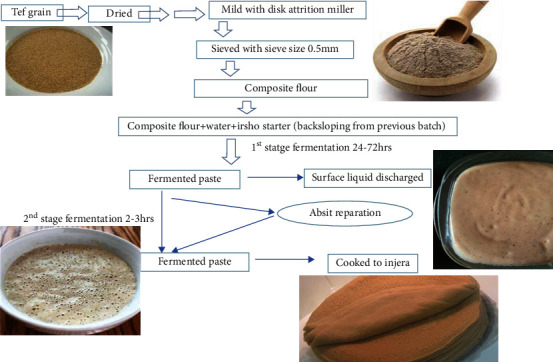
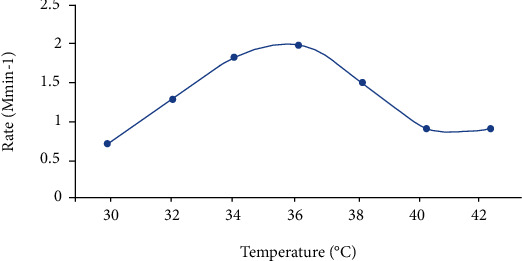
Fermented foods and beverages are the product of the enzymaticcally transformed food components which are acived by different microorganisms. Fermented foods have grown in popularity in recent years because of their alleged health benefits. Biogenic amines, bioactive peptides, antinutrient reduction, and polyphenol conversion to physiologically active chemicals are all possible health benefits of fermentation process products. In Ethiopian-fermented foods, which are mostly processed using spontaneous fermentation process. Injera is one of the fermented food products consumed in all corners of the country which sourdough fermentation could be achieved using different LAB and yeast strains. Moreover, the kind and concentration of the substrate and the type of microbial flora, as well as temperature, air supply, and pH, all influence the fermentation process of injera. This review article gives an overview of factors influencing the fermentation process of teff ('Eragrostis tef.') and other cereal-based Ethiopian injera.
发酵食品和饮料是由不同微生物激活的酶促转化食品成分的产物。近年来,发酵食品因其所谓的健康益处而越来越受欢迎。生物胺、生物活性肽、抗营养物质减少以及多酚转化为生理活性化学物质都是发酵过程产物可能带来的健康益处。在埃塞俄比亚的发酵食品中,大多采用自然发酵工艺进行加工。英吉拉是该国各地都食用的发酵食品之一,使用不同的乳酸菌和酵母菌株可以实现酸面团发酵。此外,底物的种类和浓度、微生物菌群的类型以及温度、空气供应和pH值都会影响英吉拉的发酵过程。这篇综述文章概述了影响画眉草(‘Eragrostis tef.’)和其他以谷物为基础的埃塞俄比亚英吉拉发酵过程的因素。