Kundu Sumana, Jha Surajkumar B, Rivera Ana P, Flores Monar Gabriela V, Islam Hamza, Puttagunta Sri Madhurima, Islam Rabia, Sange Ibrahim
Research, Radha Govinda Kar Medical College, Kolkata, IND.
Research, School of Medicine/Jinan University, Guangzhou, CHN.
Cureus. 2022 Feb 25;14(2):e22585. doi: 10.7759/cureus.22585. eCollection 2022 Feb.
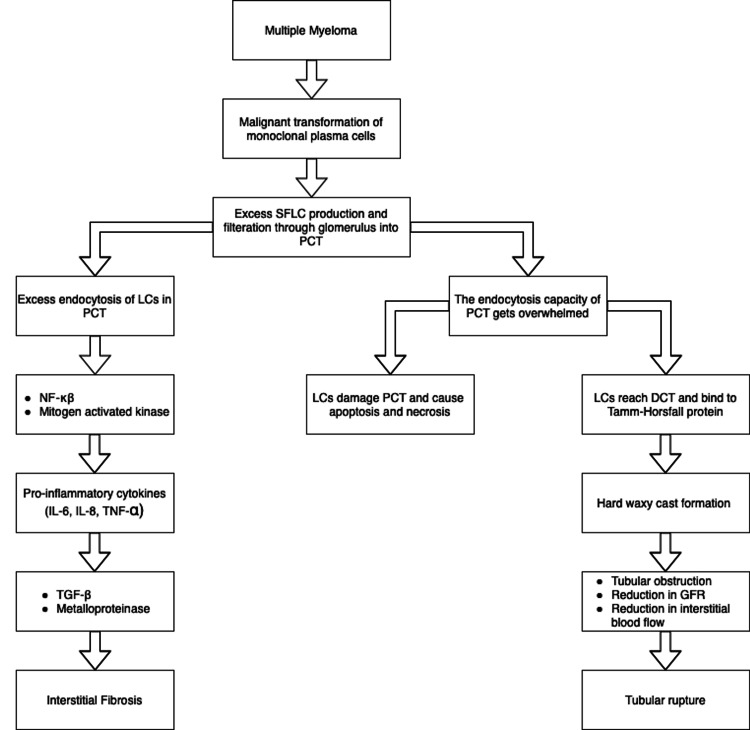
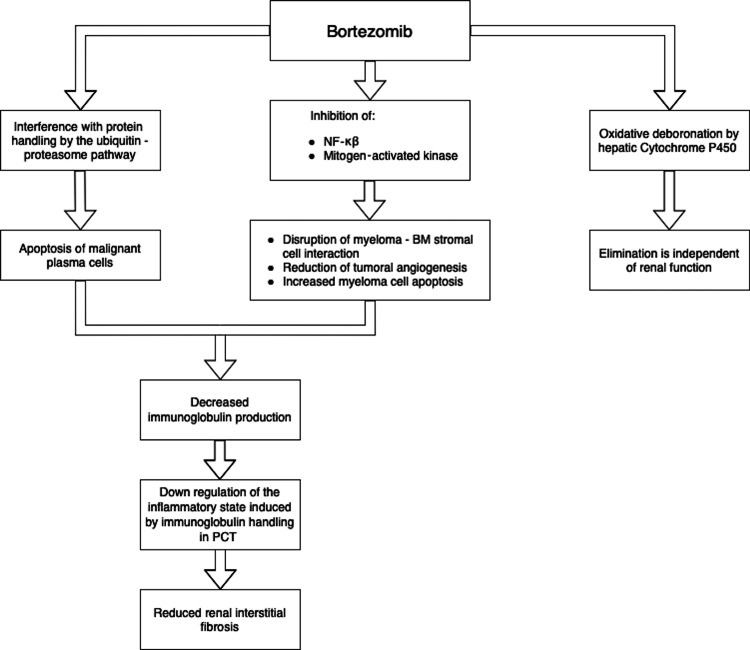
Multiple myeloma (MM) is the second most common hematologic malignancy that involves monoclonal immunoglobulin (Ig)-producing plasma cells. Due to its multifaceted clinical manifestations and complications, it draws attention to various medical specialties like neurology, nephrology, orthopedics, cardiology, etc. Renal failure (RF) is one of the most common and most serious complications of MM that can be caused either by excess immunoglobulins that are nephrotoxic or some other causes like hypercalcemia, infection, etc. In this review article, we have discussed the pathogenesis of RF in MM, described the different diagnostic tools to diagnose RF in MM, and explained different treatment modalities to treat RF in MM, including certain general measures (i.e., hydration, withholding any nephrotoxic agents), renal replacement therapy, serum free light chain (SFLC) removal by plasma exchange and high cut-off dialyzer (HCO-HD), chemotherapy, hematopoietic stem cell transplantation (HSCT), and renal transplantation.
多发性骨髓瘤(MM)是第二常见的血液系统恶性肿瘤,涉及产生单克隆免疫球蛋白(Ig)的浆细胞。由于其多方面的临床表现和并发症,它引起了神经学、肾脏病学、骨科学、心脏病学等各个医学专科的关注。肾衰竭(RF)是MM最常见、最严重的并发症之一,其可由具有肾毒性的过量免疫球蛋白或高钙血症、感染等其他原因引起。在这篇综述文章中,我们讨论了MM中RF的发病机制,描述了诊断MM中RF的不同诊断工具,并解释了治疗MM中RF的不同治疗方式,包括某些一般措施(即水化、停用任何肾毒性药物)、肾脏替代治疗、通过血浆置换和高通量透析器(HCO-HD)清除血清游离轻链(SFLC)、化疗、造血干细胞移植(HSCT)和肾移植。