Department of Critical Care Medicine, West China Hospital, West China Clinical Medical School, Sichuan University, Chengdu, China.
Department of Critical Care Medicine, Sichuan Provincial People's Hospital, University of Electronic Science and Technology of China, Chengdu, China.
Front Cell Infect Microbiol. 2022 Mar 16;12:863399. doi: 10.3389/fcimb.2022.863399. eCollection 2022.
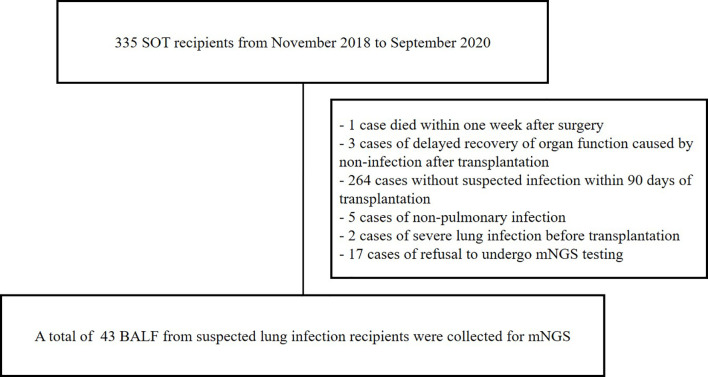
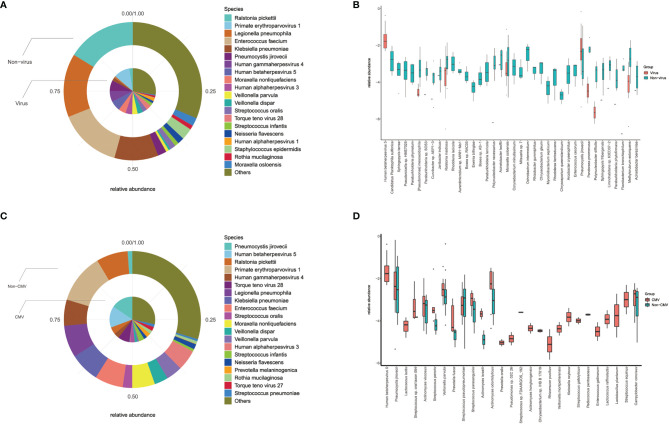
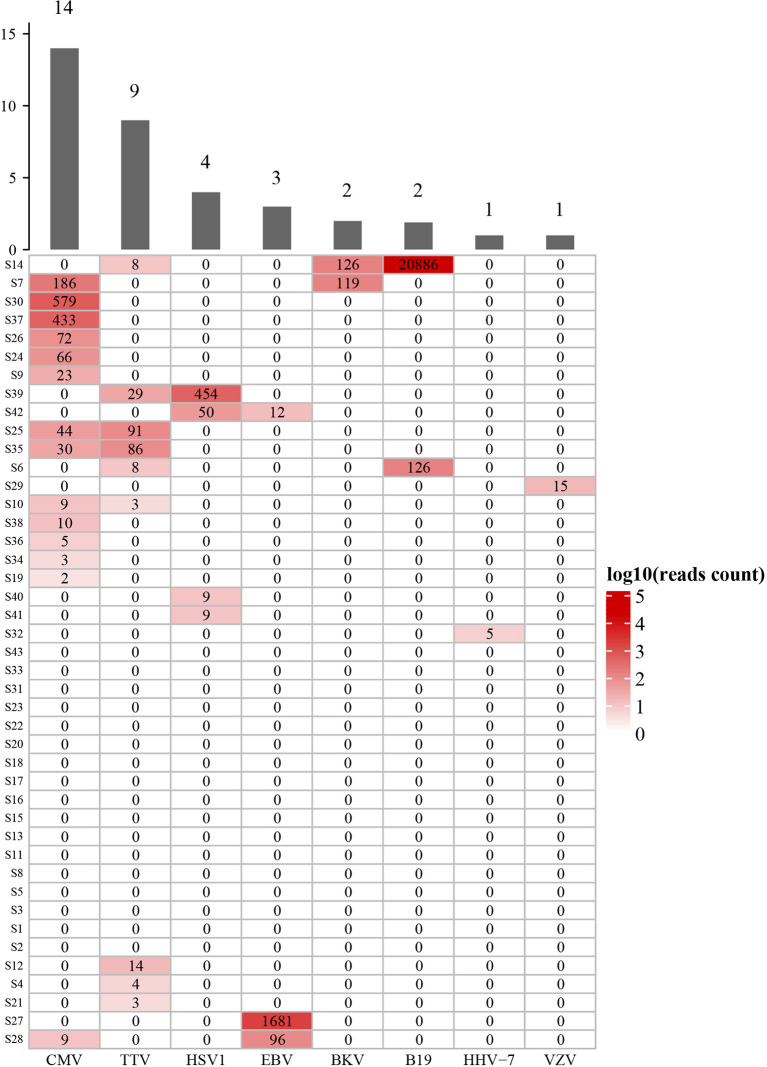
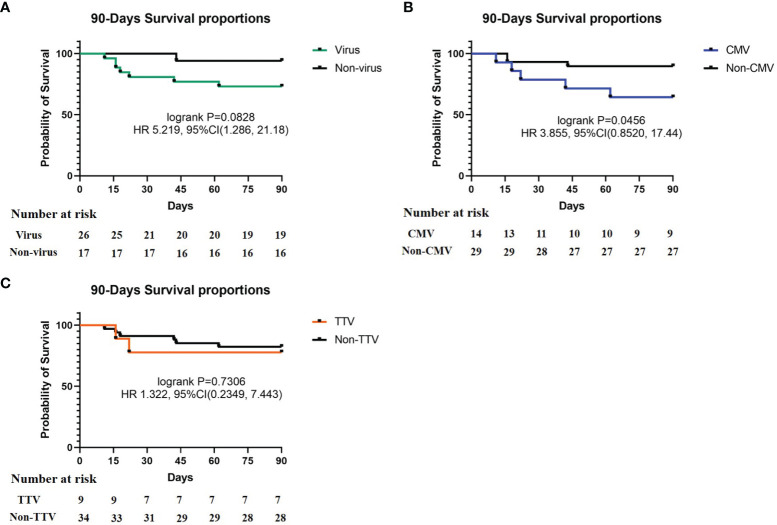
Solid organ transplantation (SOT) is the final therapeutic option for recipients with end-stage organ failure, and its long-term success is limited by infections and chronic allograft dysfunction. Viral infection in SOT recipients is considered an important factor affecting prognosis. In this study, we retrospectively analyzed 43 cases of respiratory infections in SOT recipients using metagenomic next-generation sequencing (mNGS) for bronchoalveolar lavage fluid (BALF). At least one virus was detected in 26 (60.5%) recipients, while 17 (39.5%) were virus-negative. Among virus-positive recipients, cytomegalovirus (CMV) was detected in 14 (32.6%), Torque teno virus (TTV) was detected in 9 (20.9%), and other viruses were detected in 6 (14.0%). Prognostic analysis showed that the mortality of the virus-positive group was higher than that of the virus-negative group regardless whether it is the main cause of infection. Analysis of different types of viruses showed that the mortality of the CMV-positive group was significantly higher than that of the CMV-negative group, but no significant difference was observed in other type of virus groups. The diversity analysis of the lung microbiome showed that there was a significant difference between the virus-positive group and the negative group, in particular, the significant differences in microorganisms such as (PJP) and were detected. Moreover, in the presence of CMV, , , and other species showed dramatic changes in the lung of SOT patients, implying that high degree of co-infection between CMV and . Taken together, our study shows that the presence of virus is associated with worse prognosis and dramatically altered lung microbiota in SOT recipients.
实体器官移植(SOT)是终末期器官衰竭患者的最终治疗选择,但它的长期成功受到感染和慢性移植物功能障碍的限制。SOT 受者的病毒感染被认为是影响预后的重要因素。在这项研究中,我们使用宏基因组下一代测序(mNGS)对 43 例 SOT 受者的支气管肺泡灌洗液(BALF)进行了回顾性分析。26 例(60.5%)受者至少检测到一种病毒,17 例(39.5%)为病毒阴性。在病毒阳性受者中,检测到巨细胞病毒(CMV)14 例(32.6%),检测到 Torque teno 病毒(TTV)9 例(20.9%),其他病毒 6 例(14.0%)。预后分析显示,病毒阳性组的死亡率高于病毒阴性组,无论其是否为感染的主要原因。不同类型病毒的分析表明,CMV 阳性组的死亡率明显高于 CMV 阴性组,但其他类型病毒组之间无显著差异。肺部微生物组的多样性分析表明,病毒阳性组与阴性组之间存在显著差异,特别是在 PJP 和 等微生物中存在显著差异。此外,在存在 CMV 的情况下, 、 、 和其他物种在 SOT 患者的肺部中表现出明显的变化,这表明 CMV 与 之间存在高度的合并感染。总之,我们的研究表明,病毒的存在与 SOT 受者预后较差和肺部微生物组发生显著改变有关。