Jillani Umair, Mudassir Jahanzeb, Ijaz Qazi Amir, Latif Sumera, Qamar Nadia, Aleem Ambreen, Ali Ejaz, Abbas Khizar, Wazir Muhammad Asif, Hussain Amjad, Abbas Nasir, Arshad Muhammad Sohail
Faculty of Pharmacy, Bahauddin Zakariya University, Multan, Pakistan.
Akson College of Pharmacy, Mirpur University of Science and Technology, Azad Jammu and Kashmir, Pakistan.
Biomed Res Int. 2022 Mar 25;2022:1662194. doi: 10.1155/2022/1662194. eCollection 2022.
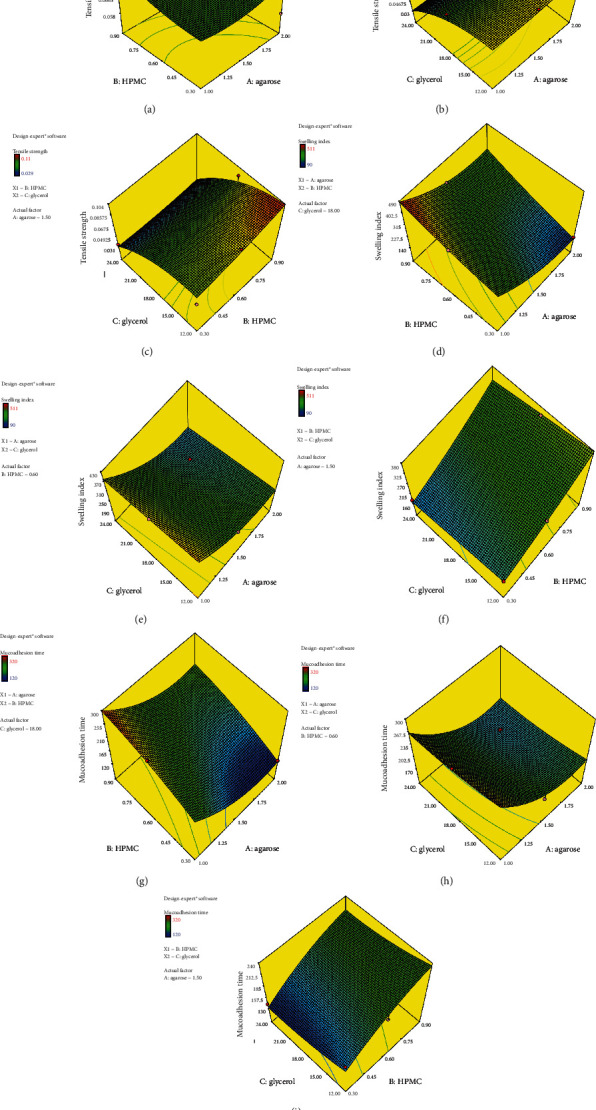
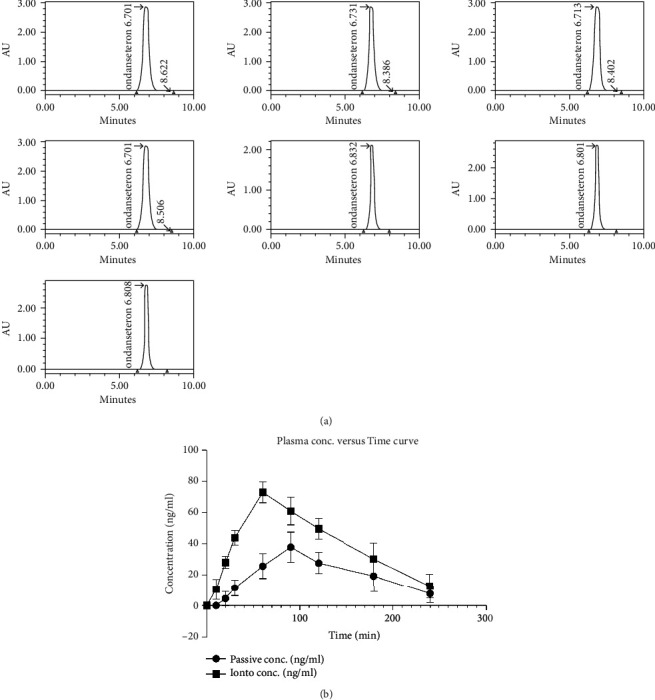
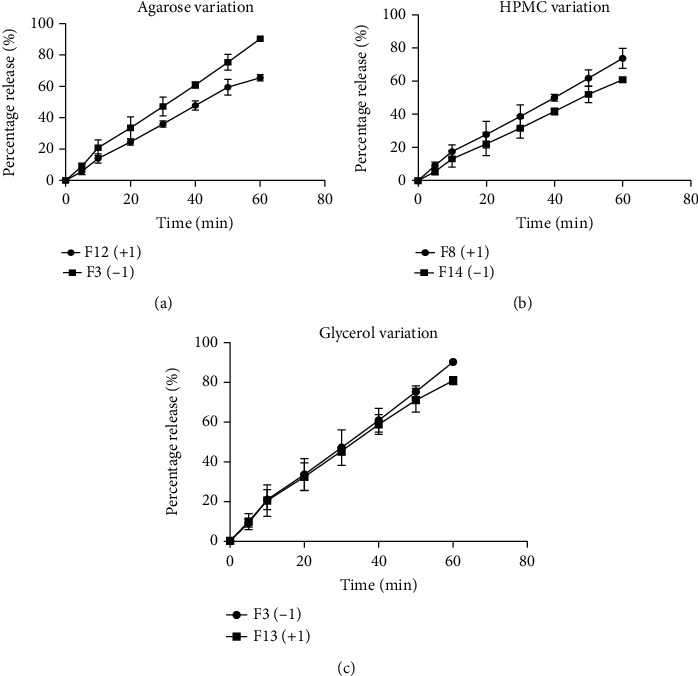
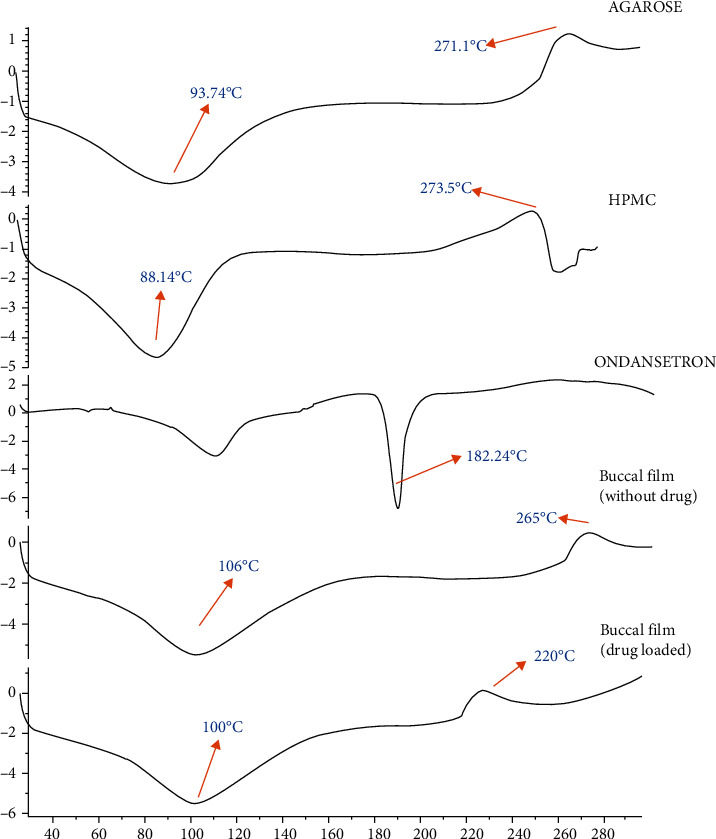
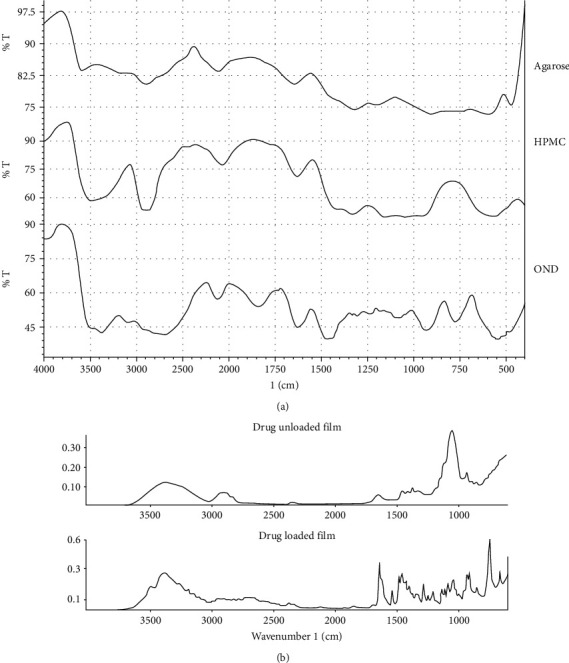
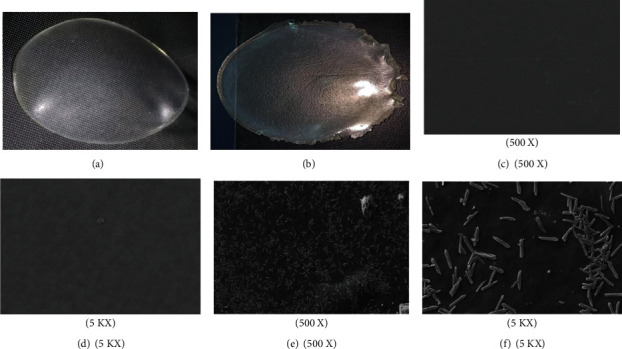
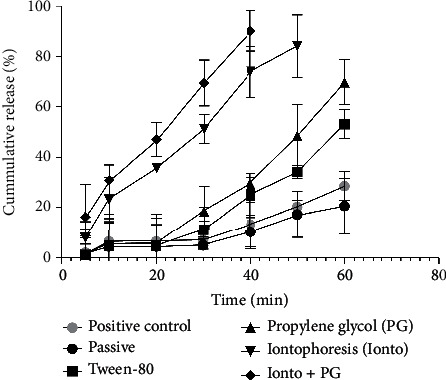
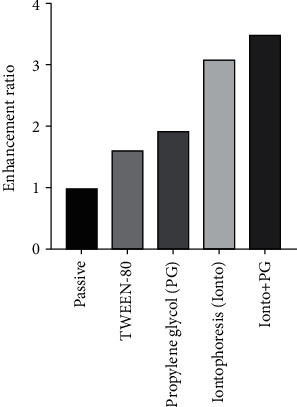
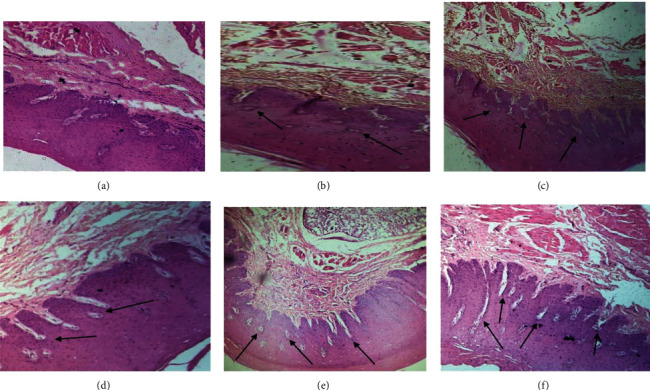
The study was aimed at designing and characterizing the ondansetron hydrochloride (OND) bearing agarose (AG), and hydroxypropyl methyl cellulose (HPMC) mucoadhesive buccal films employing glycerol as a plasticizer. The buccal delivery of ondansetron hydrochloride was remarkably boosted by employing physical (iontophoresis) and chemical enhancement approaches (chemical penetration enhancers). To explore the influence of different formulation components, i.e., agarose, hydroxypropyl methyl cellulose (HPMC), and glycerol on various evaluating parameters, i.e., tensile strength, swelling index, ex vivo mucoadhesion time, and subsequently on in vitro drug release, a D-optimal design was opted. A buccal film bearing OND was mounted on bovine buccal mucosa for ex vivo permeation studies and impact of chemical and physical enhancement techniques on the permeation profile was also analysed. A linear release profile was revealed in in vitro drug release of OND over 60 minutes and outcomes ascertained the direct relationship between HPMC content and in vitro drug release and inverse relationship was depicted by AG content. The FTIR and DSC thermal analysis was executed to determine the physicochemical interactions and results exposed no chemical interactions between drug and polymers. The drug (OND) appeared as tiny crystals on smooth film surface during scanning electron microscopy (SEM) analysis. A notable enhancement in permeation flux, i.e., 761.02 g/min of OND during ex vivo permeation studies was witnessed after the application of current (0.5-1 mA) without any time lag and with enhancement ratio of 3.107. A time lag of 15 minutes, 19 minutes, and 26 minutes with permeation flux of 475.34 g/min, 399.35 g/min, and 244.81 g/min was observed after chemical enhancer pretreatment with propylene glycol, Tween 80, and passive, respectively. Rabbit was employed as the experimental animal for pharmacokinetic studies (in vivo) and cats for pharmacological activity (in vivo), and the results illustrated the enhanced bioavailablity (2.88 times) in the iontophoresis animal group when compared with the rabbits of control group. Likewise, a remarkable reduction in emesis events was recorded in cats of iontophoresis group. Conclusively, the histopathological examinations on excised buccal mucosa unveiled no severe necrotic or cytopathetic outcomes of current.
本研究旨在设计并表征负载盐酸昂丹司琼(OND)的琼脂糖(AG)和羟丙基甲基纤维素(HPMC)黏膜黏附性口腔膜,其中甘油用作增塑剂。采用物理方法(离子电渗疗法)和化学增强方法(化学渗透促进剂)可显著提高盐酸昂丹司琼的口腔给药效果。为探究不同配方成分,即琼脂糖、羟丙基甲基纤维素(HPMC)和甘油对各项评估参数,如拉伸强度、溶胀指数、离体黏膜黏附时间,以及随后对体外药物释放的影响,选择了D - 最优设计。将载有OND的口腔膜置于牛口腔黏膜上进行离体渗透研究,并分析化学和物理增强技术对渗透曲线的影响。OND的体外药物释放在60分钟内呈现线性释放曲线,结果确定了HPMC含量与体外药物释放之间的直接关系,而AG含量呈现反比关系。进行了傅里叶变换红外光谱(FTIR)和差示扫描量热法(DSC)热分析以确定物理化学相互作用,结果表明药物与聚合物之间不存在化学相互作用。在扫描电子显微镜(SEM)分析中,药物(OND)在光滑的膜表面呈现为微小晶体。施加电流(0.5 - 1 mA)后,离体渗透研究中观察到渗透通量显著提高,即OND的渗透通量为761.02 g/min,无任何时间滞后,增强比为3.107。分别用丙二醇、吐温80进行化学增强剂预处理以及被动处理后,观察到时间滞后分别为15分钟、19分钟和26分钟,渗透通量分别为475.34 g/min、399.35 g/min和244.81 g/min。选用兔子作为药代动力学研究(体内)的实验动物,选用猫作为药理活性研究(体内)的实验动物,结果表明与对照组兔子相比,离子电渗疗法动物组的生物利用度提高(2.88倍)。同样,离子电渗疗法组的猫呕吐事件显著减少。最后,对切除的口腔黏膜进行组织病理学检查,未发现电流导致严重坏死或细胞病变的结果。