Devarajan Prasad, Chertow Glenn M, Susztak Katalin, Levin Adeera, Agarwal Rajiv, Stenvinkel Peter, Chapman Arlene B, Warady Bradley A
Division of Nephrology and Hypertension, Department of Pediatrics, Cincinnati Children's Hospital Medical Center, University of Cincinnati, Cincinnati, OH.
Division of Nephrology, Stanford University, Stanford, CA.
Kidney Med. 2022 Feb 11;4(4):100435. doi: 10.1016/j.xkme.2022.100435. eCollection 2022 Apr.
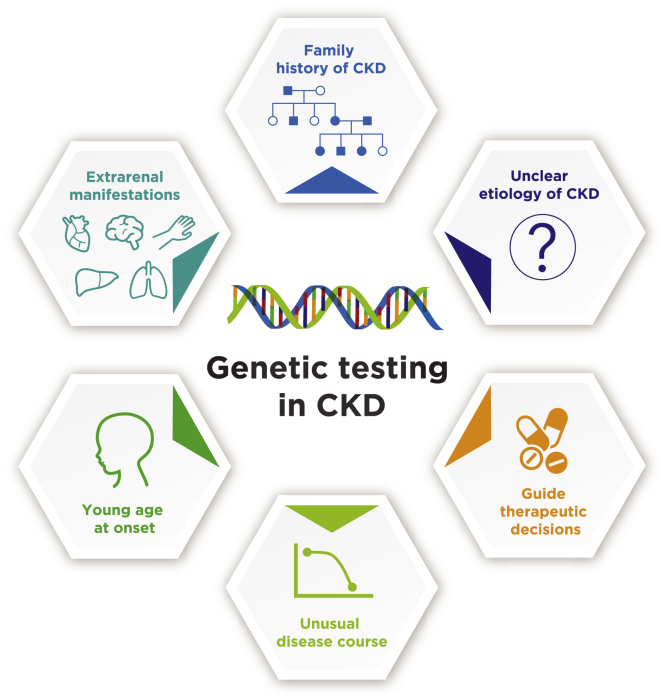
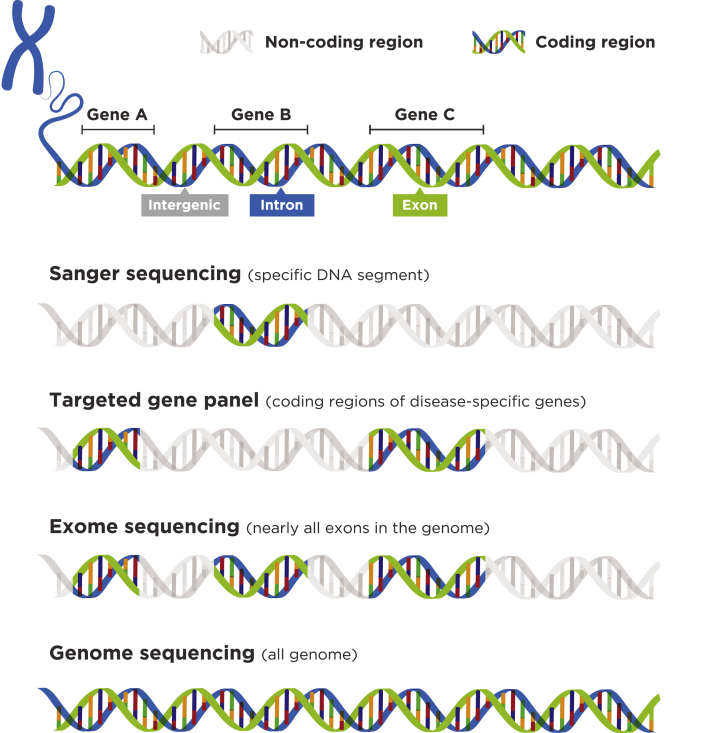
Chronic kidney disease (CKD) afflicts 15% of adults in the United States, of whom 25% have a family history. Genetic testing is supportive in identifying and possibly confirming diagnoses of CKD, thereby guiding care. Advances in the clinical genetic evaluation include next-generation sequencing with targeted gene panels, whole exome sequencing, and whole genome sequencing. These platforms provide DNA sequence reads with excellent coverage throughout the genome and have identified novel genetic causes of CKD. New pathologic genetic variants identified in previously unrecognized biological pathways have elucidated disease mechanisms underlying CKD etiologies, potentially establishing prognosis and guiding treatment selection. Molecular diagnoses using genetic sequencing can detect rare, potentially treatable mutations, avoid misdiagnoses, guide selection of optimal therapy, and decrease the risk of unnecessary and potentially harmful interventions. Genetic testing has been widely adopted in pediatric nephrology; however, it is less frequently used to date in adult nephrology. Extension of clinical genetic approaches to adult patients may achieve similar benefits in diagnostic refinement and treatment selection. This review aimed to identify clinical CKD phenotypes that may benefit the most from genetic testing, outline the commonly available platforms, and provide examples of successful deployment of these approaches in CKD.
慢性肾脏病(CKD)在美国影响着15%的成年人,其中25%有家族病史。基因检测有助于识别并可能确诊CKD,从而指导治疗。临床基因评估的进展包括使用靶向基因panel的二代测序、全外显子组测序和全基因组测序。这些平台提供了覆盖整个基因组的优质DNA序列读数,并已确定了CKD的新遗传病因。在以前未被认识的生物学途径中发现的新的病理性遗传变异阐明了CKD病因背后的疾病机制,有可能确定预后并指导治疗选择。使用基因测序的分子诊断可以检测罕见的、可能可治疗的突变,避免误诊,指导最佳治疗方案的选择,并降低不必要和潜在有害干预的风险。基因检测已在儿科肾脏病学中广泛应用;然而,迄今为止在成人肾脏病学中使用较少。将临床基因方法扩展到成年患者可能在诊断细化和治疗选择方面取得类似的益处。本综述旨在确定可能从基因检测中获益最大的临床CKD表型,概述常用的平台,并提供这些方法在CKD中成功应用的实例。